When a Vietnamese conglomerate decides to challenge Tesla, BMW, and Mercedes in the premium electric SUV space, eyebrows raise. The VinFast VF 9 represents more than just another electric vehicle: it’s a statement of intent from a nation traditionally known for manufacturing rather than automotive innovation.
VinFast’s flagship three-row electric SUV enters a crowded field with bold styling, ambitious technology, and pricing that undercuts established luxury rivals. But can a brand with virtually no global recognition convince families to trust their most precious cargo to Vietnamese engineering?
Design That Demands Attention
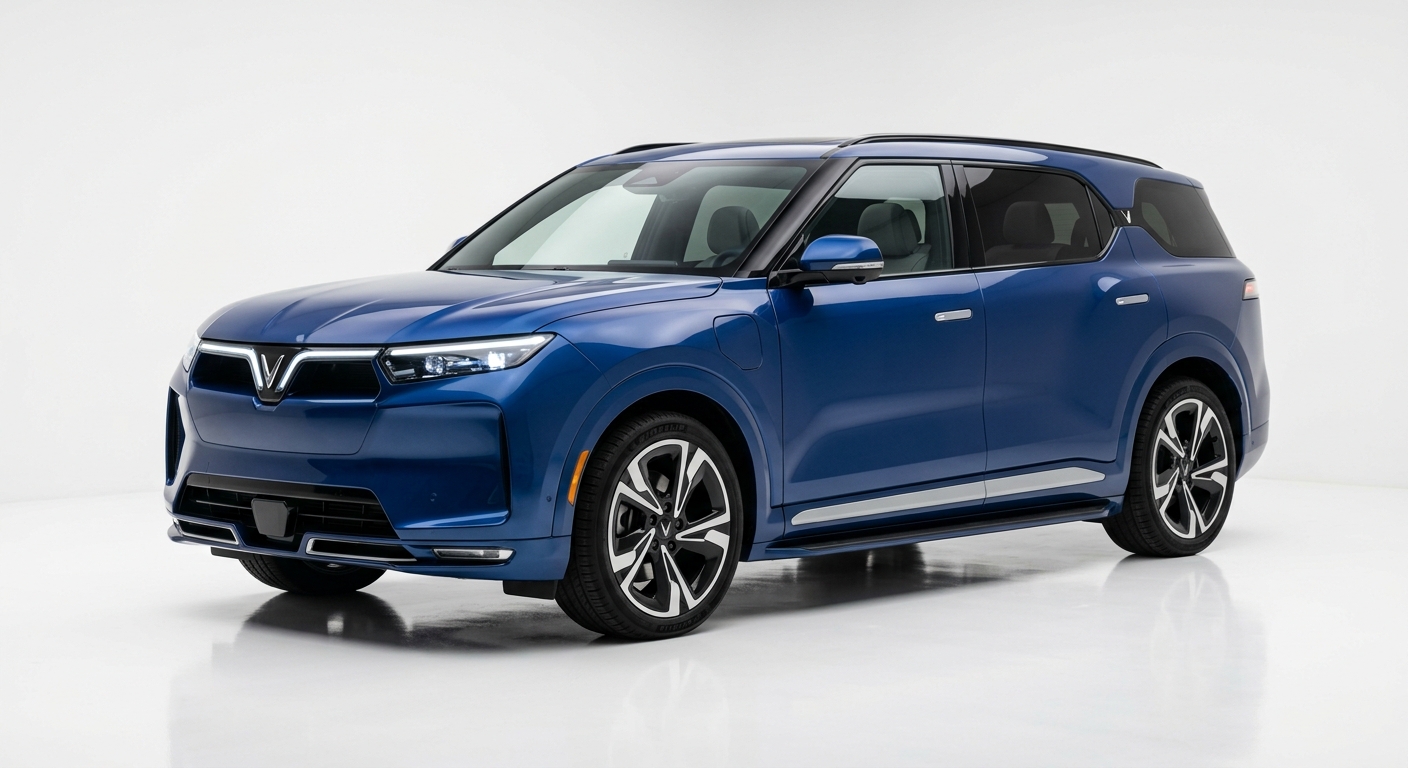
The VF 9 doesn’t whisper its presence. VinFast’s design team, led by former BMW and Audi stylists, created a SUV that’s impossible to ignore. The front fascia features a distinctive light bar that stretches across the width of the vehicle, connecting sharp LED headlight clusters that give the VF 9 an almost predatory appearance.
At nearly 17 feet long, the VF 9 commands road presence that rivals the BMW X7 and Mercedes GLS. The sculpted bodywork avoids the boxy proportions that plague many three-row SUVs, instead flowing in smooth curves that hide the vehicle’s substantial dimensions. Chrome accents and flush door handles complete the premium appearance.
Interior Ambitions
Step inside and VinFast’s luxury aspirations become clear. The cabin centers around a massive 15.6-inch portrait-oriented touchscreen that controls virtually every vehicle function. Real leather surfaces, open-pore wood trim, and soft-touch materials throughout create an ambiance that wouldn’t feel out of place in a German luxury SUV.
The second-row captain’s chairs slide and recline, offering genuine comfort for adult passengers. Even the third row provides reasonable space for teenagers or shorter adults. With all seats folded, cargo capacity expands to a cavernous 131 cubic feet.
Electric Performance
Two electric motors, one at each axle, combine to produce 402 horsepower and 472 lb-ft of torque. That’s enough to propel this 5,600-pound SUV from zero to 60 mph in 6.5 seconds, respectable for a vehicle prioritizing comfort over outright performance.
The 123-kWh battery pack provides an EPA-estimated range of 330 miles, competitive with established rivals. DC fast charging at up to 175 kW allows 10-80% charging in approximately 35 minutes under ideal conditions.
On the Road
The VF 9’s driving character prioritizes comfort above all else. The air suspension soaks up road imperfections with impressive composure, while sound deadening keeps wind and tire noise to a minimum. Steering feel is light but predictable, making the large SUV manageable in tight spaces.
Regenerative braking can be adjusted through multiple levels, though even the most aggressive setting allows for comfortable one-pedal driving. The powertrain delivers smooth, silent acceleration that masks the vehicle’s substantial weight.
Technology Integration
VinFast equipped the VF 9 with an impressive array of standard technology. The infotainment system includes wireless Apple CarPlay and Android Auto, over-the-air updates, and a premium audio system. A full suite of driver assistance features comes standard, including adaptive cruise control, lane-keeping assistance, and automated emergency braking.
However, some software integration feels unfinished. Menu structures can be confusing, and response times occasionally lag behind premium German rivals. VinFast promises regular over-the-air updates to address these concerns.
The VF 9 represents an ambitious first step for VinFast in the global luxury electric SUV market. While software refinement lags behind established rivals, the combination of striking design, competitive specifications, and aggressive pricing makes it worthy of consideration for families seeking electric luxury with a difference. VinFast’s biggest challenge won’t be building a competent SUV, but convincing buyers to take a chance on an unknown brand.