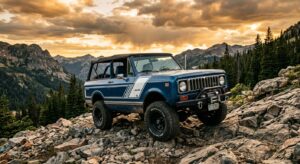
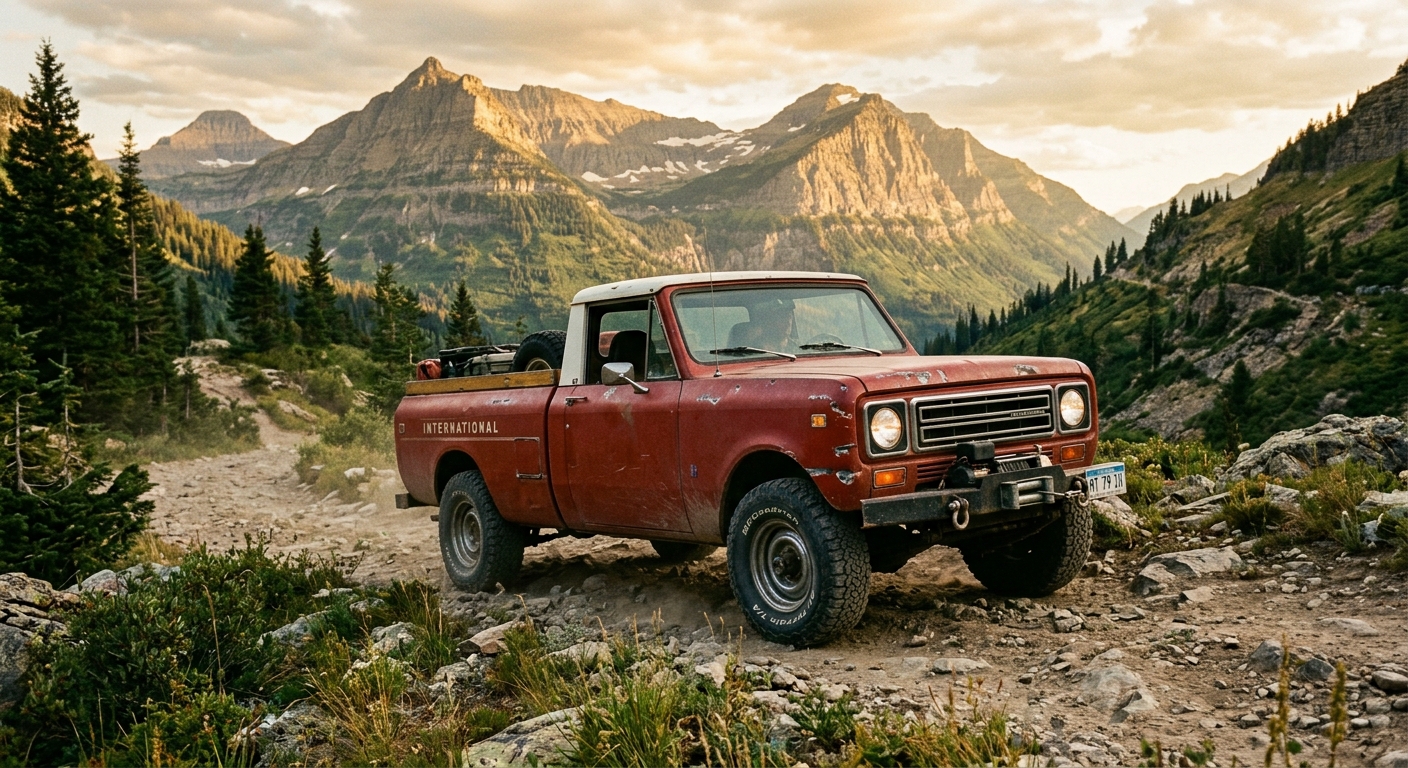
While Ford and Chevrolet battled for suburban driveways with increasingly civilized trucks, International Harvester took a different path. The 1979 Scout Terra represented the last gasp of truly utilitarian American trucking, a vehicle built not for comfort but for capability. This was a truck that understood the difference between hauling groceries and hauling civilization into the wilderness.
The Terra variant of International’s Scout line arrived in 1976 as the company’s answer to the growing pickup truck market. Unlike the standard Scout wagon, the Terra stretched its wheelbase to accommodate a proper pickup bed while maintaining the rugged character that made International’s agricultural and commercial vehicles legendary.
Farming Equipment DNA
Everything about the Scout Terra feels purposeful rather than refined. The ride is firm to the point of harsh, the steering requires actual effort, and the interior makes no concessions to luxury. This isn’t a design flaw; it’s the point. International built this truck using the same philosophy that guided their tractors and heavy equipment: function over form, durability over comfort.
The Terra’s construction reflects this agricultural heritage. The frame rails are substantial enough to support serious weight, while the leaf spring suspension setup front and rear prioritizes load carrying over ride quality. The result is a vehicle that feels indestructible, even if it lacks the smooth operation of its Detroit competitors.
Power When You Need It
Under the hood, the Terra offered several powerplant options, but the most characterful was the 345 cubic inch V8. This iron-block motor produces a respectable 197 horsepower and 290 lb-ft of torque, numbers that tell only part of the story. The real appeal lies in the engine’s torque curve, which delivers pulling power exactly where you need it for towing or climbing.
The available four-wheel-drive system uses a manual transfer case that requires you to stop, shift into neutral, and engage the front axle. There’s no electronic wizardry here, just mechanical certainty. When engaged, the Terra becomes genuinely capable off-road, with approach and departure angles that put modern crossovers to shame.
The End of an Era
By 1979, the writing was on the wall for International’s light truck division. Increasing emissions regulations and corporate financial troubles would soon end Scout production entirely. The Terra represented the final evolution of International’s truck-building philosophy, combining decades of commercial vehicle expertise with the growing demands of the recreational truck market.
What makes the Terra significant isn’t its sales numbers or its sophistication, but its authenticity. This was one of the last American trucks designed primarily as a tool rather than a lifestyle accessory. Every component, from the heavy-duty alternator to the manual steering box, was selected for reliability rather than refinement.
The interior reflects this utilitarian approach with vinyl seats that can be hosed clean, simple gauge clusters that prioritize legibility, and controls positioned for use with work gloves. The pickup bed features actual tie-down points and a tailgate designed to support weight, not just look stylish.
The Scout Terra stands as a monument to a vanished philosophy of truck building, when capability mattered more than comfort and authenticity trumped sophistication. It’s not the truck you want, but it might be exactly the truck you need. In an era of computerized everything, the Terra offers the radical simplicity of mechanical certainty.