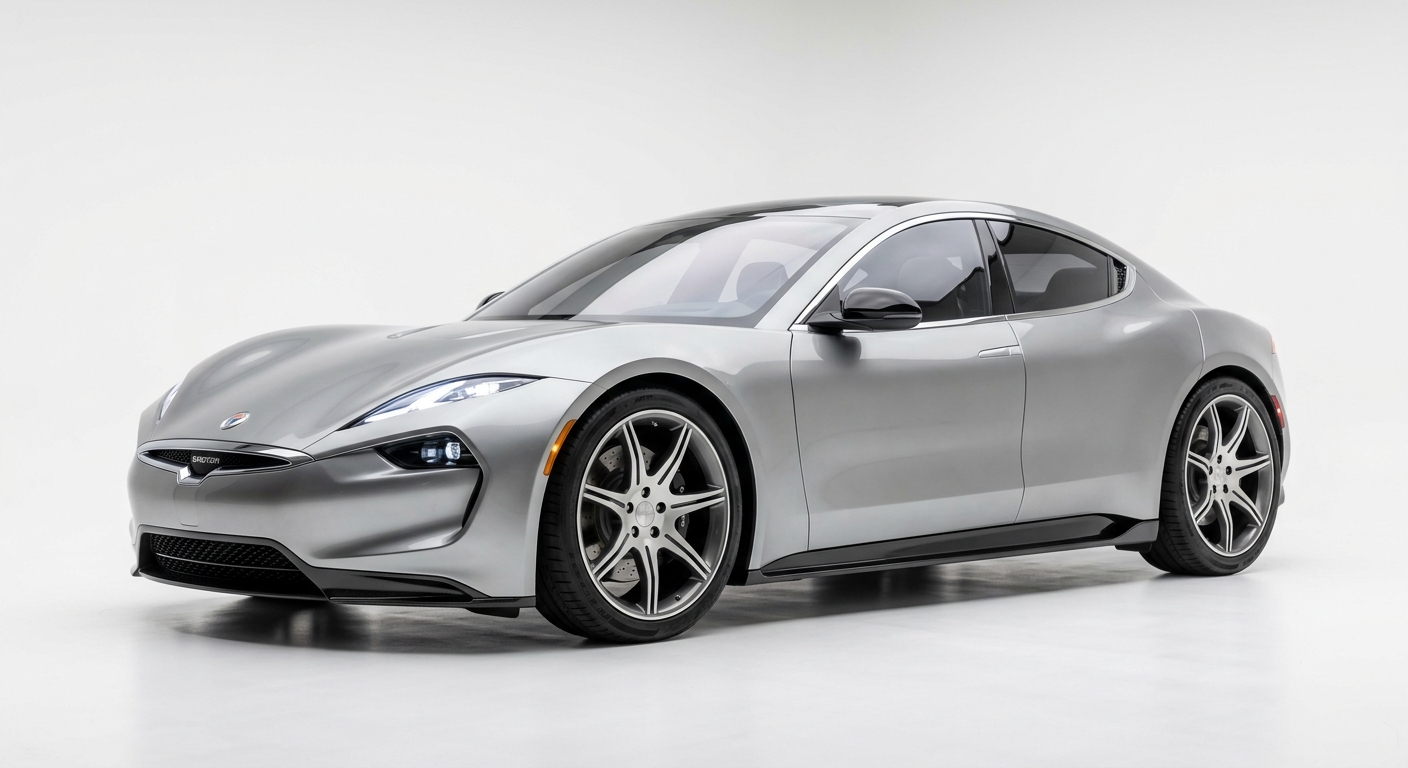
The Fisker EMotion stands as one of automotive history’s most beautiful what-ifs. Henrik Fisker’s return to the electric vehicle space promised a luxury sedan that would challenge Tesla’s dominance while delivering the kind of design flair that made the original Fisker Karma such a head-turner. Though the EMotion never reached production, its influence on electric luxury design continues to resonate.
Design Philosophy
The EMotion represented pure Fisker design DNA translated into the electric age. Its dramatic silhouette featured a long hood despite having no engine, creating proportions that bridged traditional luxury sedans with futuristic electric architecture. The signature butterfly doors weren’t just for show, they were part of Fisker’s commitment to making every interaction with the car feel special.
Henrik Fisker’s background in designing icons like the Aston Martin DB9 and BMW Z8 showed throughout the EMotion’s surfaces. The car managed to look both muscular and elegant, with flowing lines that suggested motion even at rest. The front fascia, while grille-free, maintained visual weight through clever lighting elements and sculpted surfaces.
Revolutionary Interior Concept
Inside, the EMotion promised to redefine luxury electric interiors. The cabin featured sustainable materials throughout, including recycled carbon fiber and vegan leather alternatives. The dashboard design centered around a large curved display that flowed seamlessly into the door panels, creating an immersive digital environment.
Fisker planned to incorporate biometric sensors that would adjust everything from seat position to climate control based on the driver’s vital signs. The rear seats were designed as individual thrones, with tablet-style displays integrated into the front seatbacks. Ambient lighting could shift color and intensity based on driving mode or passenger mood.
Technical Ambitions
The EMotion’s technical specifications were ambitious for 2018. Fisker claimed the car would deliver over 400 miles of range thanks to its proprietary solid-state battery technology. The powertrain promised 575 horsepower from dual electric motors, enabling 0-60 mph acceleration in under 3 seconds while maintaining the refinement expected from a luxury sedan.
The car’s platform incorporated advanced materials including carbon fiber body panels and an aluminum space frame. Active aerodynamics would adjust automatically for maximum efficiency or performance depending on driving conditions. The EMotion was also planned to support ultra-rapid charging, potentially adding 125 miles of range in just 9 minutes.
Autonomous Capabilities
Fisker envisioned the EMotion as more than just a luxury EV, it was meant to be a mobile sanctuary. The car featured provisions for Level 4 autonomous driving, with lidar sensors hidden within the bodywork to maintain clean aesthetics. When in autonomous mode, the front seats could swivel to face the rear passengers, transforming the cabin into a mobile conference room.
The steering wheel could retract into the dashboard during autonomous driving, while the pedals would fold away to maximize legroom. This transformation capability represented Fisker’s vision for the future of luxury transportation, where the journey becomes as important as the destination.
Market Positioning
With a planned starting price around $129,000, the EMotion aimed squarely at the Tesla Model S and traditional luxury sedans like the BMW 7 Series and Mercedes S-Class. Fisker positioned the car as the thinking person’s luxury EV, emphasizing sustainability without sacrificing performance or style.
The company planned to handle sales directly to consumers, bypassing traditional dealership networks. This approach would have included white-glove delivery service and comprehensive digital ownership experiences. Service would be handled through mobile technicians and strategically located service centers in major metropolitan areas.
The Fisker EMotion remains one of automotive history’s most compelling almost-stories. Its combination of stunning design, ambitious technology, and sustainable luxury pointed toward a future that the industry is still trying to achieve. While the EMotion never graced showroom floors, its DNA lives on in current electric luxury sedans that continue pushing boundaries of style and performance.