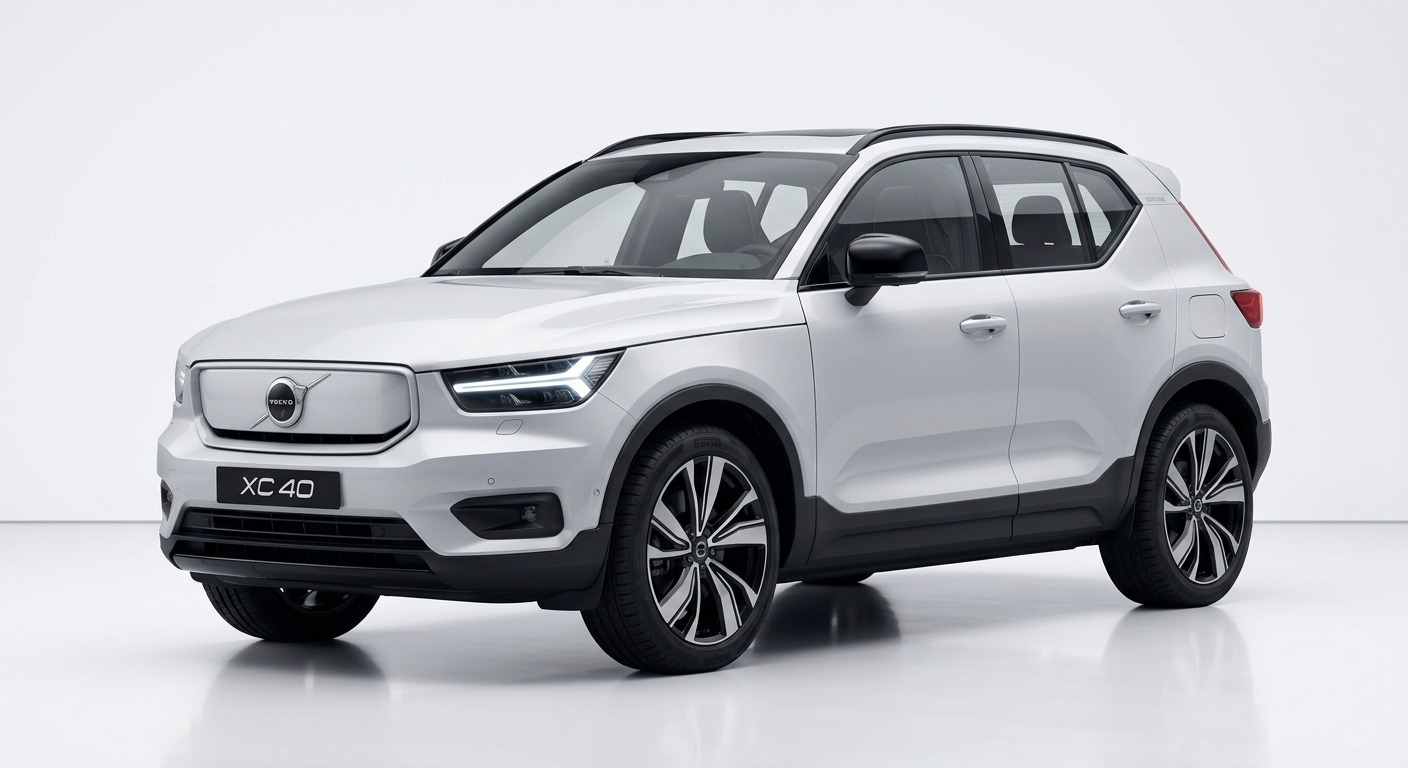
When Volvo announced its ambitious plan to become fully electric by 2030, skeptics wondered if the Swedish brand could maintain its reputation for safety and family-friendly practicality in the EV realm. The 2021 XC40 Recharge, Volvo’s first purpose-built electric vehicle, provides a compelling answer with its blend of Scandinavian design, cutting-edge technology, and uncompromising safety standards.
Electric Evolution of a Proven Formula
Built on Volvo’s Compact Modular Architecture (CMA) platform, the XC40 Recharge shares its bones with the conventional XC40 but receives significant modifications to accommodate its electric powertrain. The most obvious change is the completely sealed front grille, which maintains Volvo’s distinctive design language while optimizing aerodynamics for maximum range efficiency.
Under the hood, where you’d typically find an engine, Volvo has created a practical storage compartment they call the “frunk.” This 31-liter space is perfect for charging cables or groceries, adding to the vehicle’s already impressive practicality. It’s a clever use of space that demonstrates how electric architecture can actually enhance utility rather than compromise it.
Twin Motor Performance
The XC40 Recharge employs a dual-motor setup that delivers 402 horsepower and 487 lb-ft of torque, making it significantly more powerful than any combustion-engine XC40. The instant torque delivery typical of electric vehicles transforms this compact SUV into a surprisingly quick performer, capable of reaching 60 mph in just 4.7 seconds.
What’s most impressive is how Volvo has tuned the powertrain for everyday usability rather than raw performance. The acceleration is smooth and linear, never feeling overwhelming or difficult to modulate in parking lots or city traffic. The regenerative braking system can be adjusted through paddle shifters, allowing drivers to tailor the one-pedal driving experience to their preferences.
Range and Charging Reality
The 78-kWh battery pack provides an EPA-estimated range of 208 miles, which places the XC40 Recharge in the middle of the compact electric SUV segment. While not class-leading, this range proves adequate for most daily driving scenarios and weekend adventures.
Charging capabilities include DC fast charging at up to 150 kW, which can replenish the battery from 10% to 80% in approximately 37 minutes under ideal conditions. The vehicle also supports 11 kW AC charging, making it compatible with most home and public Level 2 charging stations.
Interior Innovation
Inside, the XC40 Recharge showcases Volvo’s commitment to sustainable materials and minimalist Scandinavian design. The cabin features recycled plastics, responsibly sourced wood trim, and optional wool-blend upholstery that feels both luxurious and environmentally conscious.
The centerpiece is Volvo’s Android-based infotainment system, which integrates Google services directly into the vehicle. This means native Google Maps navigation, Google Assistant voice control, and access to Google Play Store apps. The system is intuitive and responsive, though some traditionalists may miss the physical buttons that Volvo has largely eliminated.
Safety Without Compromise
Volvo’s legendary safety reputation remains intact with the XC40 Recharge. The vehicle earned a five-star Euro NCAP safety rating and comes standard with Pilot Assist semi-autonomous driving technology, automatic emergency braking, blind-spot monitoring, and cross-traffic alert.
The electric architecture actually enhances safety in some ways, with the battery pack’s rigid structure contributing to the vehicle’s overall crash protection. Volvo has also implemented safeguards to protect the high-voltage systems in the event of an accident, ensuring first responders can work safely around the vehicle.
The XC40 Recharge proves that Volvo’s transition to electrification doesn’t require sacrificing the brand’s core values of safety, practicality, and thoughtful design. While the range may not lead the segment, the overall package delivers exactly what families expect from a modern Volvo: refined performance, uncompromising safety, and guilt-free luxury that happens to run on electrons instead of gasoline.