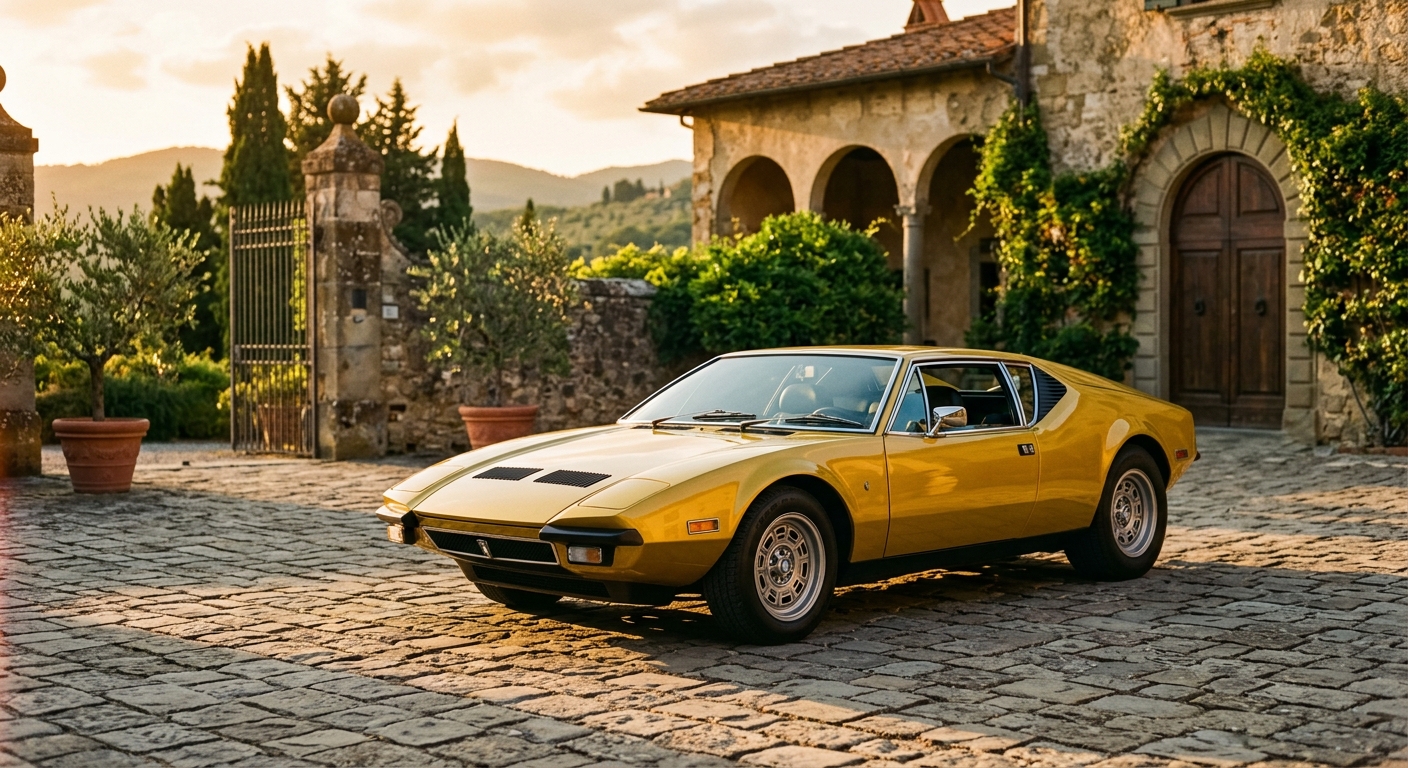
In the early 1970s, when Ferrari and Lamborghini dominated the exotic car landscape, an audacious Italian entrepreneur named Alejandro de Tomaso had a different vision. What if you could combine Italian styling genius with American V8 reliability and Ford’s global distribution network? The result was the Pantera, a mid-engine exotic that brought supercar performance to Lincoln-Mercury dealerships across America.
The 1975 Pantera L represents the model at its most refined, incorporating lessons learned from the early production cars while maintaining the raw, uncompromising character that made it legendary. This was exotic car ownership without the typical Italian reliability headaches, powered by Detroit’s most potent small-block V8.
American Heart, Italian Soul
At the Pantera’s core beats Ford’s legendary 351 Cleveland V8, a powerplant that shared DNA with the engines propelling Boss Mustangs and Cobra Jet Torinos. In Pantera tune, this mill delivered 330 horsepower and 380 lb-ft of torque, figures that were genuinely supercar-worthy in 1975. The Cleveland’s aggressive cam profile and free-breathing heads made it sound like thunder trapped in a steel cage.
Unlike its temperamental European rivals, the Pantera’s Ford V8 could be serviced at any American dealership. Need parts? Your local Ford dealer likely had them in stock. This practical approach to exotic car ownership was revolutionary, making the Pantera accessible to enthusiasts who wanted performance without the complexity.
Ghia’s Geometric Masterpiece
Penned by Tom Tjaarda at Ghia, the Pantera’s bodywork was pure 1970s geometric aggression. Sharp creases, aggressive air intakes, and a distinctive wedge profile made it look like it was carved from a single block of steel. The design was both functional and beautiful, with every line serving aerodynamic or cooling purposes.
The 1975 L model featured subtle refinements over earlier cars, including improved interior ergonomics and better build quality. The cabin, while cramped by modern standards, felt authentically exotic with its mix of Italian leather, American switchgear, and that magnificent view over the long, low hood.
Mid-Engine Dynamics
Behind the driver sat that thunderous Cleveland V8, its weight perfectly centered for optimal balance. The Pantera’s chassis dynamics were surprisingly sophisticated, with unequal-length A-arms all around and carefully tuned geometry that delivered genuine supercar handling.
On the road, the Pantera felt like nothing else. The steering was heavy but communicative, the suspension firm but controlled, and the engine’s torque delivery was immediate and intoxicating. This wasn’t a car that flattered novice drivers, it demanded respect and rewarded skill with performance that could embarrass cars costing twice as much.
The Elvis Connection
Perhaps no story better illustrates the Pantera’s character than Elvis Presley’s relationship with his yellow 1971 model. When the King’s Pantera wouldn’t start one day, he reportedly pulled out a .45 and shot the dashboard. The car still ran afterward, testament to both Elvis’s marksmanship and the Pantera’s fundamental toughness.
This blend of exotic sophistication and American durability made the Pantera unique in automotive history. It was equally at home on the Sunset Strip or at a drag strip, a supercar that could handle both caviar and chili dogs.
The 1975 Pantera L represents automotive compromise at its finest, blending Italian exotic appeal with American V8 practicality in a package that still thrills five decades later. It wasn’t perfect, but its flaws were part of its considerable charm. In a world of sanitized supercars, the Pantera’s raw, unfiltered character feels more special than ever.