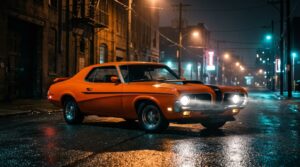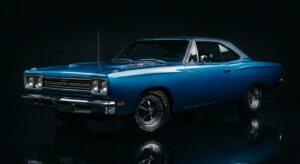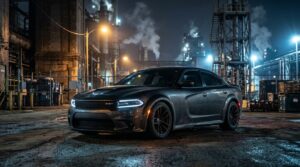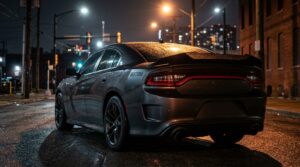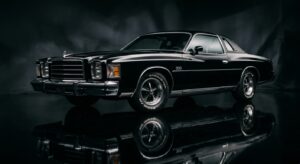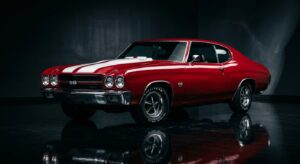
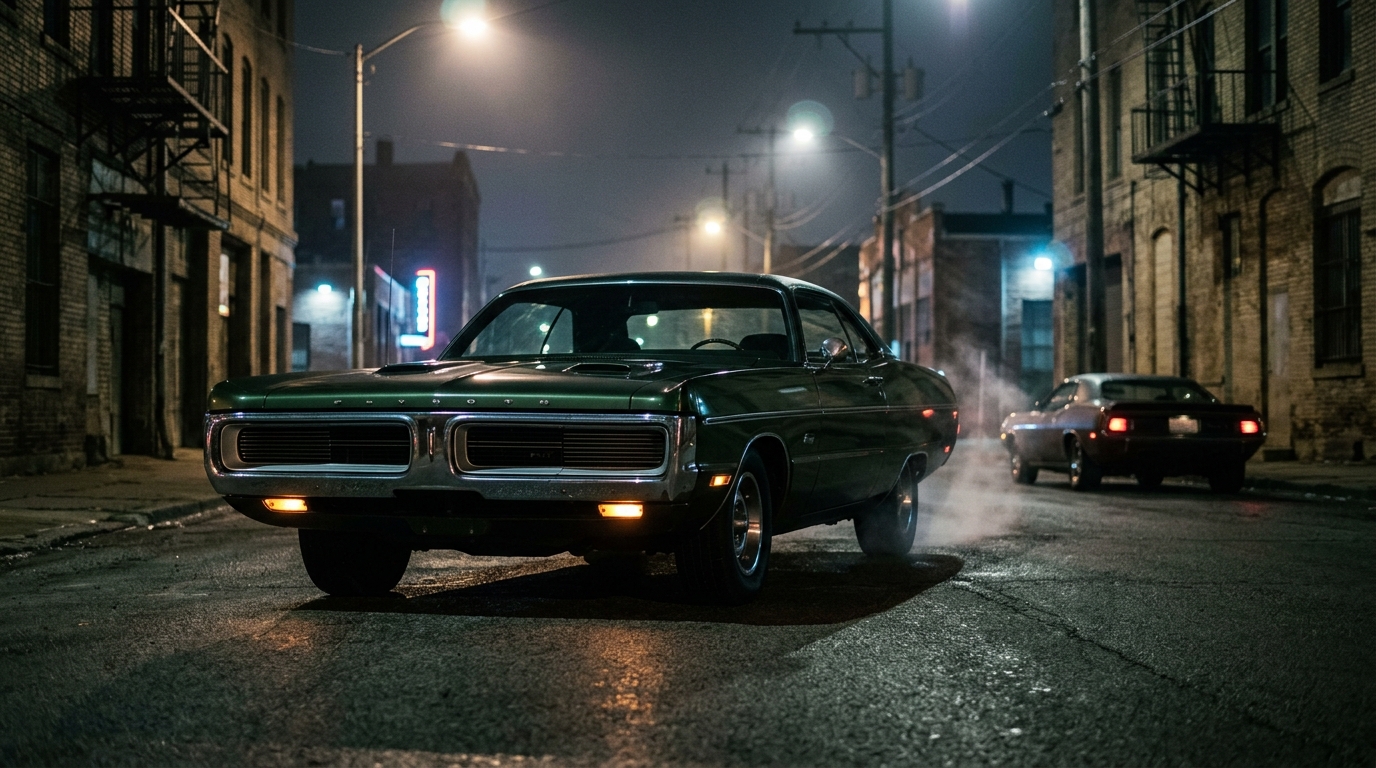
It is 1:40 a.m. and the only sound on this empty boulevard is the low, rolling rumble of a big-block Mopar working its way through a pair of dual exhausts. Somewhere across town a Barracuda is probably doing the same thing, and the neighborhood is learning to recognize that growl. But tonight we are in the car most people forget: the 1970 Plymouth Fury GT, the full-size sleeper that carries the same 440 punch in a body the size of a city block.
The Fury Nobody Parks Next to the ‘Cuda
Plymouth’s pony-car cousins, the Barracuda and the Road Runner, get all the posters. The Fury GT was the quiet alternative, a full-size two-door hardtop that could be optioned with serious hardware for buyers who wanted muscle without the cramped back seat. For 1970, the Fury GT was a distinct model in the line, built around the Fury body with a heavy-duty feel and an engine bay that took the 440 cubic inch big-block as its signature powerplant.
That engine was the 440 Super Commando V8, rated at 350 horsepower and 480 lb-ft of torque in its standard four-barrel form. Those torque numbers are the real story. This is a car designed to lean into the pedal and surge forward rather than scream to a redline, which makes it feel completely different from a high-strung small-block pony car.
Night Driving: Sound, Light, and Presence
After dark is where the Fury GT makes the most sense. The sheer length of the hood stretches out in front of you, and with the dash lights glowing a soft amber you get that classic gauge-cluster mood. The 1970 front end carried a prominent bumper-integrated grille, and the headlights on a car of this era are modest by modern standards. Expect sealed-beam units that throw a warm, yellowish pool of light. They are fine for city streets and quiet back roads, but on a dark rural stretch you will find yourself driving with a bit more caution than a modern LED setup would ever ask of you.
What the car lacks in illumination it makes up for in acoustics. The 440 produces a deep, mellow thrum at idle that builds into a throaty bellow under throttle. Through a dual exhaust, with the windows down on a silent street, the sound bounces off storefronts and parked cars and comes right back at you. It is a bass note rather than a shriek, and that is the sound of a big-block doing exactly what it was engineered to do.
On the Road: A Boulevard Cruiser with Teeth
Behind the wheel, the Fury GT feels like a big, comfortable American coupe that happens to have a vicious streak. The TorqueFlite three-speed automatic shifts with a firm, decisive clunk, and the torque comes on in a wave from low rpm. Stoplight launches are effortless and a little theatrical. The car squats, the nose lifts, and the 440 pulls with a long, steady shove that seems to keep going well past the speeds where lighter cars start to run out of breath.
Handling is period-correct. Big body, soft suspension compared to a modern car, and recirculating-ball steering that wants you to plan ahead. You do not attack corners in a Fury GT. You set the car, roll through, and let the torque pull you out the other side. Braking was front disc, rear drum on cars equipped with the available power front discs, and it is adequate for the era but demands respect when the car is loaded up with 4,000 pounds of Detroit steel.
A Brief History: Plymouth’s Full-Size Muscle Play
The Fury name dates back to 1956, and by the late 1960s Plymouth was using it across a wide range of full-size cars, from basic sedans to the sporty GT trim. The Fury GT arrived as the performance-flavored option for buyers who wanted torque, presence, and a sporty look without stepping into the smaller muscle category. It shared the stage with the Fury S-23 and other high-performance Fury trims, giving Plymouth dealers a way to sell power to families and bachelors alike.
Today the Fury GT is a genuine under-the-radar collectible. It does not carry the instant name recognition of a Hemi ‘Cuda, which means prices stay far more approachable, but the 440 big-block and the full-size presence make it a rewarding car to own and drive. Finding one in good condition takes patience, and parts support is solid thanks to the huge Mopar aftermarket.
Living With a Fury at Night
This is not a car for tight parking garages or twisty canyon descents. It is a car for long, empty avenues, for drive-in lots that no longer exist, and for the kind of late-night run where the radio is low and the 440 does all the talking. The seating position is high and commanding, the bench-style comfort is generous, and the visibility out of the big greenhouse is genuinely good, which helps enormously after dark.
Editor’s verdict: The 1970 Plymouth Fury GT is the muscle car for people who prefer torque to tire smoke and presence to posters. It will not win a canyon duel with a ‘Cuda, but on an empty boulevard at midnight, with the 440 rumbling off every storefront, it makes a lot more sense than it has any right to.