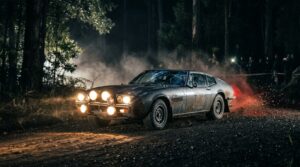
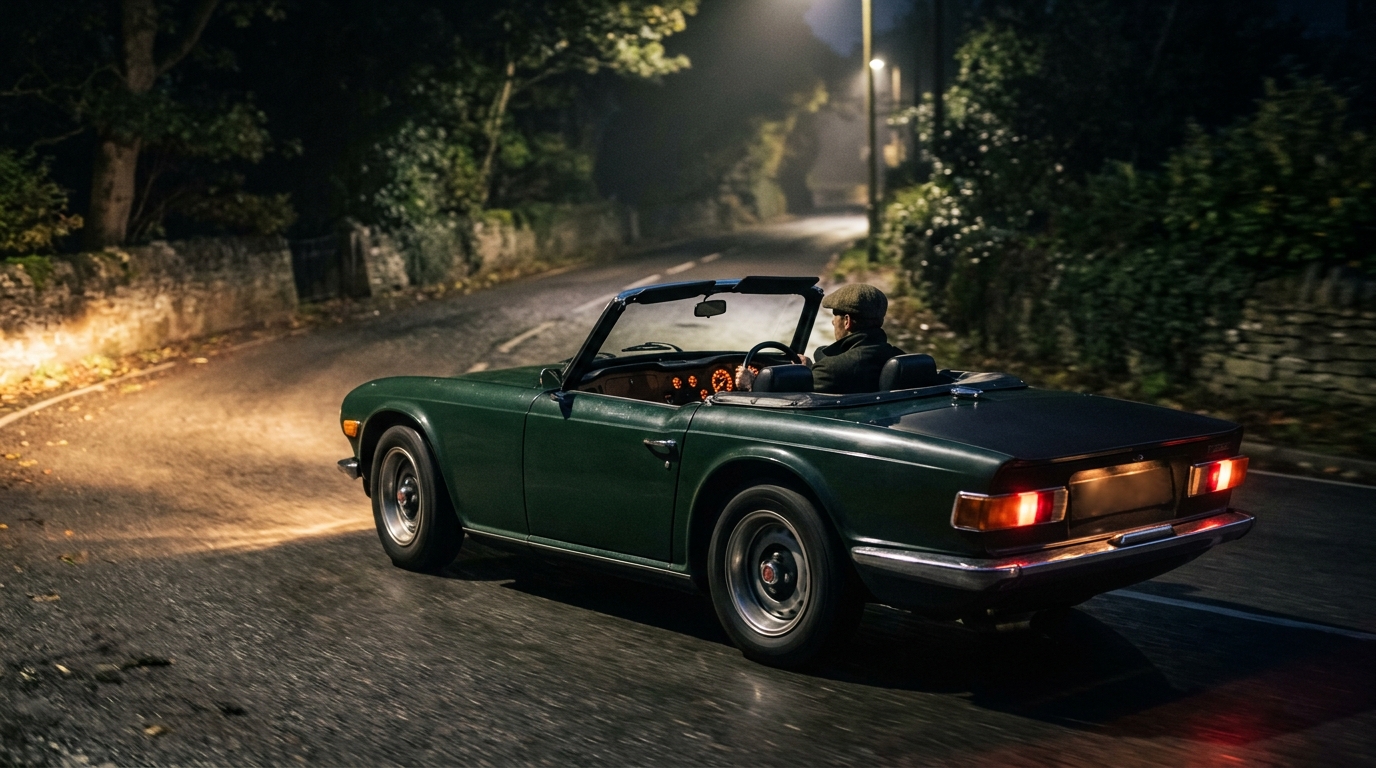
There is a particular sound a straight-six makes when the world has gone quiet and the road ahead is lit only by a pair of modest headlamps and the occasional sodium glow. Drop the top on a 1973 Triumph TR6 after midnight, turn the key, and that sound rolls out across the dark like a low brass growl. This is not a polite car, and that is exactly why you drive it at night.
A Last Hurrah in Six Cylinders
The TR6 arrived for the 1969 model year and ran until 1976, and it earned its reputation as the final, most muscular expression of the traditional Triumph TR sports car. Its body was a clever reskin of the earlier TR4 and TR5 platform. Karmann of Germany restyled the nose and tail with a squared-off, more modern look, while the underlying chassis stayed true to the old-school formula: a separate steel frame, independent rear trailing-arm suspension, and a long-stroke inline six up front.
The 1973 car sits in an interesting spot in the TR6’s life. In most export markets, and in the United States especially, it was the year the carbureted engine was the norm for the American market. The earlier fuel-injected cars, which used a Lucas mechanical system, were the ones that made the big headline power figures in the UK and other markets. In America, the TR6 used twin Zenith-Stromberg carburetors and a lower state of tune to meet emissions rules.
Behind the Wheel After Dark
Climb in and the cockpit greets you with a wooden dashboard, a row of round Smiths gauges, and a thin-rimmed steering wheel that feels perfectly sized for the job. At night the instruments glow with a soft, slightly greenish light that suits the mood. It is a simple, analog, tactile place to be, and every switch feels like it was chosen by someone who trusted drivers to learn their way around.
Twist the key and the 2.5-litre six settles into a rumbling idle. Pull away and the torque is the first thing you notice. Triumph’s big six pulls cleanly from low revs, so you rarely need to chase the redline. Short-shift, let the engine lug a little, and the TR6 surges forward with a deep, woofling exhaust note that bounces off every wall and overpass you pass. In a tunnel, with the top down, it is intoxicating.
The four-speed manual gearbox has a satisfyingly mechanical throw, and most cars of this era came with the optional overdrive on the upper ratios, which makes highway cruising far more relaxed. Select overdrive on a quiet stretch of road and the engine drops into a lazy, loping stride that lets you settle in for a long night run.
Headlights, Visibility and Lucas Lore
Let us talk about the lighting, because no night review of a British car is complete without it. The TR6 carried conventional sealed-beam round headlamps, and by modern standards they are dim, warm, and a touch yellow. They throw enough light to drive confidently at sensible speeds, but you quickly learn to respect their limits and keep your pace honest on unlit back roads. The upside is the atmosphere: the amber wash of those lamps on hedgerows and tarmac is pure vintage romance.
Lucas electrics, of course, have a reputation. The joke about the Prince of Darkness is well worn, but a well-sorted TR6 with clean grounds and fresh connections is a reliable machine. Owners swear by simple fixes like cleaning earth points and upgrading a few relays. With the hood down and a clear sky overhead, the real light show is the stars.
Ride, Handling and Character
The TR6 is a car that rewards commitment rather than precision. Independent rear suspension was a real advantage over the live-axle rivals of its day, and it keeps the car composed over bumps. Even so, the chassis flexes, the steering is on the heavy side at parking speeds, and body roll is part of the experience. Push it hard through a sweeping bend and the car leans, settles, and then catches itself with a mild tail-out attitude that feels more playful than frightening.
Drum brakes are not part of the story up front here: the TR6 used front discs and rear drums, with a servo for assistance. Stopping power is adequate for the performance, but this is a car that asks you to plan your braking, especially on damp night roads.
Living With a Legend
Practicality is modest. The boot is shallow, the cabin is snug, and the soft top is a manual affair that takes some practice. Still, the TR6 has a rugged durability that its owners cherish. Parts availability is excellent thanks to a thriving specialist community, and the straightforward mechanicals make it a great classic for the home wrench. Prices have climbed steadily as buyers recognize it as one of the most charismatic and approachable classic British roadsters.
Editor’s verdict: The 1973 TR6 is not the fastest or sharpest roadster of its era, but it may be the most soulful. Drop the top, listen to that six-cylinder burble echo through the dark, and you will understand why people still fall for this car decades later.