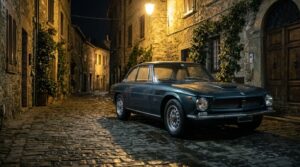
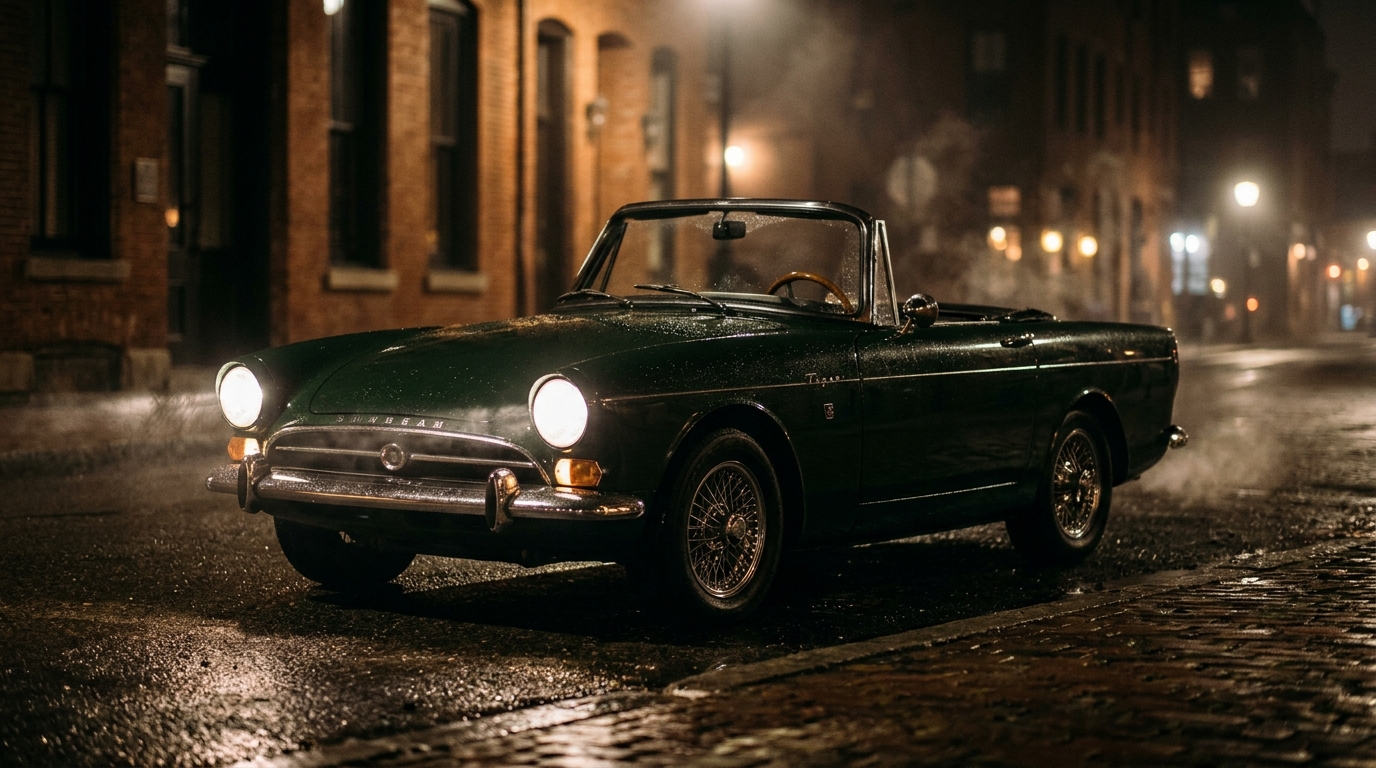
It is a little past midnight and the streets have emptied out, the kind of quiet that makes every sound carry. Then a low, burbling rumble rolls around the corner, far too deep for the tidy little roadster it comes from. The 1967 Sunbeam Tiger is a Sunbeam Alpine that went to America, found a Ford V8, and never looked back.
A Shelby Idea With a British Accent
The Tiger story starts with Carroll Shelby’s success stuffing a Ford V8 into the AC Ace to create the Cobra. Rootes Group, the British parent of Sunbeam, saw the same recipe working for its own struggling Alpine roadster. Ian Garrad, Rootes’ West Coast sales manager in Los Angeles, had Shelby’s team build a prototype, and a second one was built in England. The result went into production in 1964, with final assembly handled by Jensen Motors in West Bromwich, England.
The Tiger launched with Ford’s 260 cubic inch (4.3 liter) small block V8. That version is retrospectively called the Mk1. It was followed in 1967 by the Mk1A, still on the 260 engine and distinguished by minor trim and detail updates. The larger 289 cubic inch (4.7 liter) V8 came to the Mk II, which arrived in 1967 and used the 289. Production of the Tiger ended in mid 1967 after Chrysler took control of Rootes, since Chrysler had no interest in selling a car powered by a Ford engine.
Driving It After Dark
The Tiger is a small car, and at night that smallness becomes charm. The cabin is intimate, the long bonnet stretches out ahead of you, and the dash glows with a modest, old school amber and white light from the round gauges. This is not a car that tries to overwhelm you with tech. It simply lights up what you need and gets out of the way.
The headlights are period sealed beams, and it is worth being honest about them. They are fine for town speeds and quiet back roads, but they are a far cry from modern LED or projector units. On a dark country lane you learn to respect the car’s pace and let your eyes adapt. That slower, more deliberate rhythm is part of the appeal.
The sound is the real headline. Idling at a stoplight, the V8 burbles with that unmistakable cross plane lope. Because the engine is tuned for torque rather than revs, you rarely need to hunt through the gears. A gentle squeeze of the throttle makes the exhaust note swell, and between buildings or under an overpass it echoes back at you. At night, with the traffic gone, it fills the street.
The Tiger is quick for its era, but the steering and brakes remind you of its roots. The steering is a recirculating ball setup, communicative enough but light on the kind of precision a modern driver expects. The front discs and rear drums stop it adequately, though you plan your braking well ahead. The V8 weighs more than the original four cylinder, so the nose is heavier, and you feel it on twisty roads. The Tiger rewards smooth inputs and punishes sudden ones.
Living With a Legend
A Tiger is not a car for people who want effortless modern reliability. Cooling, wiring, and rust are the usual areas to inspect, and the tight engine bay makes service a puzzle. The tradeoff is a classic British roadster with a thundering American heart and parts support from the Ford side that is the envy of other British classics. The community around the Tiger is passionate, and a well sorted car is a joy to take out on a warm summer night.
Why It Still Matters
The Tiger is a reminder that clever engineering and a little audacity can create something special. It was never as famous as the Cobra, but it shares the same spirit, a lightweight chassis with a big V8. With only a few thousand built over its short life, it has become a prized collectible, and it sounds as good under a streetlight today as it did in the sixties.
The 1967 Sunbeam Tiger is a small British roadster with a big American voice, and after dark that voice is pure theater. It asks for patience, mechanical sympathy, and a quiet street, and it pays you back with one of the best sounds in the classic world.