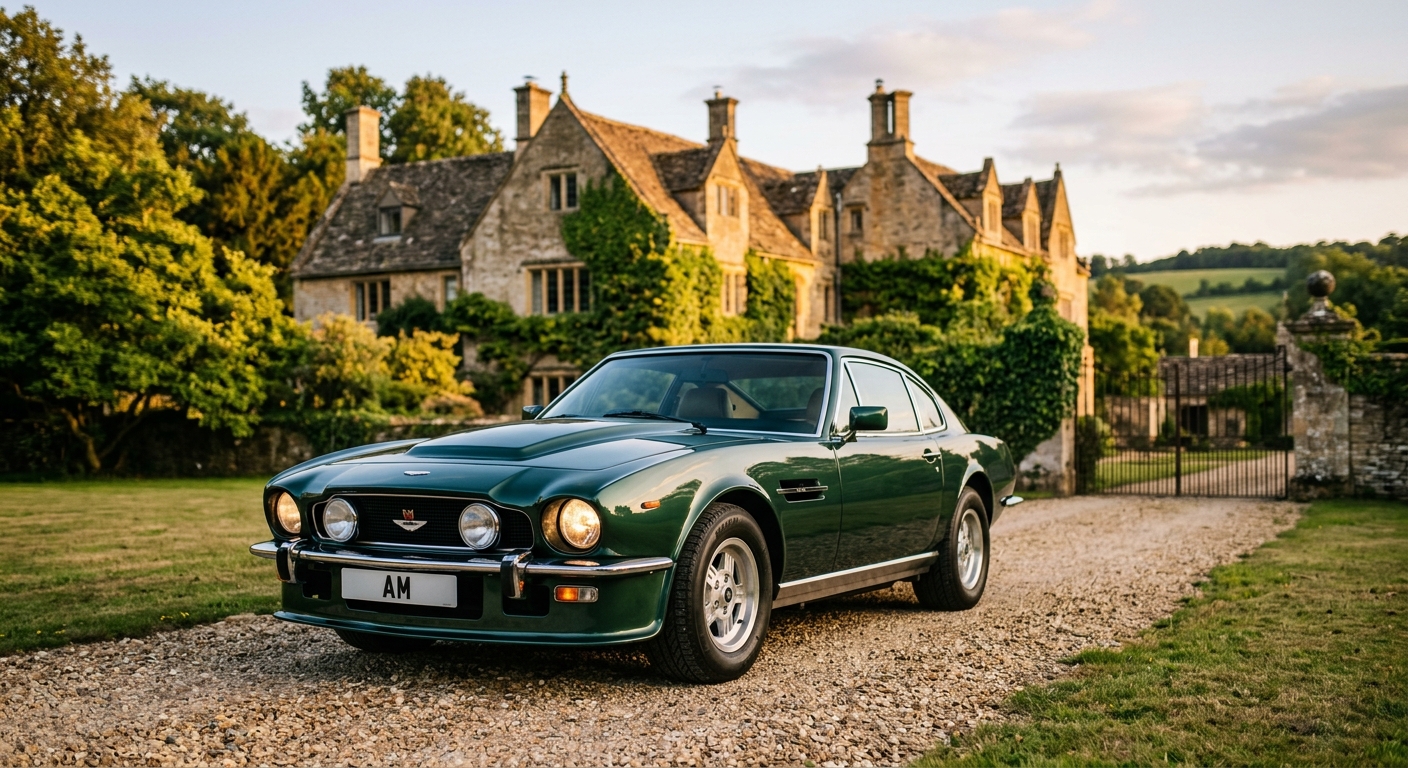
In an era when supercars were becoming increasingly clinical and computerized, the 1987 Aston Martin V8 Vantage stood as a defiant throwback to the days when building fast cars was more art than science. This was British automotive craftsmanship at its most gloriously uncompromising, a hand-built missile that could embarrass Ferraris on the motorway while still maintaining the understated elegance expected of Her Majesty’s finest marque.
The Last of the Mohicans
By 1987, the automotive world was changing rapidly. Electronic fuel injection was becoming standard, turbocharging was the latest craze, and manufacturers were chasing ever-higher power figures with increasingly sophisticated technology. Aston Martin, however, took a different approach with the V8 Vantage. They simply built the biggest, most powerful naturally aspirated engine they could fit into their elegant coupe body and called it a day.
The result was extraordinary. With 432 horsepower from its 5.3-liter V8 engine, the Vantage was one of the most powerful production cars in the world at the time. But power was only part of the story. This was a car that represented the pinnacle of traditional British coachbuilding, with each example taking months to complete by hand at Aston Martin’s Newport Pagnell facility.
Driving the Beast
Behind the wheel, the V8 Vantage is an experience that modern supercars simply cannot replicate. The steering is heavy and communicative, requiring real muscle to navigate tight corners but rewarding the driver with precise feedback about every nuance of the road surface. The throttle response is immediate and brutal, with none of the lag or electronic intervention that characterizes modern performance cars.
The sound is perhaps the most memorable aspect of the Vantage experience. The 5.3-liter V8 produces a deep, thunderous roar that seems to emanate from somewhere deep in the earth. At idle, it burbles and pops with barely contained violence. Under full acceleration, it becomes a primal scream that can be heard from miles away.
Performance figures tell only part of the story, but they’re impressive nonetheless. The sprint to 60 mph takes just 5.2 seconds, remarkable for a car of this era, while the top speed approaches 170 mph. More importantly, the Vantage feels fast in a way that transcends mere numbers. Every control input requires deliberate action, every gear change is an event, and every mile covered feels like a significant accomplishment.
Craftsmanship and Character
Step inside a V8 Vantage and you’re immediately transported to a different era of automotive luxury. The interior is swathed in the finest Connolly leather, with each hide carefully selected and hand-stitched by master craftsmen. The dashboard is real wood, not the plastic imitations found in lesser cars, and every switch and control has the satisfying weight and precision that only comes from proper engineering.
This attention to detail extended to every aspect of the car’s construction. Body panels were hand-formed over traditional wooden bucks, engine components were individually balanced and blueprinted, and final assembly was carried out by teams of skilled technicians who took personal pride in each car they completed.
The exclusivity was part of the appeal. Aston Martin built fewer than 400 V8 Vantages during the model’s production run, making it one of the rarest supercars of its era. Each car was essentially bespoke, with customers able to specify everything from paint colors to interior trim to mechanical specifications.
Legacy and Impact
Today, the 1987 V8 Vantage is recognized as one of the last truly analog supercars, a bridge between the genteel grand tourers of the 1960s and the high-tech missiles that would define the 1990s. It represented Aston Martin at both its finest and most vulnerable, showcasing the company’s unmatched ability to create automotive art while also highlighting the financial pressures that would eventually force the brand into foreign ownership.
For collectors and enthusiasts, the V8 Vantage represents the purest expression of what made British sports cars special. It’s a car that demands skill and respect from its driver, rewards patience and understanding, and provides an emotional connection that no amount of modern technology can replicate.
The 1987 Aston Martin V8 Vantage remains one of the most characterful supercars ever built, a hand-crafted masterpiece that prioritized soul over statistics. In an age of increasing automation and homogenization, it stands as a monument to what happens when skilled craftsmen are given unlimited freedom to create automotive art. Few cars have ever delivered such an intoxicating blend of raw power, elegant design, and pure emotional engagement.