In the pantheon of forgotten Italian supercars, few names carry the mystique and tragedy of Bizzarrini. By 1973, Giotto Bizzarrini’s small company was gasping its final breaths, but not before producing one last masterpiece: the 5300 GT Europa. This was Italian artistry wrapped around American muscle, a philosophy that would have seemed heretical to purists but resulted in one of the most compelling GT cars ever built.
The Genius Behind the Machine
Giotto Bizzarrini wasn’t just another Italian coachbuilder with grand ambitions. This was the man who had penned the Ferrari 250 GTO while working at Maranello, before striking out on his own following the famous palace revolt of 1961. By the early 1970s, his small operation in Livorno was creating some of the most distinctive and purposeful sports cars in the world, each one bearing his obsessive attention to aerodynamics and weight distribution.
The 5300 GT Europa represented Bizzarrini’s final evolution of his signature formula: take Chevrolet’s bulletproof small-block V8, wrap it in a body shaped by wind tunnel testing, and engineer the chassis with the precision of a racing car. The result was a machine that could embarrass Ferraris on the track while offering the reliability that Italian exotics of the era rarely possessed.
American Heart, Italian Soul
Under the Europa’s dramatically low hood sat a 327 cubic inch Chevrolet V8, producing 365 horsepower in a car that weighed just 2,400 pounds. This wasn’t badge engineering or corporate cost-cutting; it was pragmatic genius. Bizzarrini recognized that Chevrolet had perfected the art of making reliable power, and he saw no shame in harnessing that capability for his own vision.
The engine breathed through a quartet of Weber carburetors, their distinctive trumpets visible through the hood’s functional air intakes. The sound was intoxicating: American thunder filtered through Italian sensibilities, resulting in a note that was both muscular and sophisticated. Unlike the temperamental V12s found in contemporary Ferraris and Lamborghinis, the Chevrolet unit started reliably, ran cool, and could be serviced anywhere in the world.
Driving the Legend
To drive a 5300 GT Europa is to experience one of motoring’s great what-ifs. The seating position is impossibly low, the view forward framed by a hood that seems to stretch to the horizon. The steering is heavy at parking speeds but comes alive with feedback as the miles accumulate. This is an analog machine in the purest sense, every input met with immediate, unfiltered response.
The chassis exhibits the kind of balance that only comes from obsessive engineering. Bizzarrini had learned his lessons well during his racing days, and the Europa’s suspension geometry reflects decades of competition experience. Turn-in is sharp without being nervous, and the car maintains composure even when driven hard on challenging roads.
Design That Defied Convention
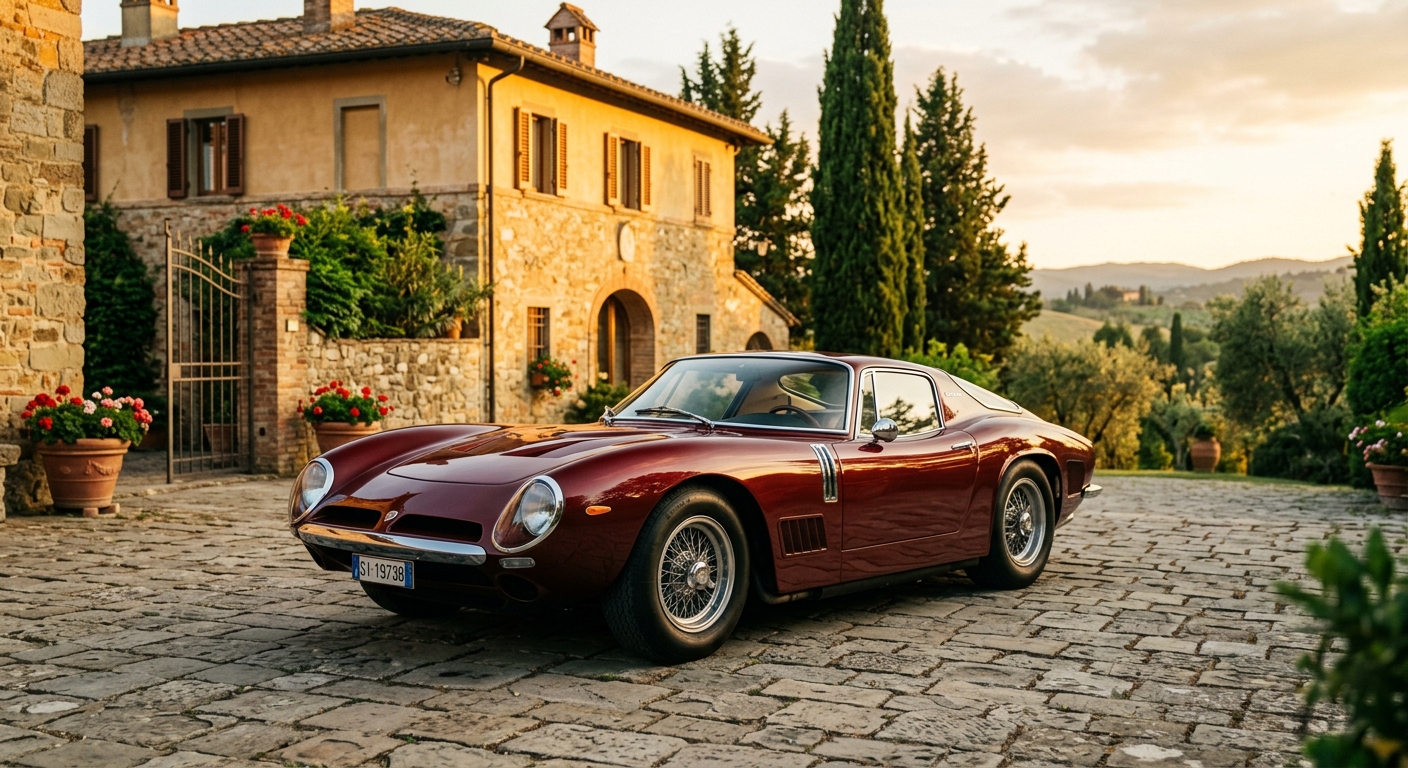
Visually, the Europa was unlike anything else on the road. Its profile was almost impossibly low, with a roofline that barely reached most people’s waists. The front end was dominated by a massive air intake, necessary to feed the hungry V8, while the rear featured distinctive vertical louvers that gave the car an almost spacecraft-like appearance.
Every line served a purpose. Bizzarrini had spent countless hours in wind tunnels, refining the body’s shape to minimize drag while maximizing cooling airflow. The result was a coefficient of drag that wouldn’t be matched by mainstream manufacturers for another decade, helping the Europa achieve a genuine 175 mph top speed at a time when such performance was reserved for the most exotic machinery.
The Final Chapter
Tragically, the 5300 GT Europa would prove to be Bizzarrini’s swan song. Financial pressures and the oil crisis of 1973 conspired to end production after fewer than two dozen examples were built. Today, these cars are among the most sought-after Italian classics, their rarity matched only by their exceptional engineering and timeless design.
The 1973 Bizzarrini 5300 GT Europa stands as automotive history’s greatest footnote, a machine that combined visionary engineering with tragic timing. Today, these rare survivors command serious money from collectors who understand that sometimes the most significant cars are those that dared to be different. This is Italian passion meeting American pragmatism, and the result is nothing short of magnificent.