In 1973, BMW shocked the automotive world by strapping a KKK turbocharger to their beloved 2002, creating Europe’s first production turbocharged car. The result was a machine so wild, so unpredictable, that it earned both reverence and fear in equal measure. This wasn’t just evolution, it was revolution wrapped in understated German engineering.
The Turbo Pioneer
When BMW decided to turbocharged the 2002, they weren’t just adding power to their compact sports sedan. They were pioneering technology that would define performance cars for decades. The 2002 Turbo arrived as a homologation special, built to qualify BMW’s racing efforts in European Touring Car Championship. Only 1,672 examples were produced between 1973 and 1974, making it one of the rarest BMWs ever built.
The engineering was groundbreaking but brutal. BMW fitted a KKK turbocharger to the proven 2.0-liter M10 four-cylinder engine, boosting output from 130 hp in naturally aspirated form to a formidable 170 hp. More importantly, torque jumped to 181 lb-ft, transforming the character of the lightweight 2002 platform completely.
Driving the Beast
Behind the wheel, the 2002 Turbo is an exercise in patience and precision. The turbo lag is legendary: press the throttle and count to two before the KKK turbocharger spools up and launches you forward with shocking violence. Modern drivers accustomed to instant throttle response will find this delay unsettling, but when the boost arrives, it’s addictive.
The transformation from docile city car to raging bull happens in milliseconds. One moment you’re cruising peacefully through traffic, the next you’re pinned to the seat as 170 horses suddenly wake up and demand attention. The engine note changes from a refined burble to an angry growl, punctuated by the distinctive whistle of the turbocharger working overtime.
Handling Dynamics
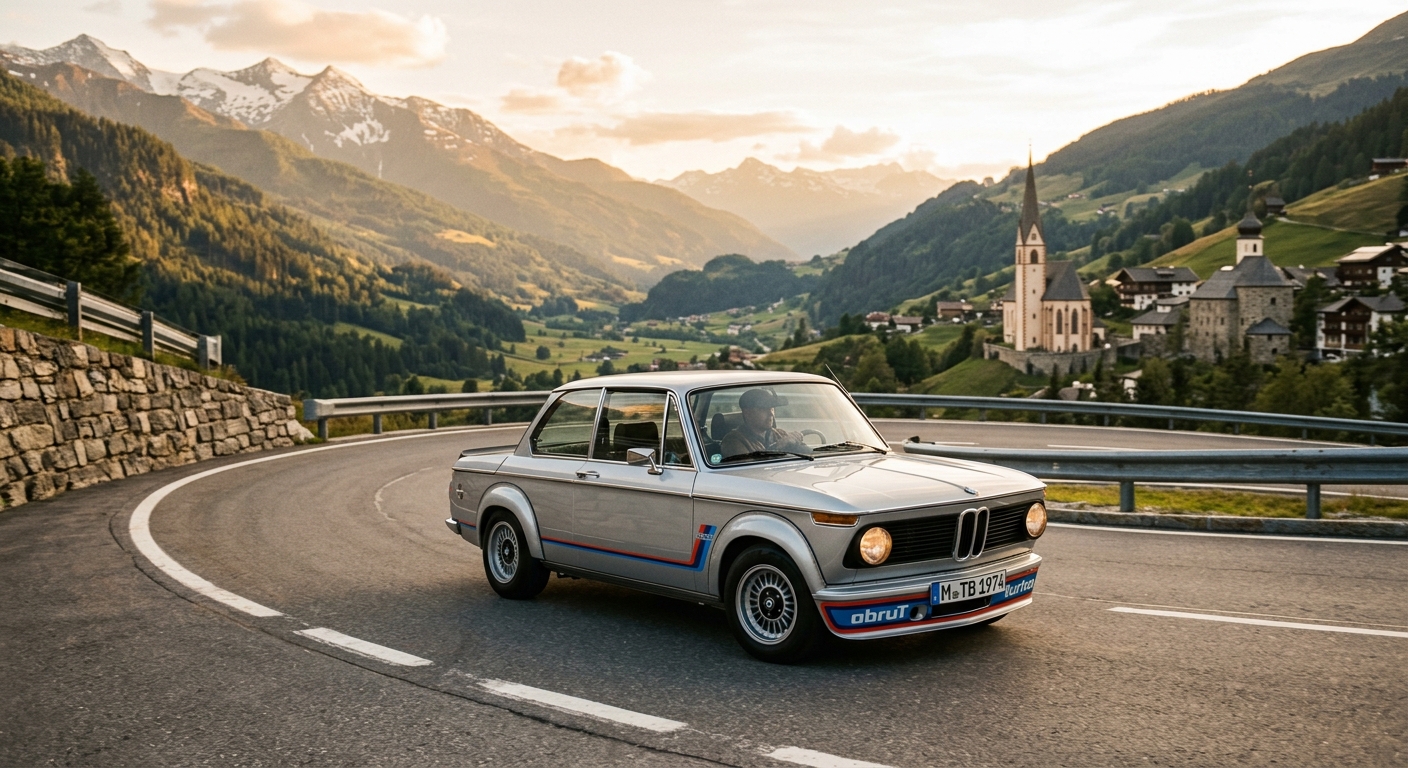
The chassis modifications were extensive. BMW widened the rear track, fitted flared wheel arches, and added a front air dam that became iconic. Bilstein shocks, stiffer springs, and wider wheels helped contain the additional power, but the 2002 Turbo remains a handful. The short wheelbase and sudden power delivery create a car that rewards smooth inputs and punishes ham-fisted driving.
In corners, the car feels alive in ways modern performance machines cannot match. There’s constant communication through the unassisted steering, and the suspension telegraphs every surface imperfection. It’s demanding, requiring full attention, but immensely rewarding for drivers willing to learn its language.
Historical Impact
The 2002 Turbo’s influence extended far beyond its brief production run. It established BMW’s reputation for innovative engineering and performance leadership. The lessons learned from this turbocharged experiment directly influenced the development of the original M1 supercar and laid groundwork for BMW’s M division, founded just years later.
Visually, the car was instantly recognizable. The reverse “TURBO” script on the front spoiler became legendary, designed to be read correctly in rival drivers’ rearview mirrors. Combined with the aggressive wheel arch flares and unique front air dam, the 2002 Turbo looked fast even when standing still.
The 1974 BMW 2002 Turbo remains one of automotive history’s most significant machines, a turbocharged terror that established BMW as a performance innovator. It’s demanding, unpredictable, and absolutely unforgettable. For collectors seeking authentic driving thrills wrapped in genuine historical importance, few classics deliver like Europe’s first turbo.