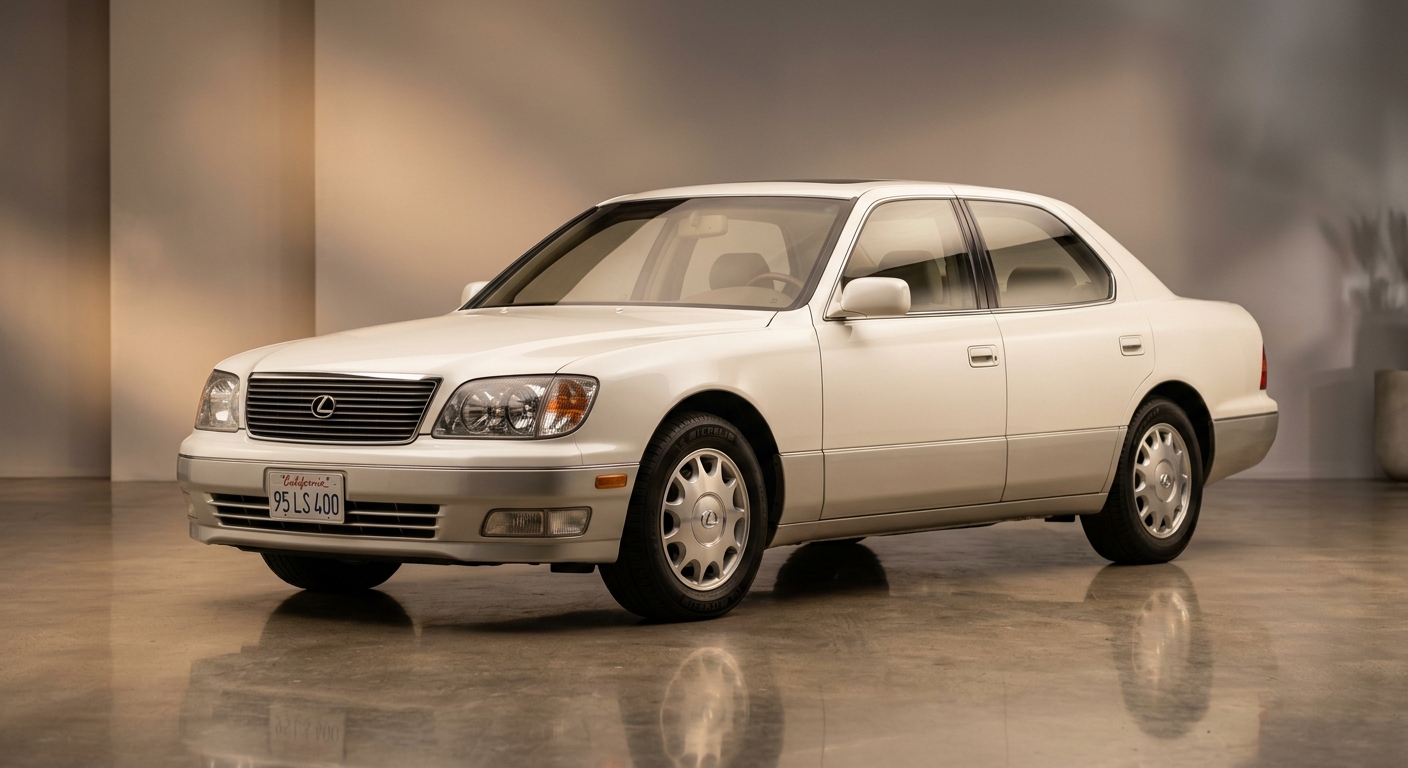
When Lexus launched the LS 400 in 1989, it didn’t just enter the luxury car market: it detonated a precision-guided missile right through the heart of Mercedes-Benz and BMW’s established order. By 1995, this third-generation refinement had evolved into something even more remarkable, a luxury sedan that delivered German-beating refinement with Japanese reliability that bordered on the supernatural.
The LS 400 represented Toyota’s most ambitious project ever, a no-compromise assault on the luxury market that took six years and over a billion dollars to develop. What emerged was a car so thoroughly engineered that it made established luxury marques look complacent, offering near-silence at highway speeds and build quality that redefined what buyers could expect from a premium sedan.
Engineering Excellence
At the heart of the LS 400 lies the 1UZ-FE, a 4.0-liter V8 that represents one of the finest engines ever built. This all-aluminum masterpiece produces 250 horsepower and 260 lb-ft of torque, but power figures tell only part of the story. The real magic lies in its refinement: this engine is so smooth that Lexus famously balanced rotating assemblies to tolerances that put Swiss watchmakers to shame.
The four-speed automatic transmission shifts with the subtlety of a master butler, never drawing attention to itself while managing power delivery with seamless precision. Combined with the engine’s linear power delivery, the LS 400 accelerates with a sense of inevitability rather than drama, reaching 60 mph in 8.5 seconds while maintaining library-level quietness.
Sanctuary on Wheels
Step inside the 1995 LS 400, and you enter a realm of hushed luxury that puts many modern cars to shame. The cabin represents peak 1990s opulence, with rich leather appointments, genuine wood trim, and an attention to detail that borders on obsessive. Every surface feels substantial, every control operates with precision-engineered tactility.
The seats offer sublime comfort for cross-country journeys, with power adjustments that seem to anticipate your needs. Climate control maintains perfect temperature without the intrusive fan noise that plagued contemporary German rivals. Even at highway speeds, conversation occurs in normal tones, thanks to extensive sound deadening and aerodynamic refinement that was revolutionary for its time.
The Driving Experience
The LS 400 doesn’t try to be a sports sedan; instead, it perfects the art of effortless luxury transportation. The suspension absorbs road imperfections with supernatural composure while maintaining precise body control. Steering is light but communicative enough for confident highway cruising, though it prioritizes comfort over ultimate feedback.
This is a car that excels at making long distances disappear. Highway cruising reveals the LS 400’s true character: a magic carpet that delivers you to your destination refreshed rather than fatigued. The drivetrain’s smoothness, combined with the cabin’s serenity, creates a driving experience that feels almost pharmaceutical in its ability to reduce stress.
Revolutionary Impact
By 1995, the LS 400 had already forced Mercedes and BMW to completely rethink their approach to luxury cars. Its combination of reliability, refinement, and value proposition devastated traditional luxury car sales and established Lexus as a permanent fixture in the premium market. The car’s legendary durability meant that high-mileage examples continued performing like new, further cementing its reputation.
The LS 400’s influence extended far beyond sales figures. It proved that luxury didn’t require European heritage, that reliability and refinement weren’t mutually exclusive, and that customers would reward engineering excellence over brand prestige when given a clear choice.
The 1995 Lexus LS 400 remains the ultimate demonstration of what happens when Japanese engineering precision meets luxury car ambition. Nearly three decades later, it still delivers the serene, effortless luxury experience that once humbled the entire German establishment. In a world of overly complex modern luxury sedans, the LS 400’s straightforward excellence feels almost revolutionary all over again.