After years of relying on aging platforms and limited production runs, Maserati needed a game changer. The 2014 Ghibli S Q4 represented exactly that: a return to the luxury sedan segment that built the brand’s reputation, wrapped in contemporary Italian style and powered by modern technology. This wasn’t just another pretty face from Modena; it was Maserati’s bold statement that they could compete with the German luxury establishment on both emotion and substance.
Design Philosophy
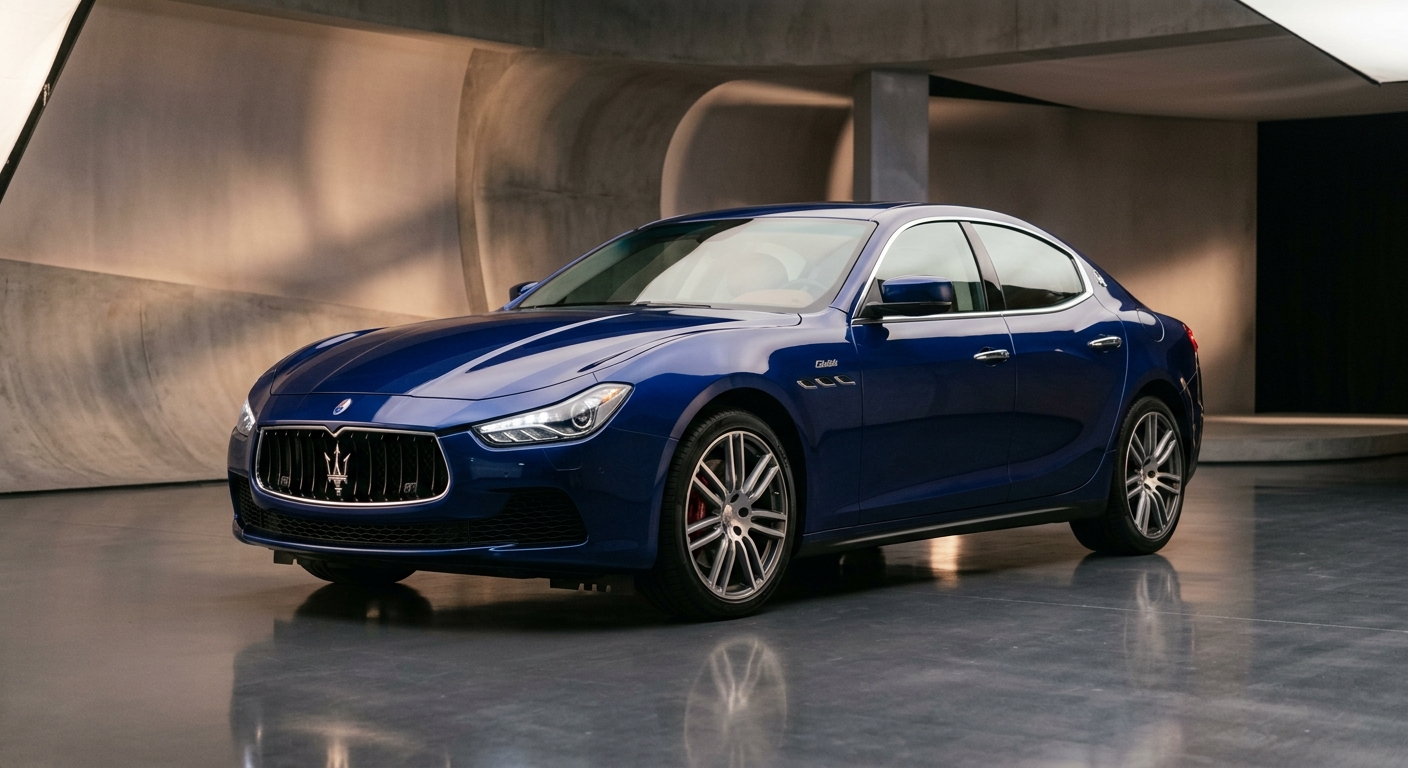
The Ghibli’s silhouette immediately announces its Italian heritage without resorting to the overwrought styling cues that sometimes plague luxury sedans trying too hard to stand out. Lorenzo Ramaciotti’s design team crafted something that looks fast even when parked, with a pronounced fastback roofline that gives the sedan an almost coupe-like profile. The signature Maserati grille dominates the front end, flanked by aggressive headlight clusters that seem to squint with predatory intent.
What strikes you most about the Ghibli is how it manages to look substantial without appearing bloated. The proportions are distinctly Italian: long hood, cab-rearward stance, and muscular rear haunches that hint at the all-wheel-drive system lurking beneath. Chrome accents are used sparingly, and the overall effect is one of understated elegance rather than flashy ostentation.
The Heart of the Matter
Under the Ghibli S Q4’s sculpted hood lies a 3.0-liter twin-turbocharged V6 that produces 404 horsepower and 406 lb-ft of torque. This isn’t the sonorous V8 symphony that Maserati enthusiasts might expect, but the Ferrari-derived engine delivers its own brand of excitement. The twin-turbo setup provides strong mid-range punch, with peak torque arriving at just 1,750 rpm and staying flat through 4,500 rpm.
The Q4 all-wheel-drive system represents a significant departure from Maserati’s traditional rear-drive focus, but it’s a necessary evolution for competing in markets where weather and traction matter. The system normally sends 100% of power to the rear wheels, only engaging the front axle when slip is detected. In practice, this means the Ghibli retains much of its rear-drive character while adding the security of all-weather capability.
Behind the Wheel
Fire up the Ghibli S Q4 and you’re immediately reminded that this is still very much a Maserati. The exhaust note, while not as theatrical as the brand’s V8 models, has a distinctive growl that sets it apart from the clinical efficiency of German competitors. The ZF eight-speed automatic transmission shifts smoothly in comfort mode but snaps off gear changes with authority when you select Sport mode.
On the road, the Ghibli strikes an impressive balance between comfort and engagement. The suspension setup, with double wishbones up front and a multi-link rear, delivers a ride quality that’s firm but not punishing. Body control is excellent, and the steering, while electrically assisted, provides genuine feedback about what’s happening at the front wheels. This is a sedan that encourages spirited driving rather than merely tolerating it.
The all-wheel-drive system proves its worth in challenging conditions, providing confidence-inspiring traction without dulling the car’s responses. In dry conditions, the Ghibli feels authentically rear-drive biased, with the kind of balanced handling that made Maserati’s reputation in the first place.
Interior Ambiance
Step inside the Ghibli and you’re greeted by an interior that successfully blends Italian flair with modern convenience. The seats, upholstered in supple leather, provide excellent support for both daily commuting and spirited driving. The dashboard design is elegant without being overwrought, dominated by a central touchscreen that controls most infotainment functions.
Material quality is generally impressive, though some critics noted that certain switchgear felt less substantial than what you’d find in comparable German sedans. The analog clock mounted prominently in the center stack is a nice touch that reinforces the car’s luxury positioning while nodding to Maserati’s racing heritage.
Technology Integration
The 2014 Ghibli was Maserati’s first serious attempt at integrating modern technology throughout the vehicle. The infotainment system, while not class-leading, provided essential connectivity features including Bluetooth, navigation, and smartphone integration. The Bowers & Wilkins premium audio system delivered exceptional sound quality, befitting a car with serious musical aspirations.
Safety features included adaptive cruise control, blind spot monitoring, and a full complement of airbags, bringing the Ghibli up to contemporary standards for executive sedan buyers who expected both luxury and security in their daily drivers.
Market Positioning
When the Ghibli S Q4 launched, it represented Maserati’s most accessible four-door offering, priced to compete directly with the BMW 5 Series, Mercedes E-Class, and Audi A6. This was a significant departure for a brand that had previously focused on low-volume, ultra-luxury offerings. The strategy paid off, with the Ghibli becoming one of Maserati’s best-selling models and introducing a new generation of buyers to the brand’s unique character.
The car’s combination of Italian style, genuine performance capability, and relative exclusivity struck a chord with buyers looking for something different from the Germanic efficiency that dominated the luxury sedan segment. While it may not have matched the clinical perfection of its German rivals in every measurable category, the Ghibli offered something they couldn’t: genuine emotional appeal.
The 2014 Maserati Ghibli S Q4 succeeded in its mission to bring Italian luxury within reach of a broader audience without sacrificing the brand’s essential character. While it may not match German rivals for outright refinement, it offers something increasingly rare in the luxury sedan segment: genuine soul. For buyers seeking distinction over perfection, the Ghibli remains a compelling choice that ages gracefully both visually and mechanically.