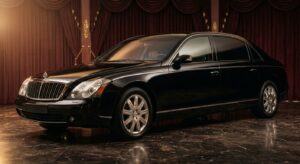
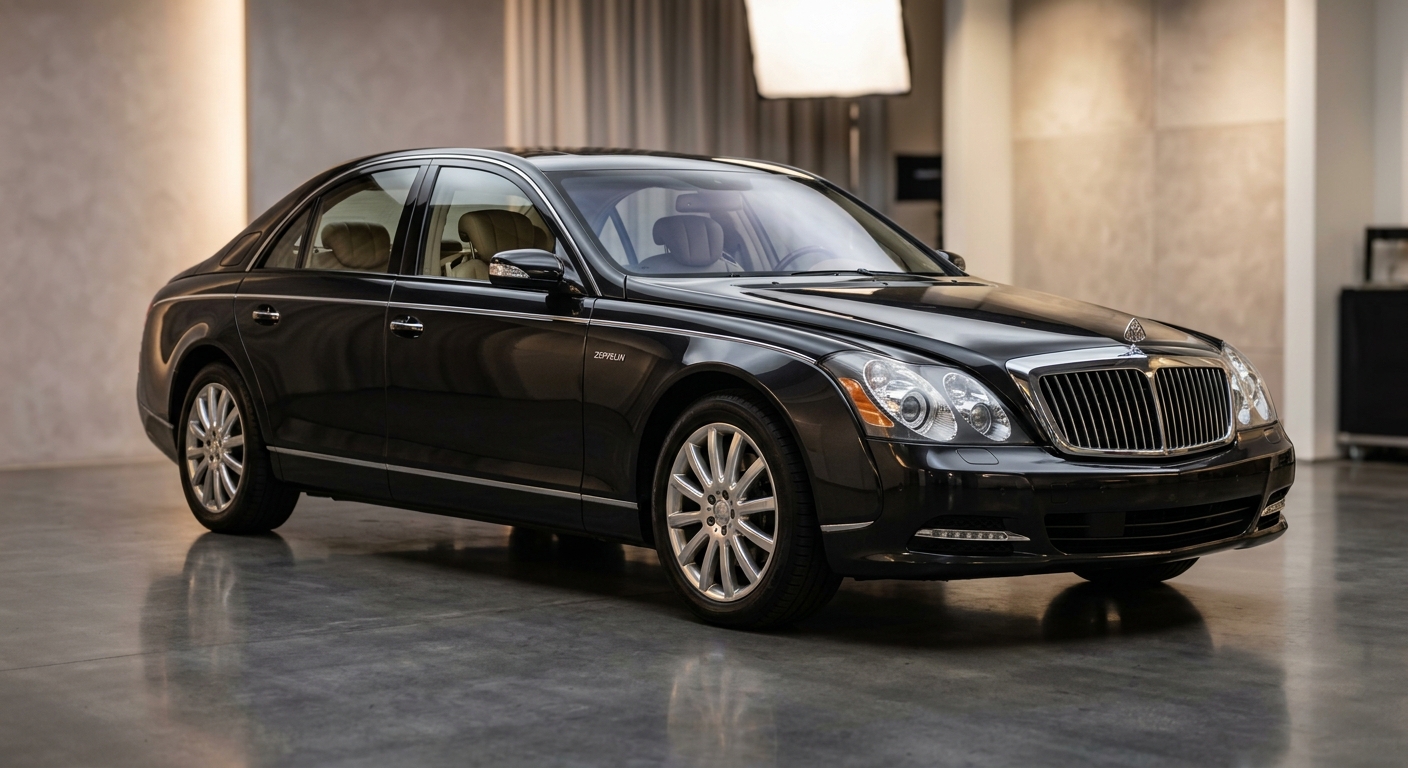
In the rarified atmosphere of ultra-luxury automobiles, few names commanded more reverence than Maybach during its brief renaissance in the 2000s. The 2008 Maybach 57 Zeppelin represented not just the pinnacle of the marque’s offerings, but a final statement of automotive aristocracy before the brand’s temporary demise.
A Legacy Reborn and Refined
Named after the iconic airships that once ruled the skies, the Zeppelin edition arrived as Maybach’s swan song, a limited production run that pushed every boundary of luxury and performance. With only 100 units planned worldwide, this wasn’t merely a car but a rolling monument to excess and engineering prowess.
The heart of the Zeppelin beat with a twin-turbocharged 6.0-liter V12 engine, producing a staggering 640 horsepower and 738 lb-ft of torque. This represented a significant leap from the standard 57’s already impressive 543 horsepower, achieved through increased boost pressure and revised engine mapping. The result was performance that seemed to defy the laws of physics for a vehicle weighing nearly 6,000 pounds.
Engineering Excellence Meets Artisanal Craft
Behind the wheel, the Zeppelin delivered an experience that transcended conventional automotive categories. The acceleration felt almost supernatural, with the massive V12 propelling this luxury liner from standstill to 60 mph in just 4.9 seconds. Yet it accomplished this feat with the serene composure expected of a vehicle wearing the three-pointed star’s most prestigious badge.
The cabin represented the absolute zenith of automotive luxury. Hand-stitched leather adorned every surface, while real wood veneers and chrome accents created an ambiance more reminiscent of a private jet than an automobile. Rear passengers enjoyed individual reclining seats with massage functions, folding tables, and a refrigerated champagne compartment. The attention to detail bordered on the obsessive, with each Zeppelin taking over 1,000 man-hours to complete.
Technology Ahead of Its Time
The Zeppelin showcased technology that wouldn’t become mainstream for another decade. The COMAND infotainment system controlled everything from climate zones to ambient lighting, while the Airmatic suspension system could adjust ride height and damping in real-time. Xenon headlights with active curve illumination provided unprecedented nighttime visibility, while the premium Bose sound system delivered concert-hall acoustics.
The Driving Experience
On the road, the 57 Zeppelin felt like a masterclass in automotive engineering. The air suspension absorbed road imperfections with ethereal grace, while the twin-turbo V12 delivered power with the smoothness of silk. Steering feel was deliberately light, prioritizing comfort over engagement, though the car’s substantial mass always reminded you of its presence.
Highway cruising revealed the Zeppelin’s true purpose. At triple-digit speeds, the cabin remained a sanctuary of calm, with wind noise virtually eliminated and engine vibrations banished through meticulous sound deadening. This was a vehicle designed for covering continents in supreme comfort rather than carving canyon roads.
The 2008 Maybach 57 Zeppelin stands as a remarkable testament to what happens when engineering excellence meets unlimited resources and uncompromising vision. While its astronomical price and thirsty V12 may have limited its appeal, those fortunate enough to experience one understand they’re not just driving a car, but participating in automotive history. In today’s market, finding a Zeppelin represents discovering automotive nobility in its purest, most unapologetic form.