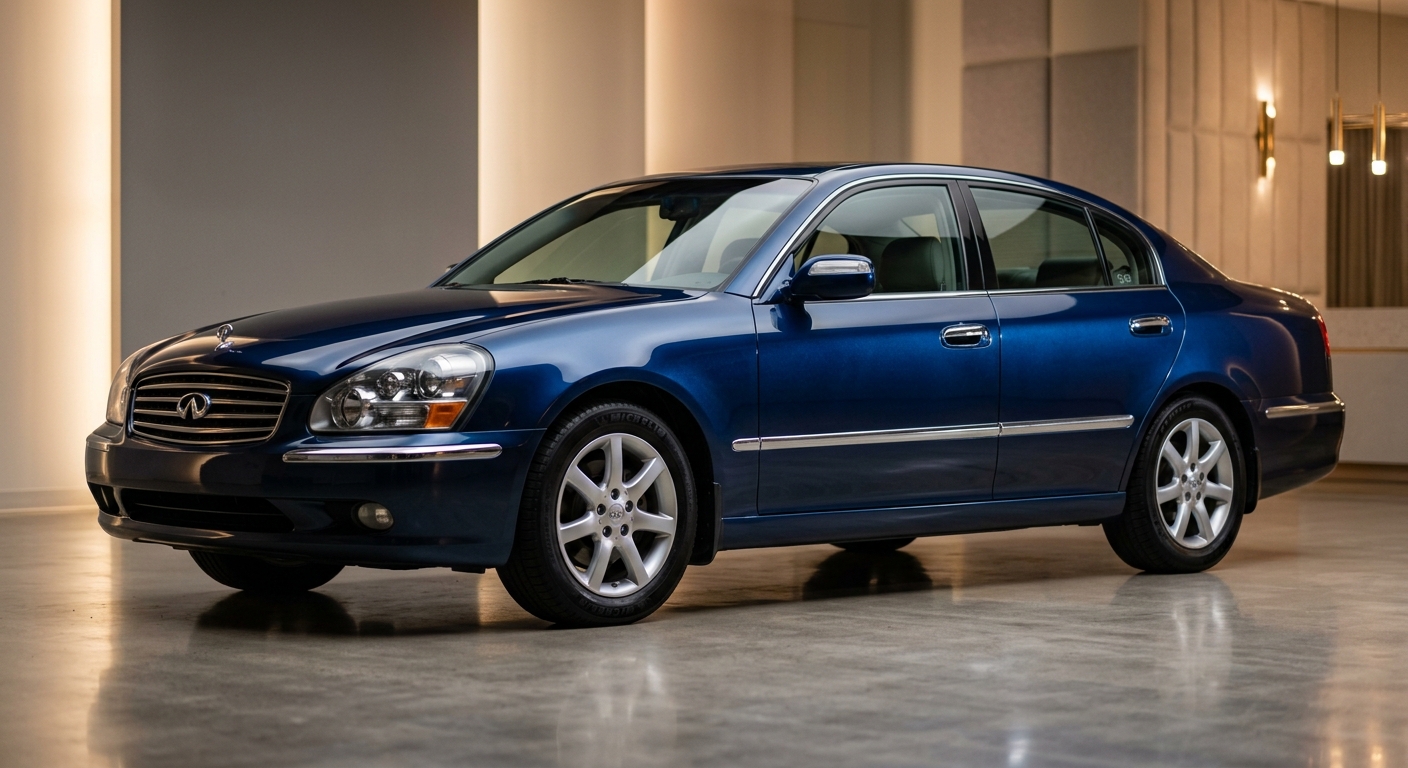
While BMW and Mercedes battled for luxury supremacy in the early 2000s, Infiniti’s Q45 quietly delivered flagship refinement with distinctly Japanese sensibilities. This third-generation sedan represented Nissan’s most ambitious attempt to crack the full-size luxury market, combining a sonorous V8 with thoughtful engineering and attention to detail that put German rivals to shame.
The 2003 Q45 arrived as a thoroughly modern interpretation of the luxury sedan formula, trading flashy styling for understated elegance and prioritizing substance over badge prestige. In a market increasingly dominated by European marques, it offered a compelling alternative for discerning buyers who valued quality over status.
The Heart of the Matter
At the core of the Q45 experience lies Nissan’s magnificent VK45DE V8, a 4.5-liter naturally aspirated masterpiece that produces 340 horsepower and 333 lb-ft of torque. This isn’t just about raw numbers, though the Q45 dispatches the 0-60 mph sprint in a respectable 6.2 seconds. It’s about the character of the power delivery, the smooth, linear surge that builds to a crescendo as the tachometer sweeps toward redline.
The engine note deserves special mention. Where German V8s often sound clinical and BMW’s units can be harsh, the VK45DE sings with a rich, cultured voice that’s simultaneously sophisticated and stirring. It’s an engine that encourages spirited driving while maintaining the composure expected of a flagship sedan.
Dynamics and Refinement
The Q45’s chassis strikes an impressive balance between comfort and control. The suspension, tuned specifically for the American market, absorbs road imperfections with aplomb while maintaining enough firmness to keep body roll in check during aggressive cornering. The steering, while not as communicative as a BMW 7 Series, provides adequate feedback and weights up nicely at speed.
What truly sets the Q45 apart is its refinement. Wind noise is virtually non-existent, road noise is expertly suppressed, and the V8’s vibrations are so well isolated that you’d swear the engine was mounted on silk. This is a car that makes 80 mph feel like 40, transforming long highway stretches into relaxing journeys rather than endurance tests.
Interior Excellence
Step inside the Q45 and you’re greeted by an environment that rivals anything from Stuttgart or Munich. The leather is supple and properly grained, the wood trim is genuine and beautifully finished, and the overall fit and finish demonstrates the Japanese obsession with quality that put the industry on notice in the 1990s.
The front seats offer excellent support for both spirited driving and long-distance comfort, with heating and cooling functions that work with impressive efficiency. The rear accommodations are equally impressive, with enough legroom for tall passengers and amenities that make the Q45 a credible choice for executive transport.
Technology and Features
For 2003, the Q45 came loaded with technology that was genuinely cutting-edge. The Bose audio system delivers concert-hall acoustics, the climate control system maintains perfect cabin temperature with minimal fuss, and the available navigation system, while primitive by today’s standards, was remarkably advanced for its time.
Safety equipment was comprehensive, including multiple airbags, stability control, and traction management systems that work transparently in the background. These weren’t just checkbox features but genuinely useful technologies that enhanced both safety and driving confidence.
Market Reality
The Q45’s greatest strength was also its greatest weakness in the marketplace. While enthusiasts appreciated its understated approach and exceptional build quality, luxury car buyers in 2003 were increasingly drawn to the prestige of German badges. The Q45 offered superior reliability and often better value, but it couldn’t overcome the perception gap that favored established European luxury marques.
This market dynamic means that today’s used Q45s represent exceptional value for buyers who prioritize substance over brand cachet. Well-maintained examples offer flagship luxury at a fraction of the cost of comparable German sedans, with the added benefit of Nissan’s reputation for long-term reliability.
The 2003 Infiniti Q45 represents everything right about Japanese luxury: meticulous attention to detail, exceptional build quality, and genuine value for money. While it may lack the badge prestige of German rivals, it delivers a flagship experience that’s both more reliable and more distinctive than the mainstream luxury alternatives.