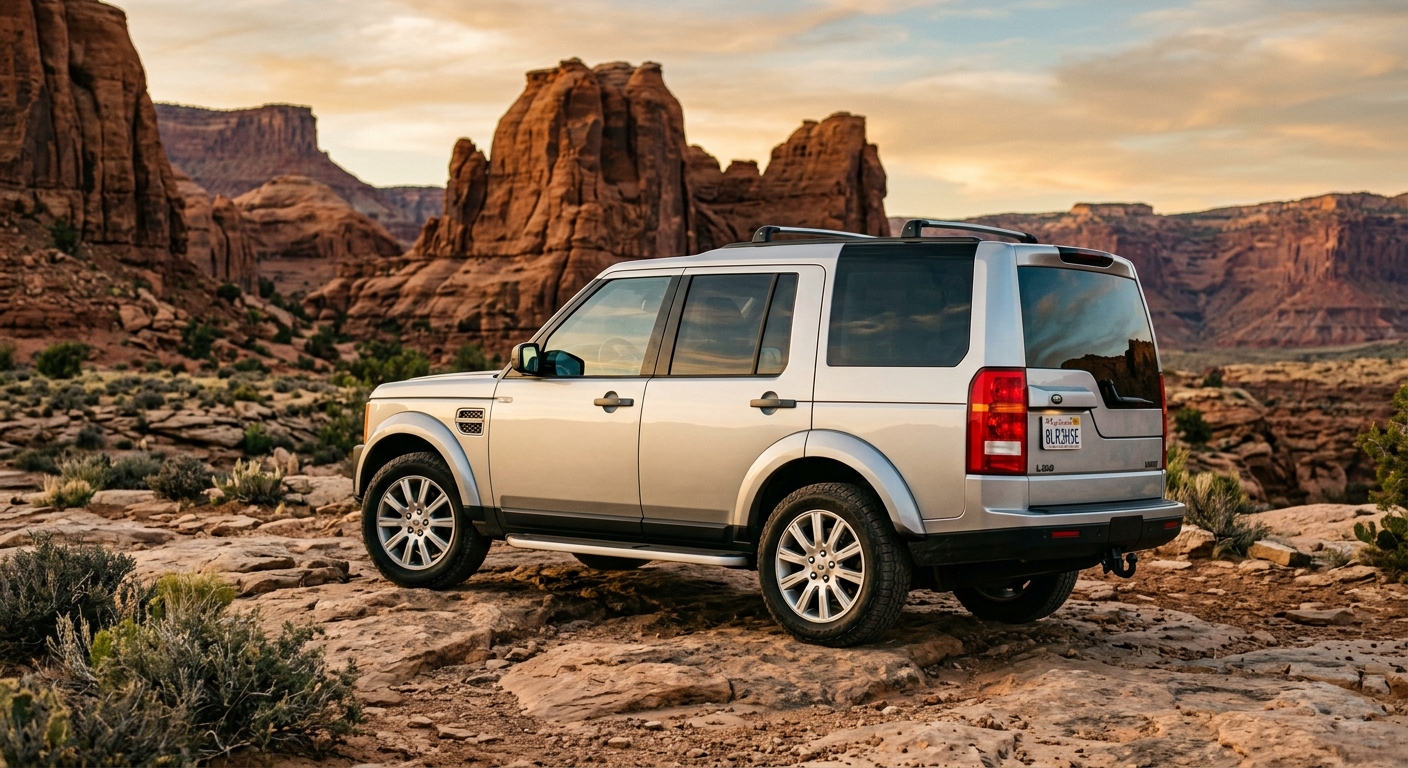
In an era when luxury SUVs were still finding their identity between boardroom and backwoods, the 2008 Land Rover LR3 HSE stood as a monument to British engineering philosophy: why choose between capability and comfort when you can excel at both? This wasn’t just another premium people mover, it was a vehicle that could ferry the kids to soccer practice on Tuesday and tackle the Rubicon Trail on Saturday.
The LR3 represented Land Rover’s bold departure from the utilitarian Defender heritage while maintaining the brand’s legendary off-road DNA. Built on the company’s integrated body-frame platform, it offered something increasingly rare in the mid-2000s SUV landscape: genuine, uncompromising capability wrapped in seven-seat luxury.
Command Performance
Behind the wheel, the LR3 HSE feels more like piloting a luxury yacht than driving a truck. The elevated seating position provides commanding views of the road ahead, while the cabin cocoons occupants in leather and wood trim that wouldn’t look out of place in a Jaguar sedan. The 4.4-liter Jaguar-sourced V8 delivers power with a refined growl, producing 300 horsepower that moves the LR3’s substantial mass with surprising urgency.
On-road manners are impressively civilized for such a capable off-roader. The sophisticated air suspension system automatically adjusts ride height based on driving conditions, lowering the vehicle at highway speeds for improved aerodynamics and fuel economy, then raising it when the terrain demands greater ground clearance. It’s technology that feels almost prescient, predicting what modern luxury SUVs would become.
Where Legends Are Born
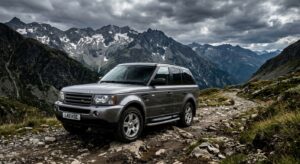
But the LR3’s true character emerges when the pavement ends. This is where decades of Land Rover engineering expertise shine brightest. The Terrain Response system, introduced on the LR3, was revolutionary for its time. Turn the rotary dial to match your environment and the vehicle’s entire personality transforms. Sand mode loosens the traction control and adjusts throttle response for dune climbing. Rock Crawl mode maximizes articulation and provides precise low-speed control that would shame many dedicated off-road vehicles.
The electronic air suspension provides nearly 11 inches of ground clearance in its highest setting, while the sophisticated traction management system can send power to whichever wheels have grip. Approach and departure angles are genuinely impressive, and the LR3 will wade through 27 inches of water without breaking stride. This isn’t marketing hyperbole, it’s engineering reality.
Family Hauler with Heritage
Inside, the LR3 accommodates seven adults in genuine comfort, a feat many modern three-row SUVs still struggle to achieve. The second-row seats slide and tilt for easy third-row access, while the cargo area swallows impressive amounts of gear. The interior design strikes a perfect balance between traditional British luxury and modern functionality, with tactile controls and logical ergonomics.
The infotainment system feels dated by today’s standards, but the essential functions are intuitive. Climate control is excellent, with separate zones for all three rows. The premium audio system delivers rich sound quality that enhances long-distance cruising comfort.
The Last of Its Kind
By 2008, the LR3 represented something of a crossroads for Land Rover. It maintained the brand’s uncompromising off-road capability while offering luxury and refinement that could compete with the best German alternatives. The build quality, while not perfect, showed significant improvement over earlier Land Rover products, and reliability had reached acceptable levels for the luxury segment.
What makes the LR3 HSE special today is its authenticity. This was built before every luxury SUV claimed off-road prowess, when Land Rover’s reputation was still earned in places where tow trucks couldn’t reach. It’s a vehicle that could genuinely handle anything you asked of it, from school runs to safari adventures.
The 2008 Land Rover LR3 HSE remains one of the most authentic luxury SUVs ever built, combining uncompromising off-road capability with seven-seat practicality and genuine British refinement. While fuel economy is laughable by today’s standards and some interior materials show their age, its character and capability are timeless. This is what luxury SUVs were meant to be before they all became minivans in disguise.