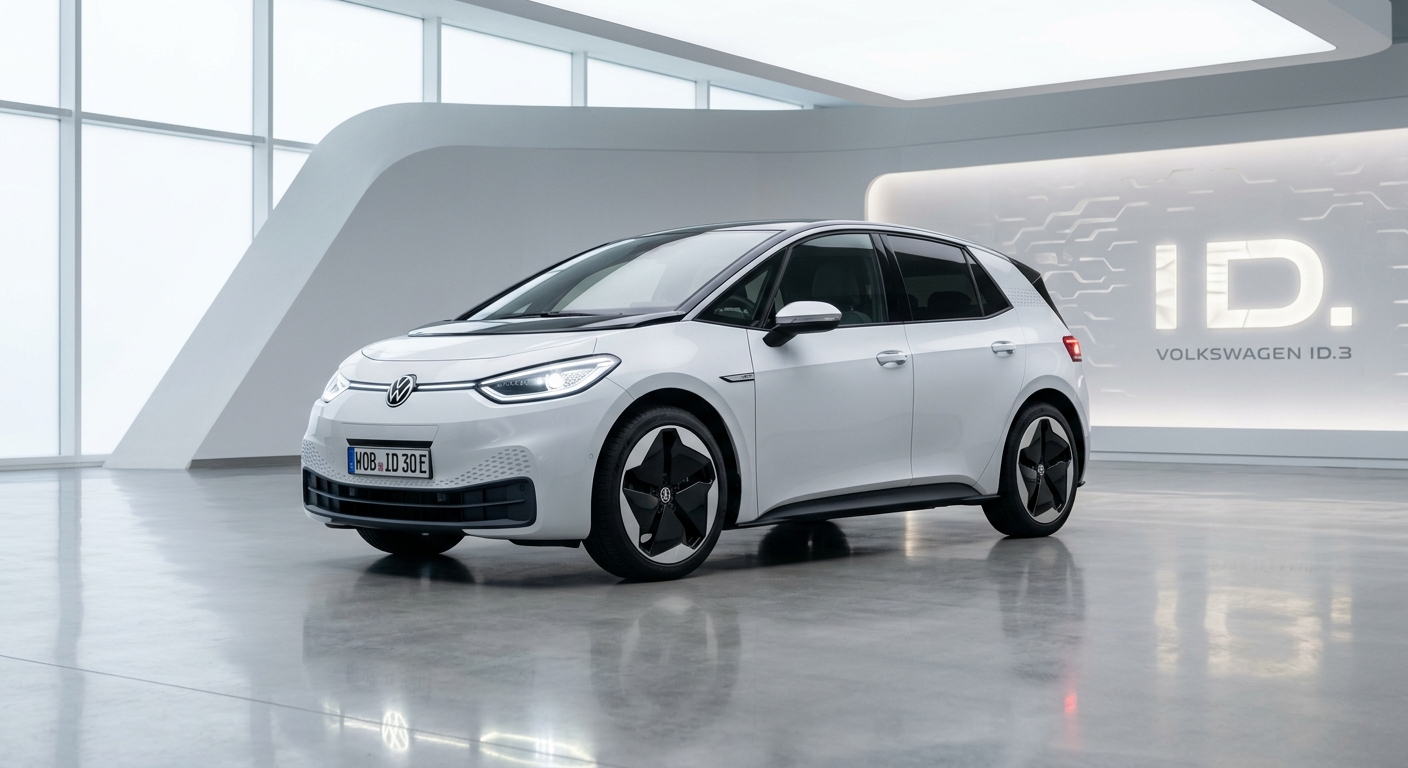
When Volkswagen launched the ID.3 in 2020, they weren’t just introducing another electric car: they were betting the company’s future on a complete reinvention. Built on VW’s dedicated MEB electric platform, the ID.3 represented the German giant’s most significant pivot since the original Beetle, promising to bring electric mobility to the masses with Golf-like practicality and cutting-edge technology. This wasn’t just an electrified version of an existing model, but a ground-up rethink of what a mainstream electric car should be.
The stakes couldn’t have been higher for Volkswagen, still reeling from the diesel emissions scandal and facing mounting pressure to electrify their lineup. The ID.3 had to prove that electric cars could be more than premium toys for early adopters, offering real-world usability, competitive pricing, and the build quality that European buyers expected from the world’s second-largest automaker.
Revolutionary Platform, Familiar Mission
The ID.3’s MEB platform represents one of the most significant investments in automotive history, with Volkswagen spending over €30 billion developing their electric architecture. Unlike converted internal combustion cars, the ID.3 was designed from the ground up as an electric vehicle, with the battery pack integrated into the floor structure and the rear-mounted motor freeing up interior space.
This purpose-built approach pays immediate dividends in packaging. Despite being shorter than a Golf, the ID.3 offers more interior room, particularly for rear passengers who benefit from the flat floor and absence of a transmission tunnel. The 385-liter trunk may not sound massive, but clever design maximizes usable space, and the additional storage areas throughout the cabin add practical value.
The exterior design strikes a balance between futuristic and approachable, with clean lines and aerodynamic efficiency taking priority over aggressive styling. The drag coefficient of just 0.267 Cd helps maximize range, while LED lighting front and rear gives the ID.3 a distinctive nighttime signature that clearly identifies it as part of VW’s electric future.
Electric Driving Experience
Behind the wheel, the ID.3 delivers on VW’s promise of making electric driving feel natural and intuitive. The rear-mounted motor produces 201 horsepower in the Pro Performance version, providing smooth, linear acceleration that feels more than adequate for daily driving. The 0-62 mph time of 7.3 seconds isn’t sports car territory, but it’s perfectly matched to the car’s character as an efficient, refined urban cruiser.
The low center of gravity, thanks to the floor-mounted battery, gives the ID.3 surprisingly engaging handling dynamics. The steering is well-weighted and accurate, while the suspension strikes an excellent balance between comfort and control. Body roll is minimal despite the comfortable ride quality, and the car feels planted and confident through corners.
Most impressively, VW has managed to make the ID.3 feel like a conventional car to drive, with none of the weird quirks or learning curves that plagued some early EVs. The regenerative braking is well-calibrated and can be adjusted through multiple levels, while the overall refinement is exactly what you’d expect from Volkswagen.
Range and Charging Reality
Real-world range testing reveals the ID.3’s practical strengths and limitations. The 58 kWh battery in the Pro version delivers a WLTP range of 426 kilometers, but like all EVs, real-world conditions significantly impact this figure. In mixed driving, expect around 300-350 kilometers of range, which drops to 250-280 kilometers in highway-heavy driving or winter conditions.
The 125 kW fast-charging capability means the ID.3 can add significant range quickly when connected to appropriate infrastructure. In ideal conditions, charging from 5-80% takes around 35 minutes, making longer journeys feasible with proper planning. However, the charging experience highlighted one of the ID.3’s early weaknesses: software reliability.
Launch models suffered from numerous software glitches that affected everything from charging performance to infotainment functionality. While many issues have been resolved through over-the-air updates, the problematic launch reminded everyone that even established automakers face steep learning curves when transitioning to electric, software-defined vehicles.
Interior Innovation and Frustration
The ID.3’s interior represents both VW’s vision for the future and some painful growing pains. The minimalist dashboard design eliminates most physical buttons in favor of touch controls and voice commands. When it works properly, the system feels futuristic and clean. When it doesn’t, simple tasks become frustrating exercises in menu navigation.
The 10-inch central touchscreen handles most vehicle functions, from climate control to drive settings. The graphics are crisp and the interface generally logical, but the lack of physical shortcuts for common functions like temperature adjustment can be annoying during driving. The optional augmented reality head-up display is genuinely impressive when it works correctly, overlaying navigation directions onto the real world with remarkable accuracy.
Material quality is generally good, with sustainable materials used throughout the cabin reflecting VW’s environmental commitments. The seats are comfortable and supportive, while build quality meets typical Volkswagen standards once you get past the software issues.
The ID.3 represents both Volkswagen’s electric ambitions and the growing pains of transformation. Despite early software troubles, it delivers on the core promise of making electric driving accessible, practical, and genuinely appealing to mainstream buyers. This is the electric Golf that Europe needed, even if it took a while to get there.