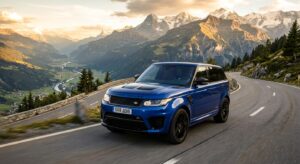
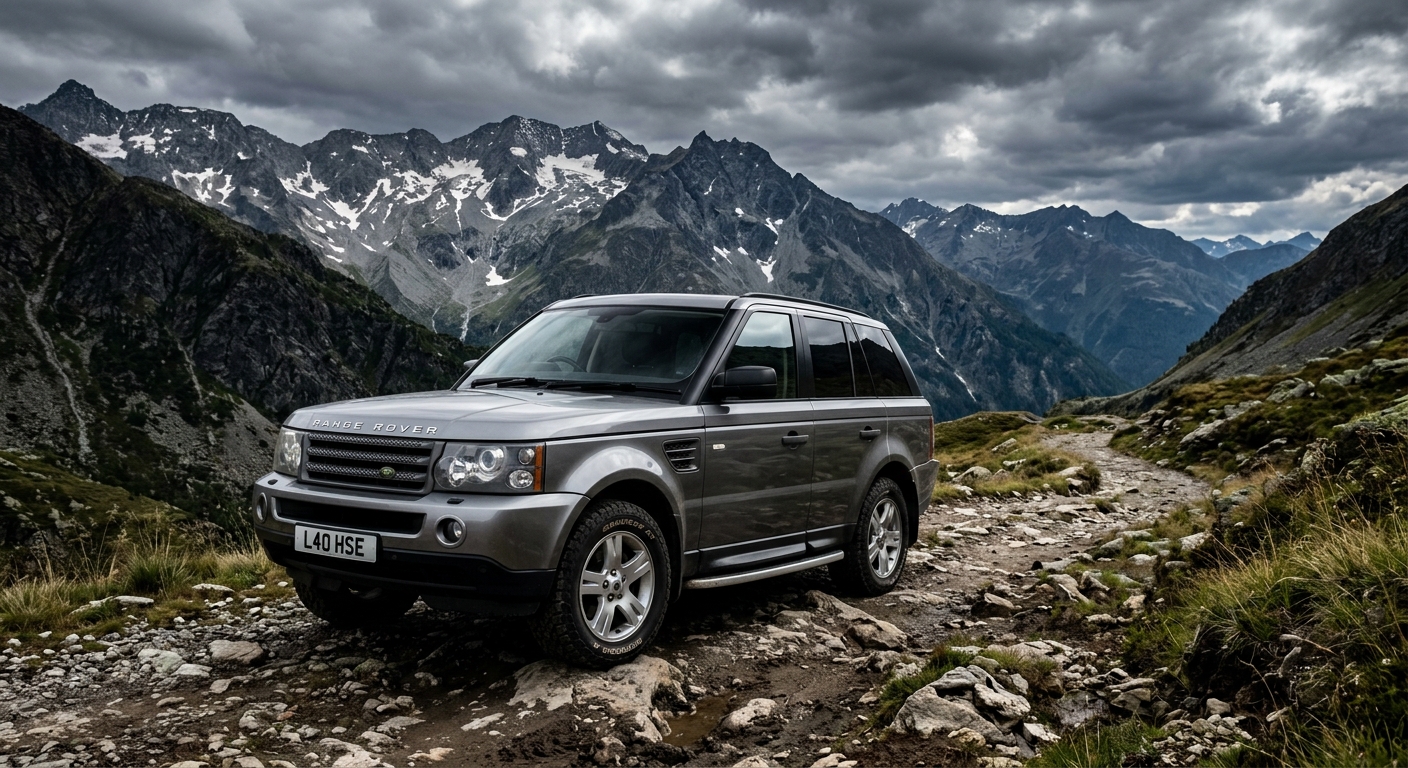
Before the Cayenne Turbo, before the X5 M, before every luxury brand felt compelled to build a sports SUV, there was the original Range Rover Sport. Land Rover’s 2005 gamble to create a more dynamic, road-focused version of their legendary off-roader didn’t just succeed, it created an entirely new category that every premium manufacturer would eventually chase.
Built on the shorter wheelbase of the Discovery 3 platform rather than the full-size Range Rover, the Sport represented a fundamental shift in philosophy for the Solihull brand. This wasn’t just about luxury anymore; it was about proving that a proper 4×4 could carve corners with genuine enthusiasm while still conquering the Rubicon Trail on weekends.
The Heart of a Beast
The HSE specification came armed with Land Rover’s naturally aspirated 4.4-liter V8, producing a respectable 300 horsepower and 315 lb-ft of torque. While modest by today’s supercharged standards, this Jaguar-derived unit provided smooth, linear power delivery that felt perfectly suited to the Sport’s character. The engine note was unmistakably British, with a cultured growl that never descended into vulgarity.
Mated to a six-speed automatic transmission and full-time four-wheel drive with a two-speed transfer case, the drivetrain was engineered for versatility rather than outright performance. The 0-60 mph sprint took a measured 8.1 seconds, but the Sport’s appeal was never about straight-line speed. It was about being equally composed whether navigating London traffic or tackling the Welsh countryside.
Revolutionary Dynamics
What set the original Range Rover Sport apart was its electronic air suspension system, which could drop the vehicle by 50mm at speed for better aerodynamics and handling, then raise it by 70mm for serious off-road work. The Dynamic Response system, Land Rover’s first foray into active anti-roll bars, helped keep body roll in check during aggressive cornering.
The steering was remarkably precise for such a tall vehicle, and the chassis tuning struck an impressive balance between comfort and control. Yes, it still felt like driving a two-ton SUV, but it was a two-ton SUV that actually seemed to enjoy being driven quickly. The brake pedal offered good feel and stopping power, essential given the vehicle’s substantial mass.
Luxury Meets Capability
Inside, the Sport maintained Range Rover’s tradition of combining rugged capability with genuine luxury. The HSE trim featured Oxford leather seats, real wood veneers, and the brand’s signature command driving position. The interior felt special in a way that the contemporary BMW X5 or Mercedes ML-Class couldn’t quite match, with materials and build quality that justified the premium pricing.
The rear seats were comfortable for two adults, though the sloping roofline compromised headroom compared to the full-size Range Rover. Cargo space was generous, and the split tailgate design remained both practical and distinctively British. Climate control was effective, and the Harman Kardon audio system delivered impressive sound quality.
Off-Road Credentials
Despite its sporting pretensions, the Range Rover Sport never forgot its heritage. With nearly 11 inches of ground clearance in its highest setting, approach and departure angles of 31 and 29 degrees respectively, and a wading depth of 700mm, it remained a genuinely capable off-roader. The Terrain Response system, though still in its early iteration, provided optimized settings for different surfaces and conditions.
Rock crawling revealed the Sport’s sophisticated traction control and differential systems working seamlessly to maintain forward progress. The air suspension’s ability to articulate individual wheels while maintaining body control was genuinely impressive, proving that luxury and capability weren’t mutually exclusive.
Nearly two decades later, the original Range Rover Sport’s influence on the luxury SUV segment cannot be overstated. It proved that buyers wanted their premium SUVs to handle like sports cars without sacrificing capability, creating a template that everyone from Porsche to Lamborghini would eventually follow. For enthusiasts seeking that perfect blend of luxury, performance, and genuine off-road ability, few vehicles deliver the complete package quite like this pioneering Sport.