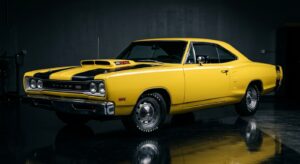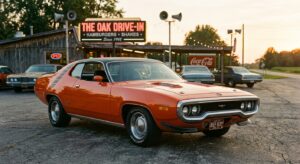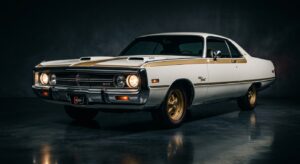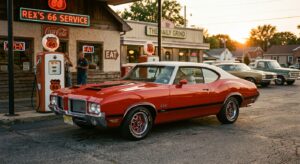
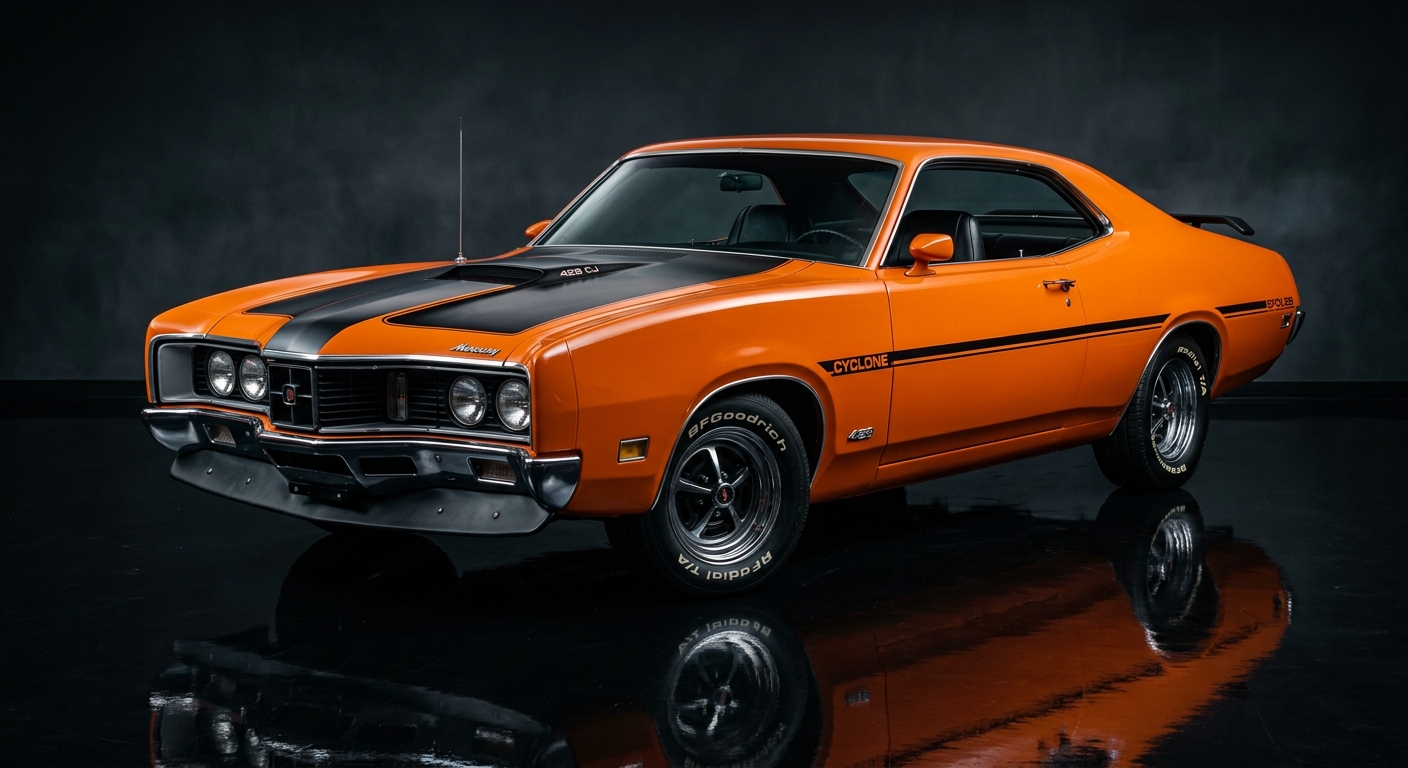
While Plymouth and Dodge dominated the headlines with their winged warriors, Mercury was quietly building its own aerodynamic monster. The 1970 Mercury Cyclone Spoiler 429 represented Ford’s intermediate division’s most serious attempt at combining NASCAR-bred aerodynamics with street-legal muscle car performance.
Born from Racing DNA
The Cyclone Spoiler wasn’t just another muscle car with a big engine and flashy graphics. Mercury developed this machine specifically to homologate aerodynamic improvements for NASCAR competition, where the brand was locked in fierce battle with Chrysler’s winged cars and GM’s slippery intermediates.
The most distinctive feature was the extended nose cone, which added several inches to the car’s length while smoothing airflow over the front wheels. Combined with the functional rear spoiler, these modifications reduced drag and increased high-speed stability. On the street, they gave the Cyclone an unmistakably purposeful appearance that set it apart from conventional muscle cars.
Thunder Valley Power
Under the hood, Mercury installed Ford’s legendary 429 Cobra Jet engine, a powerhouse that delivered 370 horsepower and 450 lb-ft of torque. This wasn’t the same 429 that would later appear in pickup trucks, this was a high-performance variant with specific camshaft timing, carburetion, and compression designed for maximum output.
The engine’s character matched the car’s racing pedigree. Rather than the explosive, short-lived power of some muscle cars, the 429 delivered sustained thrust across a broad powerband. It pulled strongly from idle and kept pulling well past the point where smaller engines would start gasping for air.
Track-Bred Handling
Mercury didn’t stop with straight-line performance. The Cyclone Spoiler received suspension tuning that prioritized high-speed stability over ride comfort. The result was a muscle car that could actually handle curves with confidence, a rarity in an era when most manufacturers focused solely on drag strip performance.
The steering was precise by 1970 standards, with good feedback from the road surface. Body roll was well-controlled, and the car felt planted even when pushed hard through sweeping corners. This composure came at the cost of some ride quality, but buyers who understood the car’s mission weren’t likely to complain.
Distinctive Styling
Beyond the aerodynamic modifications, the Cyclone Spoiler featured unique styling touches that emphasized its performance intent. The interior combined sporty bucket seats with functional instrumentation, while exterior graphics packages announced the car’s capabilities to anyone paying attention.
The build quality was typical of the era, meaning solid mechanicals wrapped in bodywork that showed the cost-cutting pressures facing American manufacturers. Chrome and trim pieces were generally well-executed, though some interior plastics felt cheap compared to what luxury car buyers expected.
The Mercury Cyclone Spoiler 429 stands as proof that Ford’s intermediate division could build serious performance machines when properly motivated. Its combination of NASCAR-derived aerodynamics, thunderous 429 power, and surprisingly capable handling makes it one of the most undervalued muscle cars of the classic era. While its Mopar winged competitors get most of the attention, the Cyclone Spoiler delivers equal thrills at a fraction of the price.