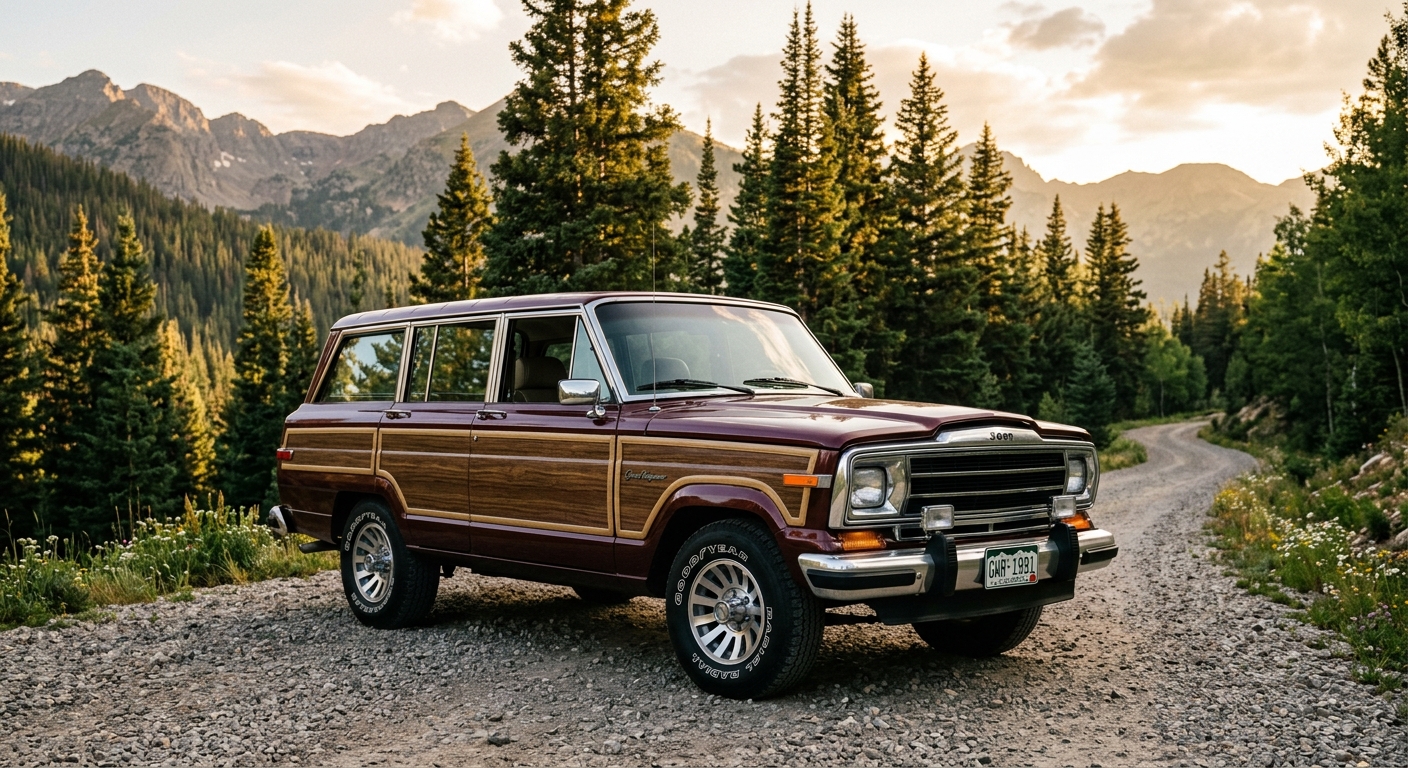
In 1991, Jeep put the final nail in the coffin of a distinctly American automotive tradition. The Grand Wagoneer, with its real wood paneling and unapologetically luxurious appointments, represented the last of its kind: a full-size SUV that prioritized comfort and status over ruggedness. As the automotive world rushed toward aerodynamic efficiency and cost-cutting measures, the Grand Wagoneer stood defiantly unchanged, a rolling testament to a bygone era of American excess.
The End of an Era
By 1991, the Grand Wagoneer had been in production for nearly three decades with minimal changes to its basic formula. While other manufacturers were designing sleeker, more fuel-efficient SUVs, Jeep kept building what was essentially a 1960s design with 1980s luxury appointments. The result was a vehicle that felt wonderfully anachronistic, like discovering a perfectly preserved piece of Americana in your neighbor’s garage.
The Grand Wagoneer’s defining characteristic was its genuine Di-Noc wood grain paneling, applied by hand at the factory. This wasn’t the vinyl applique found on lesser vehicles; this was real wood veneer that required regular maintenance and gave each vehicle a unique character. Combined with the Wagoneer’s upright, no-nonsense proportions, the wood paneling created an unmistakably American aesthetic that commanded respect at country clubs and ski lodges across the nation.
Luxurious Simplicity
Inside, the Grand Wagoneer offered a level of luxury that was impressive for its time. Leather-appointed seating surfaces, woodgrain dashboard trim, and a comprehensive array of power accessories created an environment that felt more like a luxury sedan than a truck-based SUV. The driving position was commanding, with excellent visibility in all directions thanks to the vehicle’s upright greenhouse and minimal blind spots.
The 360-cubic-inch V8 engine provided smooth, torquey power delivery that perfectly matched the vehicle’s leisurely character. While not particularly quick by modern standards, the engine offered the kind of effortless acceleration that made highway cruising a pleasure. The four-wheel-drive system, when equipped, was robust and reliable, though most Grand Wagoneers spent their lives on pavement rather than trails.
Cultural Impact and Legacy
The Grand Wagoneer occupied a unique position in American automotive culture. It was the vehicle of choice for affluent families who wanted something more substantial than a station wagon but weren’t ready to embrace the emerging minivan trend. Hollywood executives, East Coast old money, and anyone who valued tradition over trends gravitated toward the Grand Wagoneer’s timeless appeal.
What made the Grand Wagoneer special was its refusal to change with the times. While competitors added plastic cladding, aerodynamic flourishes, and cost-cutting measures, the Wagoneer remained stubbornly authentic. This consistency came at a cost in terms of fuel economy and dynamic performance, but it created a vehicle with unmatched character and presence.
The Driving Experience
Behind the wheel, the 1991 Grand Wagoneer delivered exactly what you’d expect from a luxury truck of its era. The steering was light and somewhat vague, the suspension prioritized comfort over handling precision, and the brakes required planning ahead. But these characteristics weren’t flaws; they were features that contributed to the vehicle’s relaxed, unhurried personality.
The Grand Wagoneer rewarded drivers who appreciated its deliberate pace and commanding presence. On long highway trips, few vehicles could match its combination of comfort, quietness, and effortless cruising ability. The high seating position and excellent visibility made city driving surprisingly manageable despite the vehicle’s substantial dimensions.
The 1991 Grand Wagoneer represents the end of an automotive era, when luxury SUVs prioritized presence and character over efficiency and profit margins. Today’s classics command strong values because they offer something irreplaceable: authentic American luxury that can’t be replicated in our modern world of cost-optimization and focus groups.