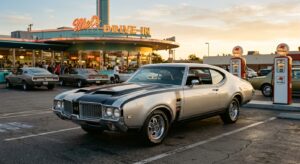
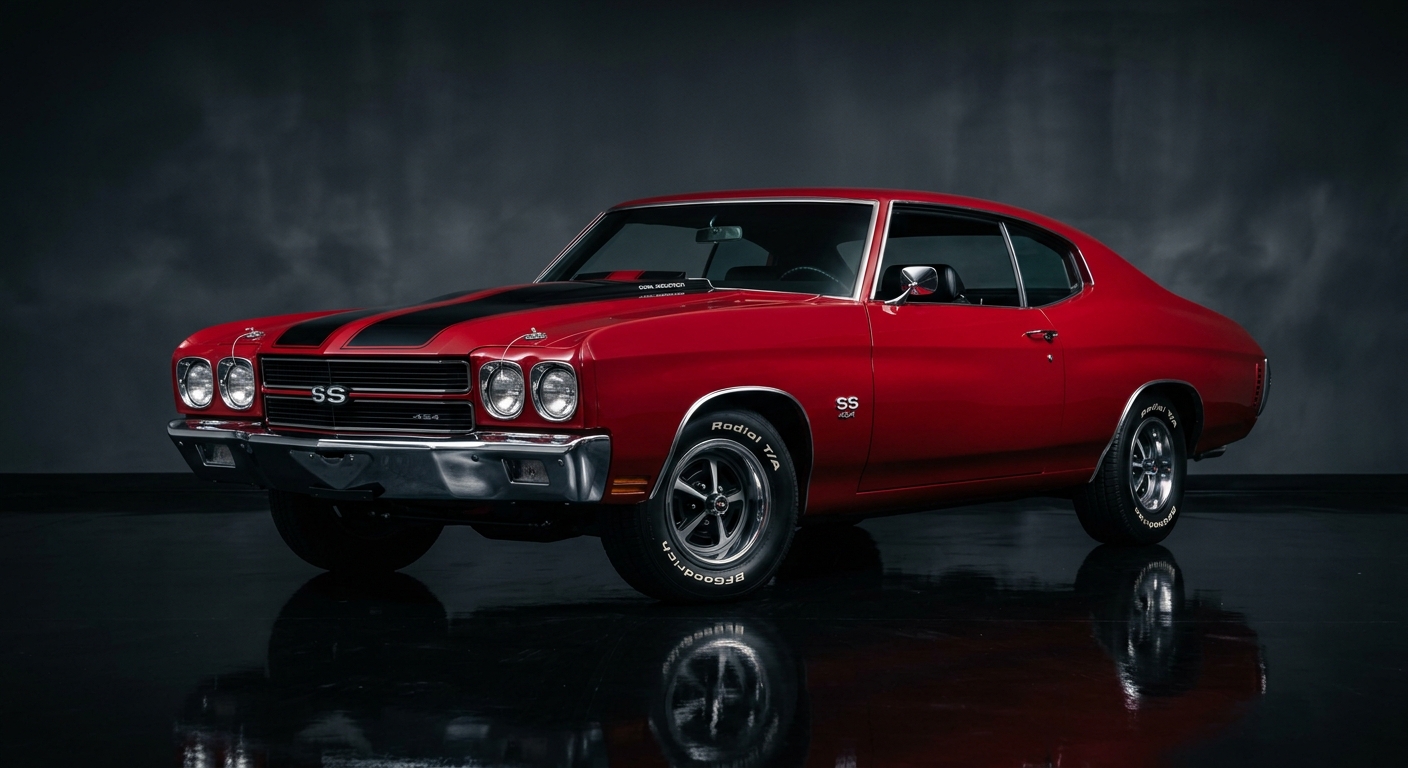
In 1970, General Motors threw the gentleman’s agreement out the window and built what many consider the most ferocious factory muscle car ever to roll off an assembly line. The Chevelle SS 454 LS6 didn’t just bend the rules of the horsepower wars, it obliterated them with 450 actual horsepower and 500 lb-ft of torque that could launch this orange-peel textured missile into automotive legend.
The LS6: When GM Stopped Playing Nice
The LS6 big block was GM’s nuclear option in the muscle car arms race. While other manufacturers were content with their 440s and 428s, Chevrolet’s engineers crafted a 454 cubic inch monster that featured solid lifters, an aggressive camshaft, four-bolt main caps, and breathing through a massive Holley carburetor. This wasn’t just another big block, it was a barely civilized race engine that somehow passed emissions and found its way into showroom cars.
The numbers were staggering for 1970. That 450 horsepower rating was conservative, with many experts believing the actual output exceeded 500 horses. Torque peaked at a tire-shredding 500 lb-ft at just 3,600 rpm, meaning this beast pulled like a freight train from idle. Contemporary road tests saw quarter-mile times in the low 13s with trap speeds exceeding 105 mph, making it one of the quickest production cars of its era.
Driving the Beast
Behind the wheel of an LS6 Chevelle, subtlety goes out the window immediately. The engine idles with a lumpy, aggressive cam that announces its intentions to everyone within a three-block radius. The solid lifters create a distinctive mechanical clatter that sounds like controlled violence about to be unleashed.
Plant your right foot and the LS6 transforms the Chevelle from cruiser to predator. The massive torque curve means effortless acceleration in any gear, while the four-speed Muncie transmission provides crisp, mechanical shifts that perfectly complement the engine’s character. This isn’t smooth, refined power delivery, it’s raw, unfiltered American muscle that pins you to the seat and scrambles your brain.
The chassis, while competent for its time, was clearly designed around straight-line performance. The heavy big block creates pronounced understeer in corners, and the live rear axle can get unsettled over bumps. But point it straight and let the LS6 breathe, and few cars from any era can match its savage acceleration.
Peak Muscle Car Era
The 1970 model year represented the absolute pinnacle of the original muscle car era. Emissions regulations were still loose, insurance companies hadn’t yet targeted performance cars, and manufacturers were in an all-out horsepower war. The LS6 Chevelle arrived at this perfect storm and delivered performance that wouldn’t be matched by GM for decades.
Only 4,475 LS6 Chevelles were built in 1970, making it one of the rarest and most desirable muscle cars ever produced. The $263 LS6 option was expensive, but it transformed the already potent SS 454 into something approaching a street-legal race car. Today, genuine LS6 cars command astronomical prices, with pristine examples reaching well into six figures.
The 1970 Chevelle SS 454 LS6 stands as the undisputed king of factory muscle cars, a machine so brutal and uncompromising that its like was never seen again. In an era when 300 horsepower was impressive, Chevrolet built a street car with 450 honest horses and the attitude to match. This wasn’t just transportation, it was automotive rebellion in steel and chrome form.