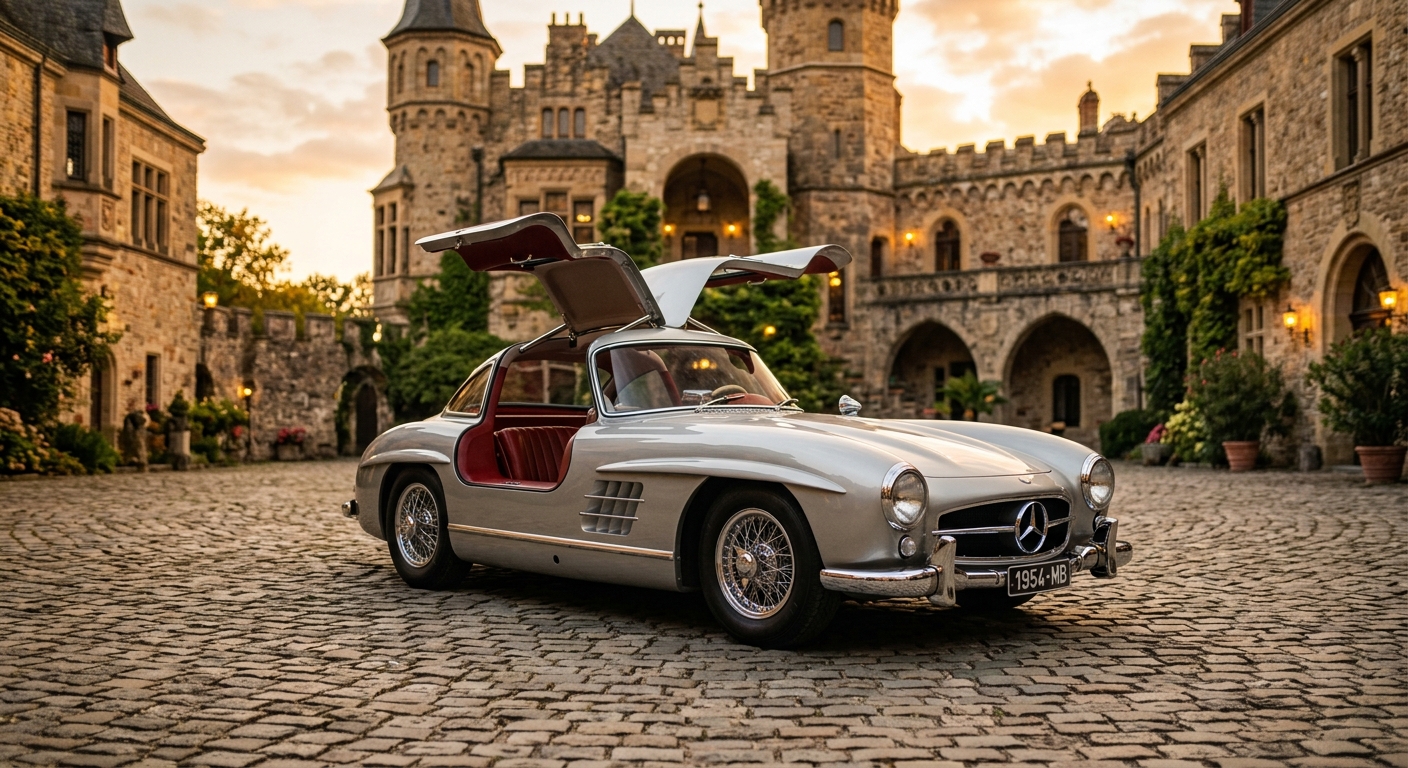
Long before the term ‘supercar’ entered automotive vocabulary, Mercedes-Benz created the blueprint with a machine so advanced it seemed to have arrived from the future. The 300SL Gullwing didn’t just push boundaries in 1954, it obliterated them with a combination of racing-bred engineering and otherworldly beauty that remains unmatched seven decades later.
Racing DNA in Road Clothes
The 300SL’s genesis lies in competition, born from the legendary W194 race car that dominated endurance racing in the early 1950s. When American importer Max Hoffman convinced Mercedes to build a road-going version, the engineers faced a unique challenge: the race car’s intricate spaceframe chassis made conventional doors impossible. Their solution became the car’s defining feature, those magnificent upward-opening doors that earned it the ‘Gullwing’ moniker.
Beneath that stunning exterior lay revolutionary technology. The 3.0-liter inline-six engine featured the world’s first production fuel injection system, developed by Bosch. This cutting-edge technology helped the naturally aspirated unit produce 215 horsepower, a staggering figure for the era that propelled the 300SL to a top speed of 161 mph, making it the fastest production car of its time.
Engineering Marvel
The 300SL’s advanced engineering extended far beyond its powerplant. The sophisticated spaceframe chassis, constructed from small-diameter steel tubes, provided exceptional rigidity while keeping weight in check. Independent suspension at all four corners, featuring swing axles at the rear and wishbones up front, delivered handling characteristics that embarrassed contemporary sports cars.
The fuel injection system represented a quantum leap in engine technology. Unlike the crude carburetor setups of the day, the Bosch mechanical injection delivered precise fuel metering, improving both power output and reliability. This system would later influence fuel injection development across the entire automotive industry.
Design That Defined an Era
Styled by Friedrich Geiger, the 300SL’s bodywork remains one of automotive history’s most beautiful creations. The long hood, distinctive grille, and flowing fenderlines create proportions that appear perfect from every angle. Those iconic gullwing doors weren’t just functional necessities, they became the car’s signature, transforming the simple act of entry into theater.
Inside, the 300SL combined luxury with purposeful design. The dashboard featured a full complement of gauges, the steering wheel tilted for easier entry through those unique doors, and the interior materials reflected Mercedes’ commitment to craftsmanship. Every detail spoke of quality and attention to detail that justified the car’s significant price premium.
Driving the Legend
Behind the wheel, the 300SL delivers an experience unlike any other classic car. The fuel-injected engine provides smooth, linear power delivery with a distinctive intake howl that builds to a crescendo at high rpm. The four-speed manual transmission, while requiring deliberate inputs, connects the driver intimately to the mechanical symphony.
The handling, though requiring respect for the swing-axle rear suspension’s quirks, offers remarkable precision for its era. The steering provides excellent feedback, and the brakes, while requiring planning, deliver adequate stopping power. This isn’t just a museum piece, it’s a machine that can still thrill on the right road.
The 300SL Gullwing represents automotive perfection frozen in time, a machine that combined groundbreaking technology with timeless beauty in ways that still inspire wonder today. Its astronomical current values reflect not just rarity, but recognition of its status as the original supercar that established the template every exotic car still follows.