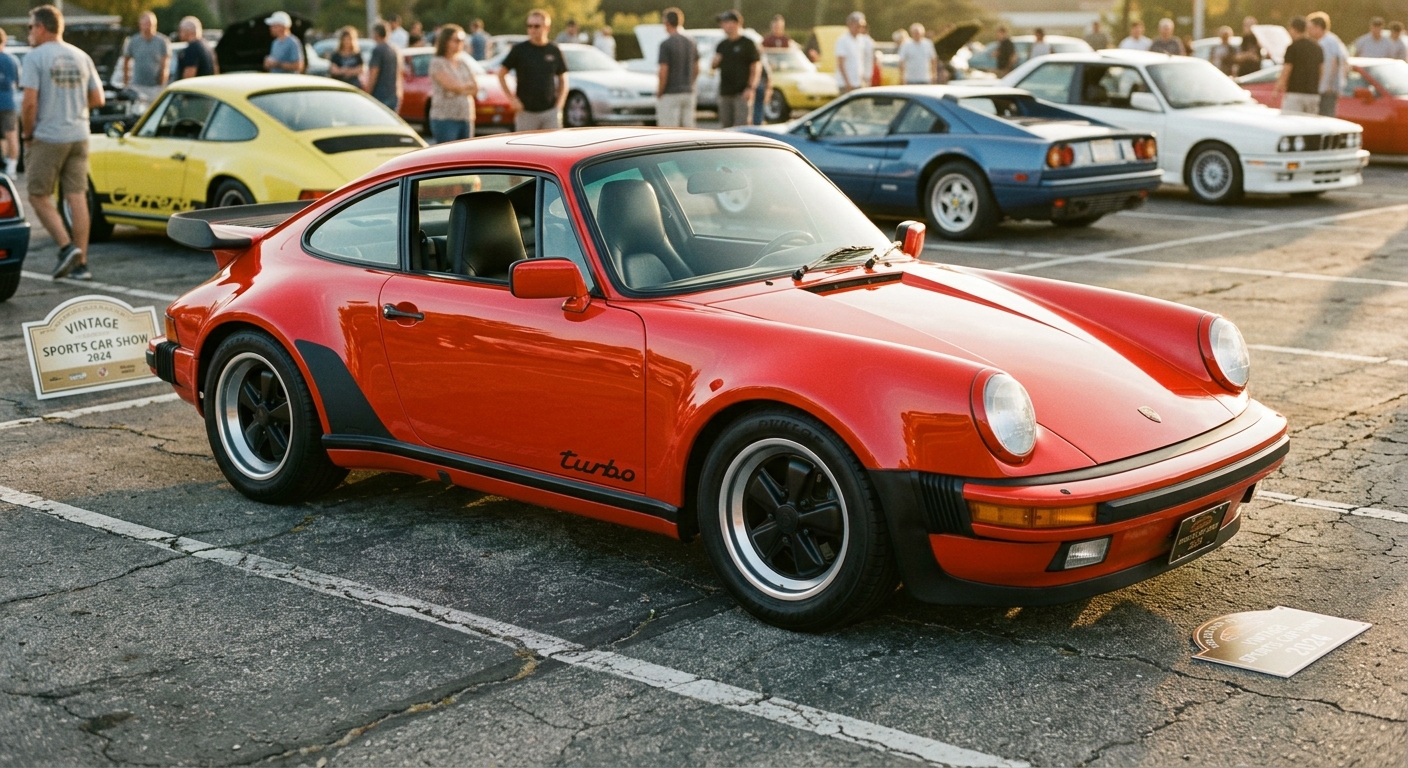
By 1987, the Porsche 930 Turbo had earned a reputation that preceded it into every conversation about dangerous cars. Known colloquially as the “Widowmaker,” this was the final year of the original turbocharged 911, a car that demanded respect and punished complacency with equal measure. After fourteen years of production, Porsche was ready to retire this analog beast in favor of something more civilized.
The Philosophy of Violence
The 930 Turbo represented Porsche’s most uncompromising approach to performance. Built around a 3.3-liter flat-six with a single KKK turbocharger, it produced 300 horsepower in an era when that figure commanded genuine respect. Unlike modern turbocharged engines with their seamless power delivery, the 930 operated on an all-or-nothing principle. Below 3,000 rpm, it felt docile, almost lazy. Then the turbo spooled up and delivered its full fury in one violent surge.
This wasn’t turbo lag in the modern sense, it was turbo drama. The engine would pull moderately, then suddenly explode with boost, often catching drivers off guard. Combined with the 911’s rear-engine weight distribution and the primitive suspension technology of the 1970s and early 1980s, it created a car that could transition from understeer to oversteer faster than most drivers could react.
The Art of Fear
Driving a 930 Turbo required a specific mindset. You couldn’t simply jump in and drive it like a normal car. Every input had to be deliberate, every corner approached with a plan. The steering was heavy at low speeds but came alive once moving, providing surprisingly good feedback despite the engine’s placement behind the rear axle. The brakes, massive for their time, provided reassuring stopping power but required a firm pedal.
On the road, the 930 felt like a barely contained explosion. The ride was firm without being punishing, and the engine’s distinctive sound, a mix of air-cooled flat-six growl and turbocharger whistle, served as a constant reminder of the power lurking beneath your right foot. In traffic, it was surprisingly manageable, but on a winding back road or race track, it transformed into something altogether more serious.
The Final Evolution
The 1987 model represented the peak of 930 development. Porsche had refined the suspension geometry, improved the intercooler, and added larger brakes. The iconic “whale tail” spoiler, while aesthetically polarizing, actually provided meaningful aerodynamic benefit at speed. Inside, the cabin mixed luxury with purpose, featuring leather-wrapped surfaces, air conditioning, and a surprisingly comprehensive instrument cluster.
What made the 930 special wasn’t just its performance, but its character. This was a car with a personality, one that demanded your full attention and rewarded skill while punishing mistakes. It represented the end of an era when sports cars were genuinely dangerous, before electronic safety systems and sophisticated chassis control made extreme performance accessible to average drivers.
Legacy and Impact
The 930 Turbo’s influence extended far beyond its production run. It established the template for the modern sports car: exotic performance wrapped in daily-drivable practicality. More importantly, it proved that turbocharging could work in a sports car context, paving the way for decades of forced-induction development across the automotive industry.
Today, clean examples command significant money on the collector market, with pristine 1987 models often exceeding six figures. They’re recognized not just as fast cars, but as important automotive artifacts from an era when driving fast required genuine skill and courage.
The 1987 Porsche 930 Turbo stands as the ultimate expression of analog performance, a car that demanded respect and rewarded skill in equal measure. In an era of increasingly sanitized supercars, it remains a reminder of when driving fast was genuinely dangerous and utterly thrilling. This is automotive history you can still experience, assuming you’re brave enough to try.