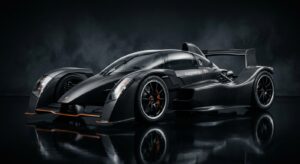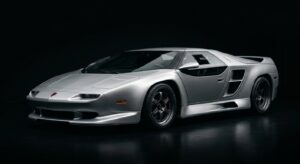
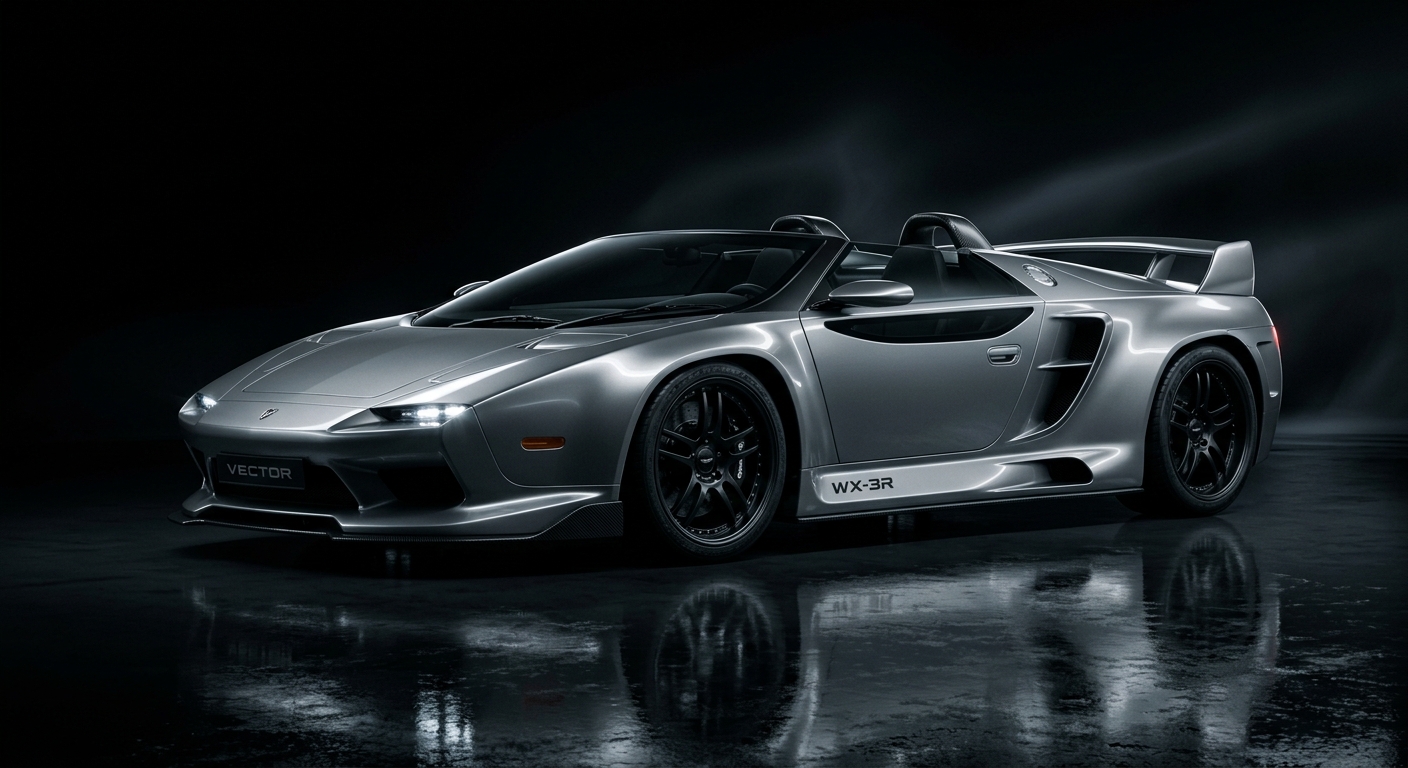
In the pantheon of American supercar ambitions, few stories are as tragic as Vector’s final chapter. The 2008 WX-3R Roadster represented the last gasp of a company that once promised to out-Italian the Italians with pure American engineering madness. With its 7.0-liter V8 producing over 600 horsepower and styling that looked like it escaped from a video game, the WX-3R was Vector’s ultimate statement of intent.
Only problem was, almost nobody got to make that statement.
The Vector Legacy
Vector Aeromotive had been the stuff of bedroom wall posters since the 1990s, when Gerald Wiegert’s W8 promised Ferrari-beating performance wrapped in aerospace-grade composites. The company’s history reads like a Hollywood thriller: brilliant engineer, revolutionary designs, corporate takeovers, lawsuits, and dreams that consistently outpaced financial reality.
The WX-3R was supposed to be different. Built on a proper platform with genuine racing DNA, it promised to deliver what Vector had always teased but never quite achieved: a legitimate American supercar that could run with the best from Europe.
Serious Performance Hardware
Under the WX-3R’s angular composite body sat serious hardware. The 7.0-liter LS7 V8, borrowed from the Corvette Z06, produced 605 horsepower and 595 lb-ft of torque. This wasn’t some theoretical engine; it was proven, reliable, and ready to propel the lightweight Vector to genuine supercar speeds.
The chassis, developed with help from racing specialists, featured a carbon fiber monocoque construction with integrated roll bars. Suspension was fully adjustable with racing-spec components throughout. Brembo brakes provided stopping power, while the six-speed manual transmission promised pure mechanical connection between driver and drivetrain.
Performance projections were staggering: 0-60 mph in under 3.5 seconds, a top speed north of 200 mph, and lateral grip figures that would shame many dedicated track cars. The WX-3R wasn’t just about straight-line speed; it was engineered to be a complete performance package.
Driving the Dream
The few journalists lucky enough to experience a prototype WX-3R reported an intoxicating blend of raw American power and sophisticated chassis dynamics. The LS7’s thunderous soundtrack filled the minimalist cabin, while the precise steering and planted suspension inspired confidence at speed.
The interior was pure function over form: racing seats, a roll cage that doubled as structural support, and controls that prioritized driver engagement over comfort. This wasn’t a car for casual drives to the country club; it was built for serious enthusiasts who valued performance above all else.
The Tragic End
Despite the promising hardware and genuine performance credentials, the WX-3R became another victim of Vector’s financial struggles. Production was limited to a handful of prototypes and pre-production models before the company once again found itself mired in legal and financial difficulties.
Today, the few surviving WX-3Rs represent one of the rarest chapters in American automotive history. They’re rolling testaments to what might have been: a legitimate American supercar that could have challenged Ferrari, Lamborghini, and McLaren on their own terms.
The WX-3R represents everything fascinating and frustrating about American automotive ambition. With performance that could embarrass supercars costing twice as much, it proved America could build world-class exotics when the stars aligned. If only Vector could have figured out the business side as well as they did the engineering.