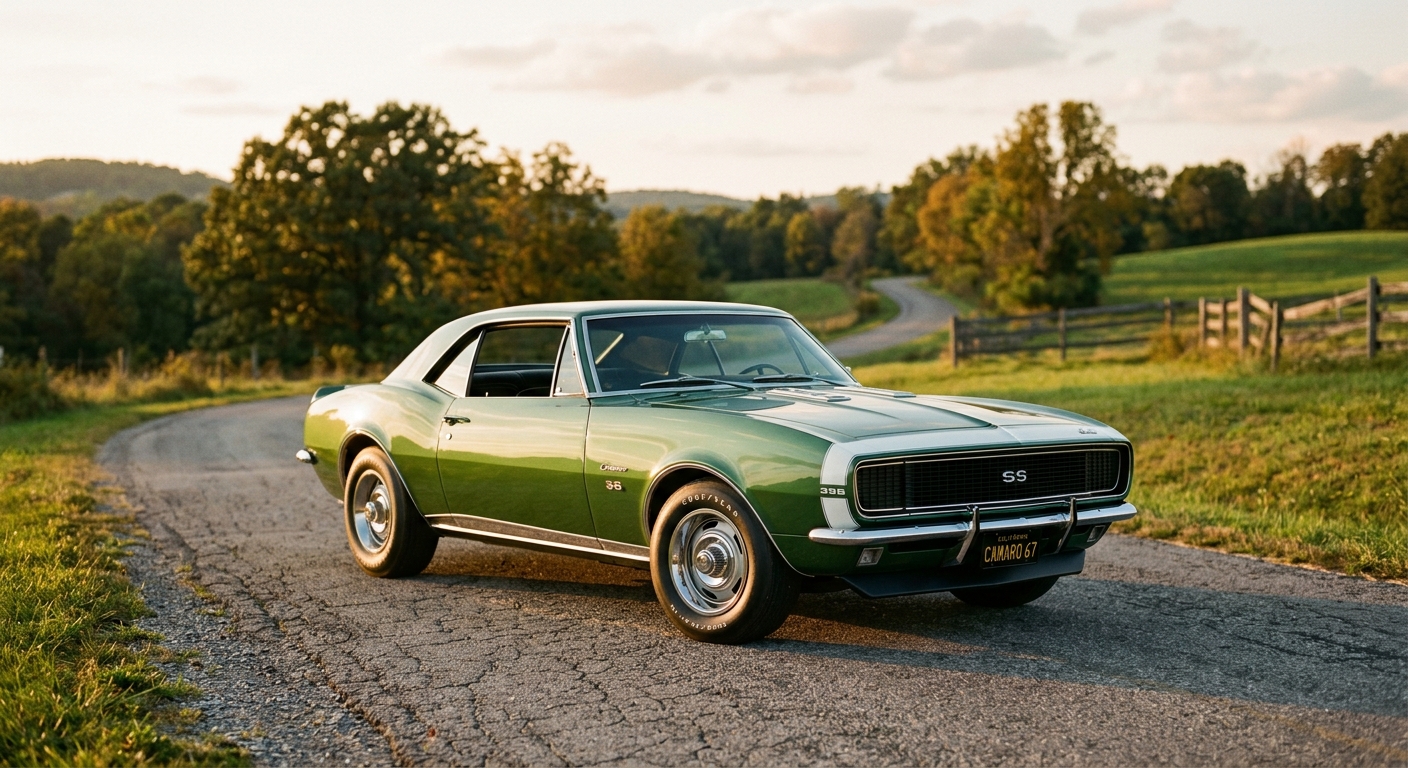
The 1967 Chevrolet Camaro SS 396 arrived at the perfect moment in automotive history, when American manufacturers were locked in an arms race of horsepower and style. Chevrolet’s answer to the Ford Mustang packed serious punch under its sculpted hood, delivering 375 horsepower from its legendary big-block V8. This wasn’t just another pony car trying to look fast: it was the real deal, capable of backing up its aggressive stance with genuine performance.
Big Block Authority
The heart of the SS 396 was Chevrolet’s venerable 396 cubic inch V8, officially rated at 375 horsepower and 415 lb-ft of torque in L78 specification. These were conservative GM ratings, and actual output was likely higher. The engine featured a solid lifter cam, 11:1 compression ratio, and Holley four-barrel carburetor that gave it a distinctive bark at idle and explosive acceleration when the secondaries opened up.
Behind the wheel, the 396 delivered power in waves. Unlike today’s linear turbocharged engines, this big block built torque like a freight train gaining momentum. The car would squat on its rear suspension and launch forward with authority, the rear tires fighting for traction as 415 lb-ft of torque hit the pavement. Zero to 60 mph came in just 6.6 seconds, impressive for 1967 and still respectable today.
First Generation Perfection
The 1967 model year marked the Camaro’s debut, and Chevrolet’s designers nailed the proportions from the start. The long hood, short deck profile was classic American muscle car DNA, while details like the split front grille and round taillights gave it distinctive character. The SS package added subtle but meaningful touches: bumblebee racing stripes, SS badges, and a blacked-out grille that hinted at the performance within.
Inside, the cockpit was driver-focused with deeply recessed gauges and a three-spoke steering wheel. The optional Rally gauges were essential for monitoring the big block’s vital signs, including oil pressure and engine temperature. Bucket seats held occupants firmly during spirited driving, though the rear seat was more decorative than functional.
Handling the Power
The SS 396 came with upgraded suspension components to handle its additional power and weight. Stiffer springs, larger anti-roll bars, and wider tires helped keep the nose planted during acceleration and provided better control in corners. However, this was still a 1960s American muscle car, which meant the handling was more about managing power than carving apexes.
The heavy iron big block affected weight distribution, making the car nose-heavy and prone to understeer. But that weight also helped with straight-line traction, and the car felt planted and stable at highway speeds. The steering was heavy but direct, giving the driver a good sense of connection to the front wheels.
Cultural Impact and Legacy
The first-generation Camaro SS 396 arrived during the peak of the muscle car era and became an instant icon. It appeared in movies, dominated drag strips, and filled the dreams of teenagers nationwide. The combination of accessible pricing, stunning looks, and genuine performance made it a democratic supercar for its time.
Today, clean examples of the 1967 SS 396 are highly sought after by collectors and enthusiasts. The first model year carries special significance, representing Chevrolet’s initial salvo in the pony car wars. Values have appreciated significantly, with numbers-matching L78 cars commanding premium prices at auction.
The 1967 Camaro SS 396 represents everything right about the original muscle car era: stunning looks, genuine performance, and character that can’t be replicated. While modern cars may be faster and more refined, few possess the raw charisma and emotional connection of this first-year legend. For enthusiasts seeking the definitive American muscle car experience, the ’67 SS 396 remains the gold standard.