In the late 1960s, while Detroit’s automakers played games with corporate policies and insurance concerns, one Chevrolet dealer in Pennsylvania had a better idea. Don Yenko didn’t wait for GM’s blessing to build the ultimate street Camaro: he simply ordered them through back channels and stuffed 427 cubic inches of pure fury under their hoods. The result was automotive legend.
The Yenko Difference
Don Yenko’s approach was beautifully simple and utterly effective. Working through Chevrolet’s Central Office Production Order (COPO) system, he bypassed GM’s self-imposed restrictions on big-block engines in intermediate cars. The COPO 9561 package delivered L72 427 big-block V8s in what were otherwise standard Camaros, creating instant legends.
But Yenko didn’t stop at the engine swap. His team added a host of performance modifications that transformed these already potent machines into street-legal race cars. Heavy-duty suspension components, upgraded cooling systems, and distinctive graphics packages marked every SC (Super Car) that rolled out of Yenko Chevrolet in Canonsburg, Pennsylvania.
Raw Power Unleashed
The heart of every Yenko Camaro SC was the L72 427 cubic inch V8, officially rated at 425 horsepower but widely acknowledged to produce significantly more. This solid-lifter, high-compression monster delivered the kind of tire-shredding torque that could break street tires loose in three gears. The deep rumble from the dual exhausts announced your presence blocks away.
Behind the 427 sat a Muncie M22 “Rock Crusher” four-speed transmission, the only gearbox tough enough to handle the engine’s massive torque output. The combination created a driving experience that was both exhilarating and demanding, requiring respect and skill to master.
Street Warrior Aesthetics
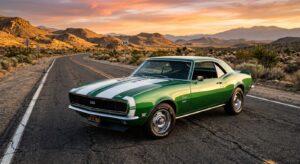
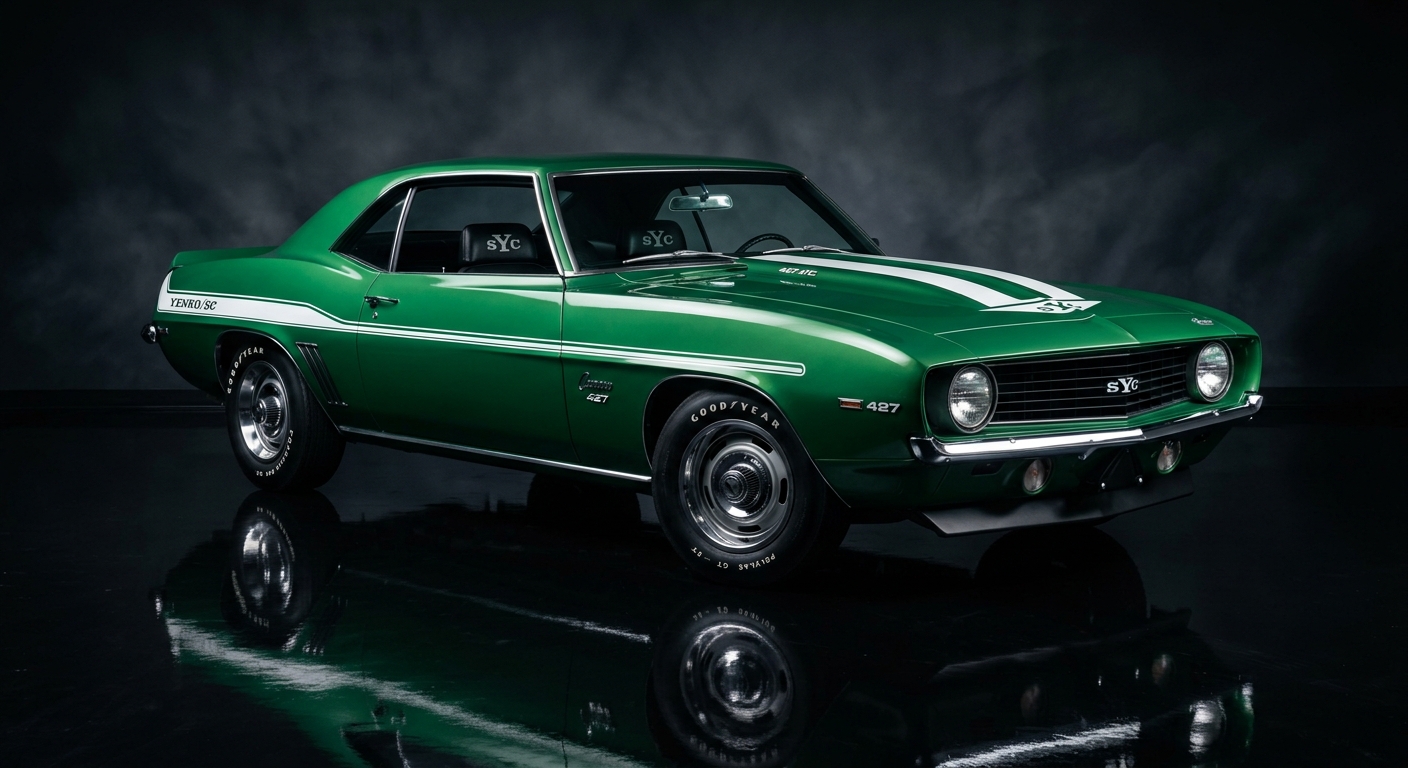
Visually, the Yenko Camaro SC commanded attention through subtle but unmistakable details. The cowl induction hood was both functional and menacing, feeding cool air directly to the hungry 427. Bold racing stripes and Yenko SC decals left no doubt about the car’s pedigree, while the aggressive stance hinted at the performance lurking beneath.
Inside, the focus remained on performance over luxury. A 140-mph speedometer was optimistically included, though reaching those speeds required more courage than most drivers possessed. The interior retained Camaro’s sporty character while adding the purposeful feel of a machine built for serious driving.
Racing Heritage
The Yenko Camaro SC wasn’t just a street car with racing pretensions; it was a genuine competitor that dominated dragstrips and road courses across America. Many examples went straight from the showroom to the track, where their combination of factory reliability and race-car performance proved unbeatable in NHRA and SCCA competition.
Don Yenko himself was an accomplished racer, and his understanding of what made cars fast translated directly into the modifications his team performed. Every change served a purpose, whether improving power delivery, handling, or durability under extreme conditions.
The Yenko Camaro SC 427 represents everything right about American performance: massive power, aggressive styling, and the fearless spirit to push boundaries. With only 201 examples built, it’s become the most coveted of all factory muscle cars, commanding prices that reflect its legendary status among collectors who understand what makes a car truly special.