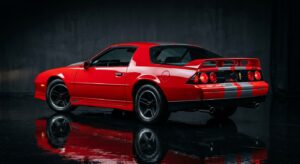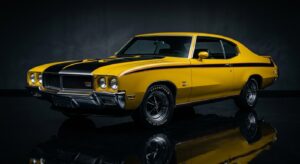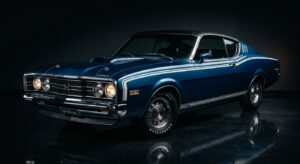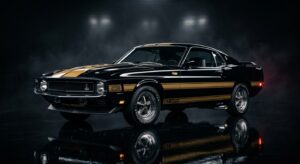
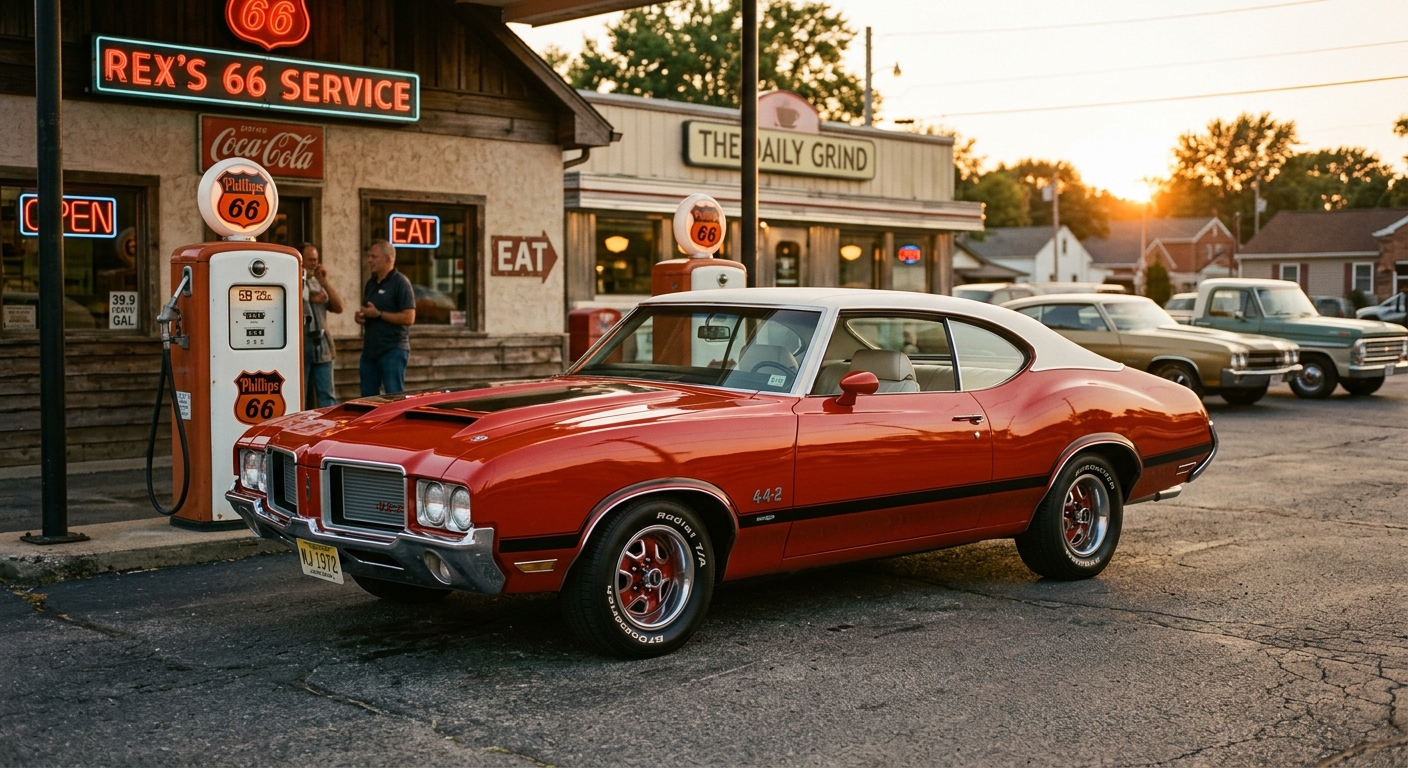
While other manufacturers were building tire-smoking street weapons, Oldsmobile took a different approach with the 442. The 1972 Cutlass Supreme 442 represented the thinking man’s muscle car, combining genuine performance credentials with the kind of refinement that made it equally at home cruising to the country club or lighting up the rear tires at a stoplight.
By 1972, the original muscle car era was winding down, strangled by insurance costs and increasingly strict emissions regulations. Yet Oldsmobile managed to keep the 442 flame burning with a package that emphasized sophistication over raw aggression, creating what many consider the most civilized muscle car of its generation.
The Refined Rocket
At the heart of the 1972 442 sat Oldsmobile’s legendary 455 cubic inch Rocket V8, producing a substantial 270 horsepower and an even more impressive 370 lb-ft of torque. While these numbers represented a decline from the peak muscle car years, the reality behind the wheel told a different story. The massive displacement and long-stroke design delivered the kind of low-end grunt that could effortlessly motivate the Cutlass Supreme’s substantial curb weight.
The driving experience was distinctly Oldsmobile: smooth, refined, yet undeniably powerful. The 455 pulled with authority from idle, delivering its power in a linear, predictable fashion that made the car surprisingly easy to drive fast. Unlike the high-strung small blocks found in other muscle cars, the Rocket motor felt unstressed even under full throttle, producing its peak torque at just 2,400 rpm.
Handling the Gentleman’s Way
The 442 package included heavy-duty suspension components, anti-roll bars front and rear, and performance-oriented shock absorbers. The result was a muscle car that actually handled corners with some degree of competence, though it never forgot its luxury car roots. The steering was precise enough for spirited driving but light enough for parking lot maneuvers, while the suspension struck an admirable balance between control and comfort.
On winding roads, the 1972 442 felt more like a grand touring car than a traditional muscle car. It preferred flowing curves to tight autocross-style corners, rewarding smooth inputs with predictable, confidence-inspiring behavior. The four-barrel carburetor responded crisply to throttle inputs, and the dual exhaust system produced a sophisticated rumble that never descended into crude noise.
Style and Substance
Visually, the 1972 Cutlass Supreme 442 wore its performance intentions with restraint. The distinctive 442 badges, dual exhaust outlets, and subtle hood scoops announced the car’s capabilities without resorting to garish graphics or aggressive spoilers. The interior combined genuine luxury materials with purposeful performance touches, including a full gauge package and comfortable bucket seats.
The build quality reflected Oldsmobile’s position in General Motors’ hierarchy. Panel gaps were tighter than those found on Chevelles or GTOs, interior materials felt more substantial, and the overall fit and finish suggested a car built to higher standards. This attention to detail extended to the driving experience, where refinement took precedence over raw performance numbers.
The End of an Era
The 1972 model year marked a significant transition for American muscle cars, and the 442 embodied this change perfectly. Rather than fighting the new reality of emissions controls and safety regulations, Oldsmobile adapted by emphasizing the aspects of performance that regulations couldn’t touch: torque, refinement, and everyday usability.
Today, the 1972 442 represents one of the most undervalued muscle cars of its era. While buyers chase after the more obvious choices, knowledgeable enthusiasts recognize the Oldsmobile as offering a unique combination of performance and sophistication that few competitors could match.
The 1972 Cutlass Supreme 442 proves that muscle cars didn’t have to be crude to be compelling. While its contemporaries focused on maximum aggression, Oldsmobile created something more sophisticated: a performance car that delivered genuine thrills without sacrificing civility. For enthusiasts seeking the road less traveled, few muscle cars offer such an appealing combination of performance, refinement, and value.