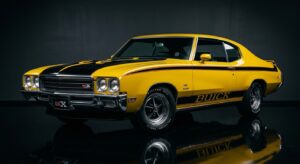
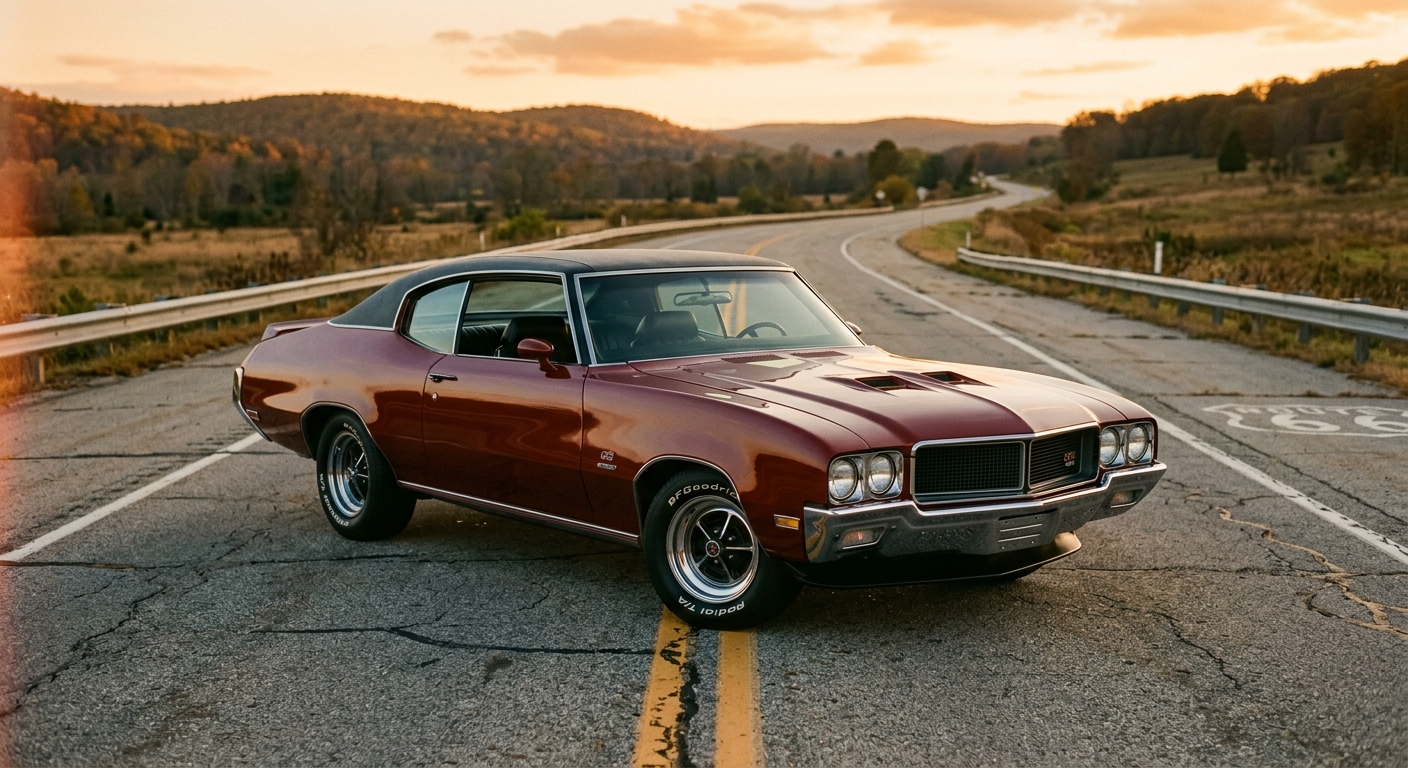
While most enthusiasts remember the legendary GTO or the brutal Chevelle SS 454, Buick’s entry into the muscle car wars often gets overlooked despite producing what many consider the most torque-rich engine of the entire era. The 1970 Gran Sport 455 Stage 1 combined Buick’s reputation for refined luxury with an absolutely savage powerplant that could embarrass any street machine foolish enough to line up beside it.
The Gentleman’s Hot Rod
Buick approached the muscle car segment differently than its corporate siblings. Where Pontiac went wild with graphics and Chevrolet built pure performance machines, Buick created what could best be described as a sleeper in a three-piece suit. The Gran Sport package transformed the mild-mannered Skylark into something far more sinister, but it retained an understated elegance that allowed it to slip past parents and insurance companies with relative ease.
The exterior changes were subtle but purposeful. Twin functional hood scoops fed the hungry 455 cubic inch V8, while discrete Gran Sport badges and rally wheels hinted at the performance lurking beneath. The interior maintained Buick’s luxury standards with comfortable bucket seats and a full complement of gauges, making this one of the most civilized muscle cars of its era.
The Stage 1 Advantage
What set the Stage 1 apart was its incredible torque production. While other manufacturers chased horsepower numbers, Buick’s engineers focused on low-end grunt that translated to devastating real-world performance. The Stage 1 455 produced 360 horsepower, but more importantly, it generated a massive 510 lb-ft of torque at just 2800 rpm. This meant the Gran Sport could pull like a freight train from virtually any engine speed.
The engine featured a higher compression ratio, revised camshaft timing, and improved breathing through larger valves and ports. A Rochester Quadrajet four-barrel carburetor sat atop the intake manifold, while dual exhausts provided the proper soundtrack for all that torque. The result was a muscle car that could run with the best of them while maintaining the refinement expected from Buick.
Performance That Spoke Volumes
Behind the wheel, the Stage 1 was a revelation. The massive torque output meant effortless acceleration from any speed, making it particularly effective in street racing situations where pure horsepower mattered less than grunt. The TH400 automatic transmission was the only option, but it proved perfectly matched to the engine’s characteristics, allowing drivers to focus on steering rather than shifting.
Quarter-mile times in the mid-13-second range were easily achievable with minimal modifications, while the car’s refined ride quality made it equally at home on long highway cruises. The suspension setup struck an excellent balance between performance and comfort, though serious track work would require significant upgrades to match the engine’s capabilities.
The Overlooked Classic
Production numbers for the Stage 1 were relatively low, with only about 3,500 examples built in 1970. This rarity, combined with Buick’s more conservative marketing approach, meant the Gran Sport never achieved the fame of its Chevrolet or Plymouth counterparts. Today, this works in favor of collectors, as Stage 1 examples can still be found for reasonable money compared to similarly performing muscle cars from other manufacturers.
The 1970 Buick Gran Sport 455 Stage 1 remains one of the muscle car era’s best-kept secrets, delivering supercar-level torque in a refined package that could embarrass flashier competitors while maintaining daily drivability. For collectors seeking maximum bang for their buck, few classics offer this combination of performance, rarity, and relative affordability in today’s inflated muscle car market.