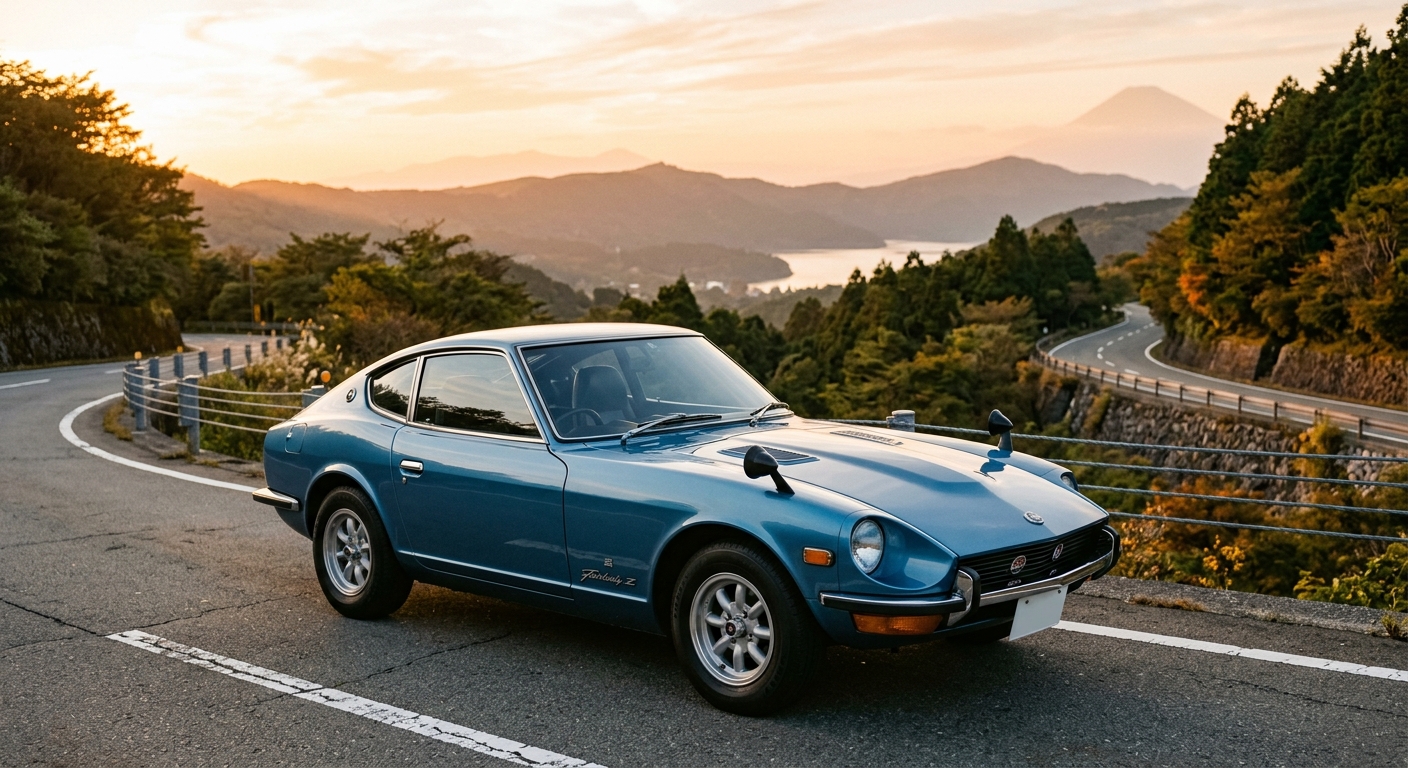
While America was locked in the horsepower wars and Europe refined its grand touring traditions, Japan was quietly crafting something extraordinary. The 1970 Datsun Fairlady Z 432 represented the pinnacle of Japanese sports car engineering, combining the mechanical soul of the legendary Skyline GT-R with the stunning aesthetics that would make the Z-car a global icon.
Built in just 420 examples plus 12 lightweight racing versions, the Z 432 stands as one of the rarest and most significant Japanese sports cars ever created. Its designation told the whole story: 4 valves, 3 carburetors, 2 camshafts per cylinder bank.
The Heart of a Legend
At the center of the Z 432’s mystique lay the S20 engine, a 2.0-liter twin-cam inline-six that had already proven itself in the Skyline GT-R. This wasn’t just any powerplant but a racing-bred unit with dual overhead cams, hemispherical combustion chambers, and triple Weber carburetors. The engine produced 160 horsepower at 7,000 rpm, making it one of the highest-revving production engines of its era.
The S20’s character was intoxicating. Unlike the torquier American V8s or the smooth European sixes, this Japanese unit demanded to be worked. Its peak power arrived high in the rev range, encouraging drivers to explore every corner of the tachometer. The triple Webers created a distinctive induction sound that became part of the car’s personality, a mechanical symphony that announced the Z 432’s presence long before it came into view.
Racing DNA in Road Clothes
The Z 432 wasn’t simply a regular Fairlady Z with a hot engine swapped in. Nissan engineers understood that the extra power demanded chassis modifications to match. The suspension received attention with stiffer springs and dampers, while limited-slip differential helped manage the power delivery. The result was a car that felt fundamentally different from its more pedestrian siblings.
Behind the wheel, the Z 432 revealed its dual nature. Around town, it could be docile enough, though the high-strung engine preferred to be kept on the boil. The clutch was heavier than expected, and the gearbox required deliberate inputs, reminding drivers that this was serious machinery. But once the revs climbed above 4,000 rpm, the S20 engine transformed the entire experience.
Design That Defined a Generation
The Fairlady Z’s shape was revolutionary when it appeared, and the 432 wore those lines with particular authority. Albrecht Goertz’s design perfectly balanced aggression with elegance, creating proportions that still look correct today. The long hood telegraphed the presence of something special underneath, while the fastback roofline created one of the most recognizable silhouettes in automotive history.
Inside, the Z 432 featured a driver-focused cockpit with deep-set gauges and a sporty three-spoke steering wheel. The seats provided decent support for spirited driving, though long-distance comfort wasn’t the primary consideration. Everything felt purposeful rather than luxurious, reflecting the car’s performance priorities.
A Collector’s Holy Grail
Today, the Z 432 occupies a legendary status among Japanese classic car enthusiasts. Its extreme rarity means that finding an authentic example requires patience and substantial resources. Many of the original 420 cars were modified over the years or fell victim to rust, making survivors increasingly precious.
The racing versions, known as Z 432-R, are even more mythical. With just 12 examples built, these lightweight racers featured aluminum body panels, stripped interiors, and other competition modifications. They represent the ultimate expression of the Z concept and command prices that reflect their historical significance.
The Fairlady Z 432 represents the moment when Japan announced its serious intentions in the sports car world. Its combination of racing-bred engineering and stunning design created something truly special, a car that feels as significant today as it did in 1970. For those lucky enough to experience one, it’s a reminder that the best classics aren’t just about nostalgia but about the pure joy of driving something truly exceptional.