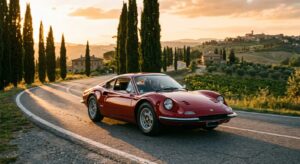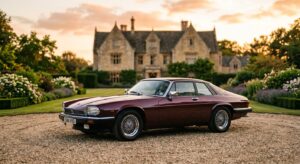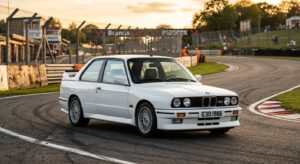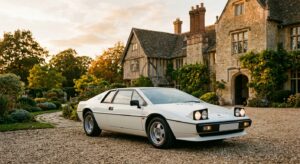
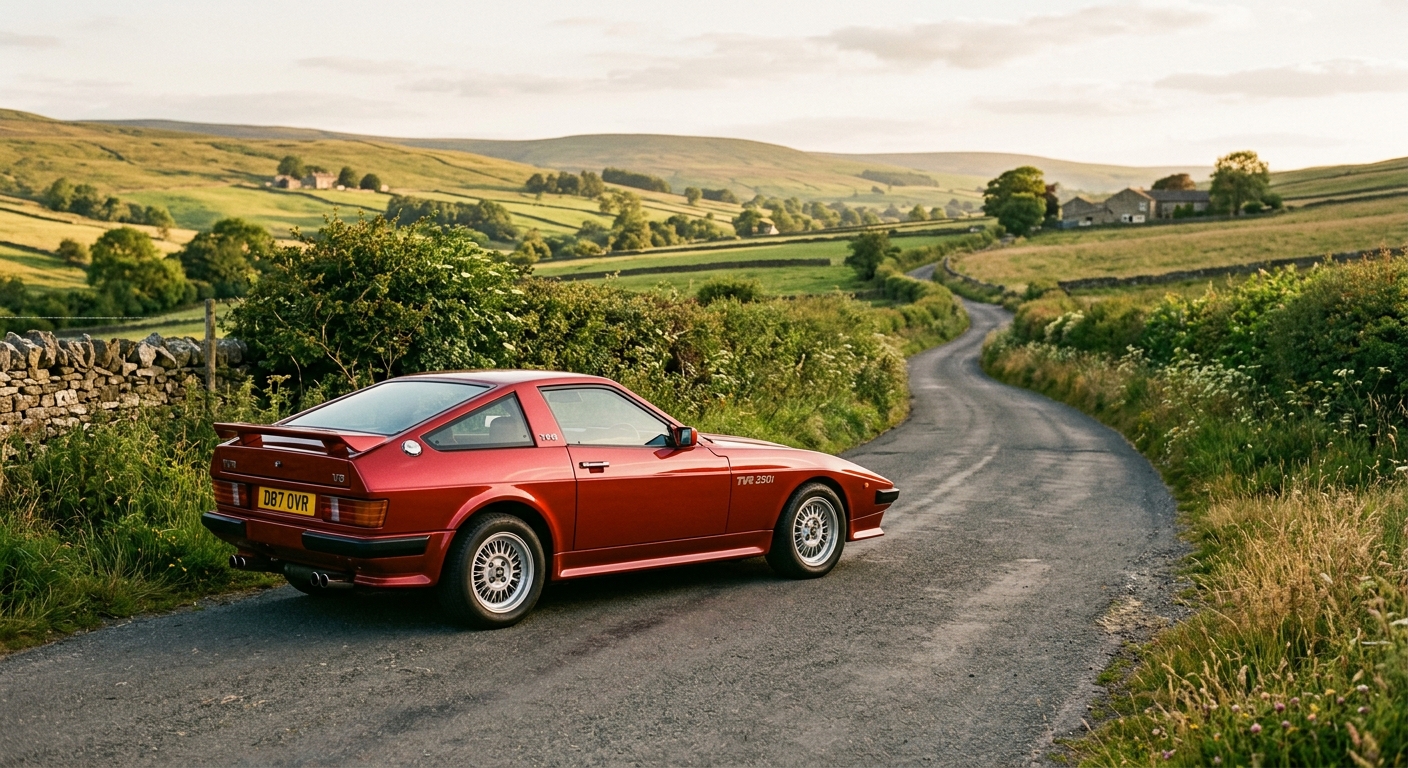
In the pantheon of British sports car manufacturers, few names evoke quite the same mixture of admiration and trepidation as TVR. The Blackpool-based company built cars that seemed to exist in defiance of common sense, engineering convention, and occasionally, the laws of physics themselves. The 1987 TVR 350i represents this philosophy at its purest: a fiberglass missile powered by a Rover V8, wrapped in bodywork that looked like it was carved by the wind itself.
The Blackpool Beast
TVR’s approach to building sports cars in the 1980s was refreshingly direct. Take a lightweight fiberglass body, drop in the most powerful engine that would fit, add the minimum amount of creature comforts required by law, and send the result hurtling down British B-roads at velocities that would make a Tornado pilot nervous. The 350i, introduced in 1983 and refined through its production run until 1989, embodied this philosophy perfectly.
The heart of the 350i was Rover’s 3.5-liter aluminum V8, the same engine that powered everything from Range Rovers to Morgan Plus 8s. In TVR tune, it produced around 190 horsepower, which might not sound earth-shattering by today’s standards, but remember: this was an era when a Porsche 911 Carrera made 207 hp, and it weighed considerably more than the TVR’s svelte 2,200 pounds.
Form Follows Function
The 350i’s bodywork was a masterclass in aggressive minimalism. Designer Oliver Winterbottom created a shape that looked fast standing still, with a low-slung nose, pronounced wheel arches, and a distinctive wedge profile that seemed to slice through the air. The fiberglass construction wasn’t just about weight savings; it allowed TVR to craft complex curves and dramatic surfaces that would have been prohibitively expensive in steel.
Inside, luxury was defined by what TVR chose to leave out rather than what they included. No power steering, no ABS, no traction control, no electronic nannies of any kind. The cockpit was snug, with supportive seats and a dashboard that featured the essential gauges arranged in a purposeful arc before the driver. The gear lever sprouted from the transmission tunnel like a chrome sapling, connected directly to a five-speed manual gearbox that required commitment and precision.
The Driving Experience
To drive a TVR 350i was to engage in a conversation with the road conducted entirely in analog. The unassisted steering provided feedback so direct and immediate that you could practically feel the texture of the tarmac through your fingertips. The suspension, while sophisticated in its geometry, was tuned for maximum involvement rather than maximum comfort.
Acceleration was explosive by 1980s standards. The combination of the torquey V8 and light weight meant that 60 mph arrived in under 6 seconds, with the engine note transforming from a burble at idle to a full-throated roar under acceleration. The exhaust note was pure theater, a soundtrack that announced the TVR’s presence from several postcodes away.
But it was in the corners where the 350i truly came alive. The car’s balance was sublime, with a natural tendency to rotate that could be managed with throttle inputs and steering corrections. This was driving that required skill, attention, and no small amount of bravery. The reward for mastering the TVR’s quirks was a driving experience of rare purity and intensity.
British Eccentricity
Of course, no discussion of TVR would be complete without acknowledging the company’s reputation for, shall we say, character. Build quality was variable, electrical systems could be temperamental, and the cars required owners who appreciated their idiosyncrasies. But for those willing to embrace the British sports car experience in all its glory and frustration, the 350i offered rewards that more conventional machinery simply couldn’t match.
The 350i represented TVR at a crucial moment in the company’s history. Still independent, still uncompromising, and still building cars that prioritized driving pleasure above all else. It was automotive engineering as practiced by enthusiasts rather than accountants, and the results were both magnificent and slightly mad.
The 1987 TVR 350i remains a monument to an era when British sports cars prioritized thrills over comfort, character over convenience. It’s a machine that demands respect, rewards skill, and delivers an intensity of experience that modern cars, for all their sophistication, struggle to match. For those brave enough to embrace its eccentricities, the 350i offers something increasingly rare: pure, unadulterated driving joy.