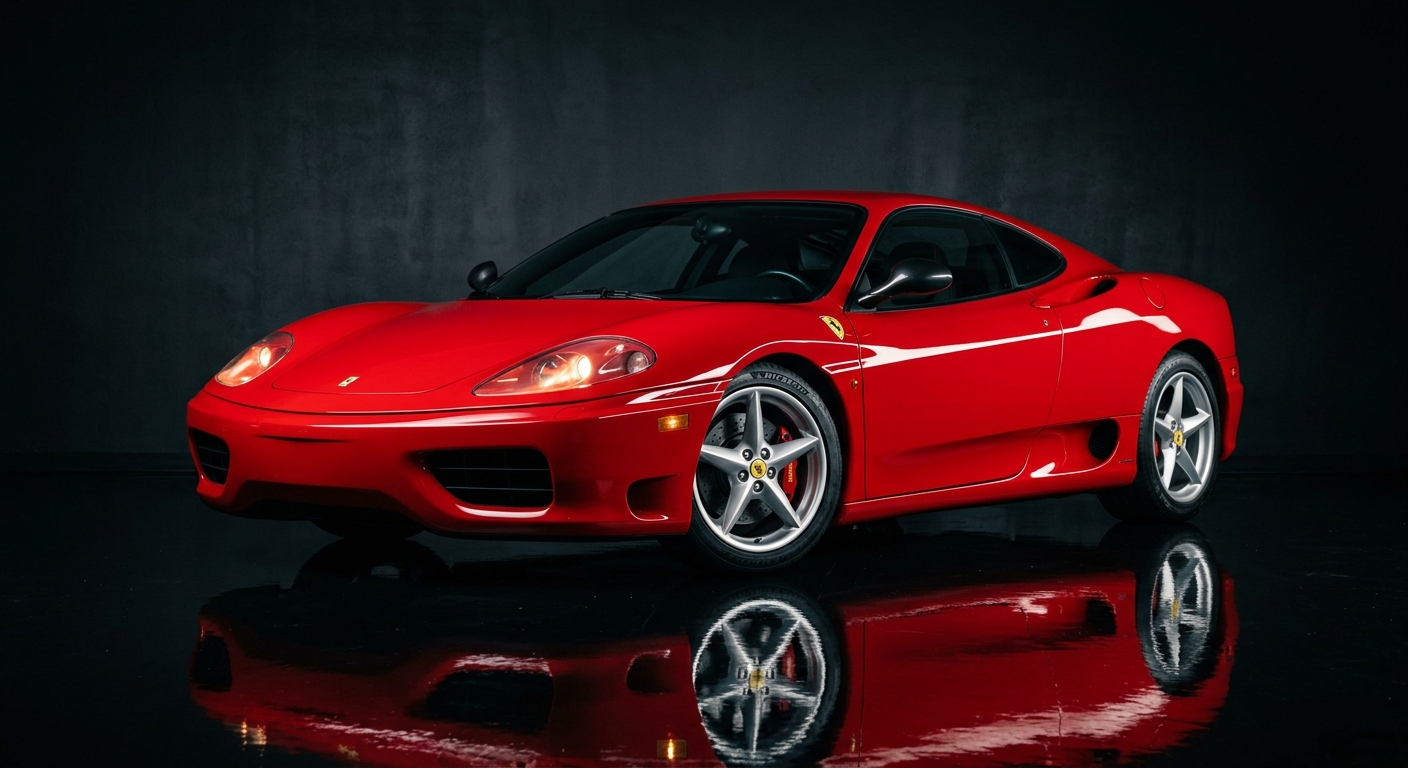
In the pantheon of Ferrari’s greatest hits, the 360 Modena occupies a unique position as the car that bridged two eras. Arriving at the tail end of the 1990s, it was Ferrari’s first all-new mid-engine V8 in over a decade, combining cutting-edge aluminum construction with the visceral drama that made Maranello legendary. Where its F355 predecessor was beautiful but temperamental, the 360 was equally stunning yet refreshingly civilized.
A Revolution in Aluminum
The 360 Modena represented Ferrari’s boldest engineering leap since the original Dino. Built around an innovative aluminum space frame that was both 40% lighter and significantly stiffer than the F355’s steel construction, the 360 felt like a glimpse into the future of supercar design. Every body panel was aluminum, contributing to a dry weight of just 1,390 kg that made the car feel impossibly nimble.
Pininfarina’s design was evolutionary rather than revolutionary, taking the F355’s gorgeous proportions and refining them with cleaner surfaces and more purposeful aerodynamics. The side air intakes grew larger and more aggressive, feeding the new 3.6-liter V8 that gave the car its name. Gone were the pop-up headlights that had defined Ferrari’s mid-engine cars for decades, replaced by fixed units that improved both aerodynamics and crashworthiness.
The Heart of the Matter
Under the engine cover sat Ferrari’s new F131 V8, a 3.6-liter naturally aspirated masterpiece that produced 400 horsepower at a screaming 8,500 rpm. This was the first Ferrari V8 to breathe through a single throttle body rather than individual throttle bodies per cylinder, improving drivability while maintaining that spine-tingling Ferrari soundtrack. The engine’s dry-sump lubrication system allowed it to sit lower in the chassis, improving the car’s center of gravity.
Mated to a six-speed manual gearbox as standard, the 360 delivered power with a linearity that was both intoxicating and accessible. Unlike some supercars that felt intimidating at legal speeds, the 360 rewarded drivers with progressive power delivery and communicative handling that built confidence rather than fear.
On the Road Reality
Behind the wheel, the 360 Modena struck a remarkable balance between supercar drama and everyday usability. The steering was precise without being nervous, the suspension firm yet compliant enough for real-world driving. The car’s party trick was its ability to feel special at any speed, whether threading through city traffic or exploring mountain passes.
The interior represented a significant step forward in Ferrari’s ongoing battle with ergonomics and build quality. While still unmistakably Italian in its flair for the dramatic, the 360’s cabin felt more thoughtfully designed than its predecessors, with better seating positions and improved visibility all around.
The Ferrari 360 Modena remains one of the most compelling entry points into serious supercar ownership, offering genuine Ferrari DNA without the maintenance nightmares of earlier models. In today’s market, it represents the sweet spot where exotic car dreams meet rational decision-making. Few cars have aged as gracefully or maintained their relevance as convincingly as this Maranello masterpiece.