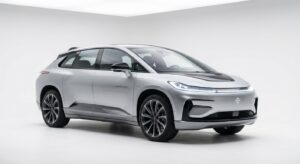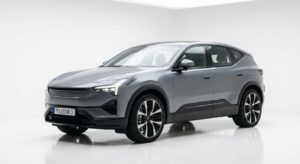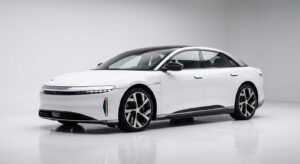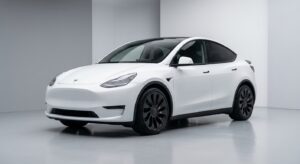
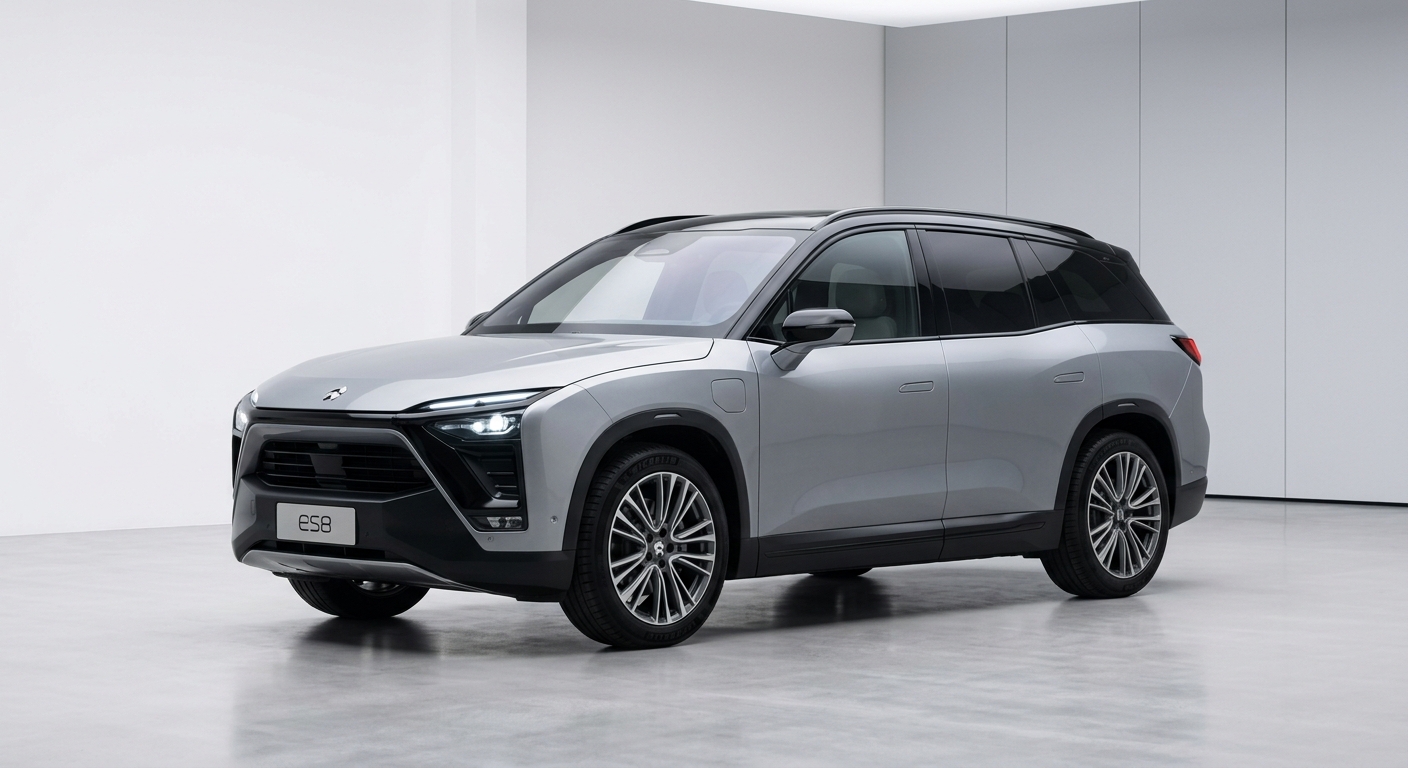
While Tesla dominated headlines with Supercharging networks, a Chinese startup quietly revolutionized electric vehicle ownership with a radically different approach. The 2024 NIO ES8 doesn’t just challenge conventional EVs with its performance and luxury credentials, it fundamentally reimagines how we power electric vehicles through innovative battery swapping technology.
The Three-Minute Future
Step into a NIO Power Swap Station and witness automotive science fiction become reality. In less time than it takes to grab coffee, robotic systems lift your ES8, extract the depleted battery pack, and install a fully charged replacement. No cables, no waiting, no range anxiety. This isn’t concept car theater, it’s production reality across China and expanding globally.
The ES8’s battery-as-a-service model transforms EV ownership economics. Purchase the vehicle without the battery pack, then subscribe to NIO’s power service for flexible, upgradeable energy storage. When solid-state batteries arrive, ES8 owners simply swap to the new technology without buying an entirely new vehicle.
Scandinavian Minimalism Meets Silicon Valley Tech
Inside the ES8’s cabin, clean architectural lines frame a digital ecosystem that feels years ahead of traditional luxury marques. The panoramic glass roof creates an airy atmosphere, while sustainable materials including recycled ocean plastic demonstrate environmental consciousness without sacrificing premium feel.
NOMI, NIO’s AI assistant, transforms vehicle interaction from button-pressing to conversation. Voice commands control everything from climate settings to massage seats, while over-the-air updates continuously expand functionality. The ES8 isn’t just transportation, it’s a constantly evolving digital platform.
Performance Without Compromise
Dual permanent magnet motors deliver 644 horsepower through NIO’s intelligent all-wheel drive system. Air suspension adapts to driving conditions automatically, lowering for highway efficiency or raising for off-road clearance. Despite weighing over 5,500 pounds, the ES8 accelerates to 60 mph in just 4.1 seconds.
Advanced driver assistance systems rival Tesla’s Autopilot, with multiple cameras, radar, and ultrasonic sensors enabling highway pilot functionality. NIO’s approach emphasizes safety through redundancy rather than camera-only solutions, providing confidence in varied driving conditions.
Redefining Luxury Service
NIO Houses blend showroom, lounge, and community center concepts into welcoming spaces for owners and prospects alike. Free coffee, children’s play areas, and co-working spaces create lifestyle destinations rather than sterile dealerships. Mobile service technicians perform maintenance at owners’ homes or offices, eliminating traditional service center visits.
The ES8’s party trick extends beyond individual convenience to grid-scale innovation. Vehicle-to-grid capability allows the SUV to power homes during outages or sell electricity back to utilities during peak demand periods. Battery swapping stations function as distributed energy storage, stabilizing renewable power grids.
The NIO ES8 represents more than another premium electric SUV, it’s a glimpse into the post-ownership automotive future. While traditional manufacturers debate charging standards, NIO has built an ecosystem that makes range anxiety obsolete. This is how China plans to win the electric revolution: through innovation, not imitation.