When a small Austrian company announces plans to build a 2,200-horsepower electric hypercar, skepticism is natural. But the Deus Vayanne isn’t just another startup pipe dream. Backed by serious engineering talent and penned by Italdesign, this electric monster represents Austria’s bold entry into the hypercar wars.
The Vayanne promises to rewrite the rules of what an electric hypercar can be, combining outrageous performance figures with genuine track capability and stunning Italian design. It’s a machine that exists at the absolute bleeding edge of automotive technology.
Austrian Engineering Meets Italian Artistry
Founded by former Williams Formula 1 team members, Deus Automobiles brings serious motorsport pedigree to the electric hypercar space. The company’s founder and CEO, Maximilian Missoni, previously worked on F1 powertrains, and that experience shows in every aspect of the Vayanne’s development.
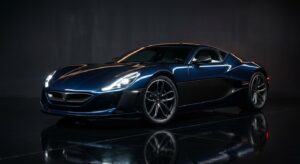
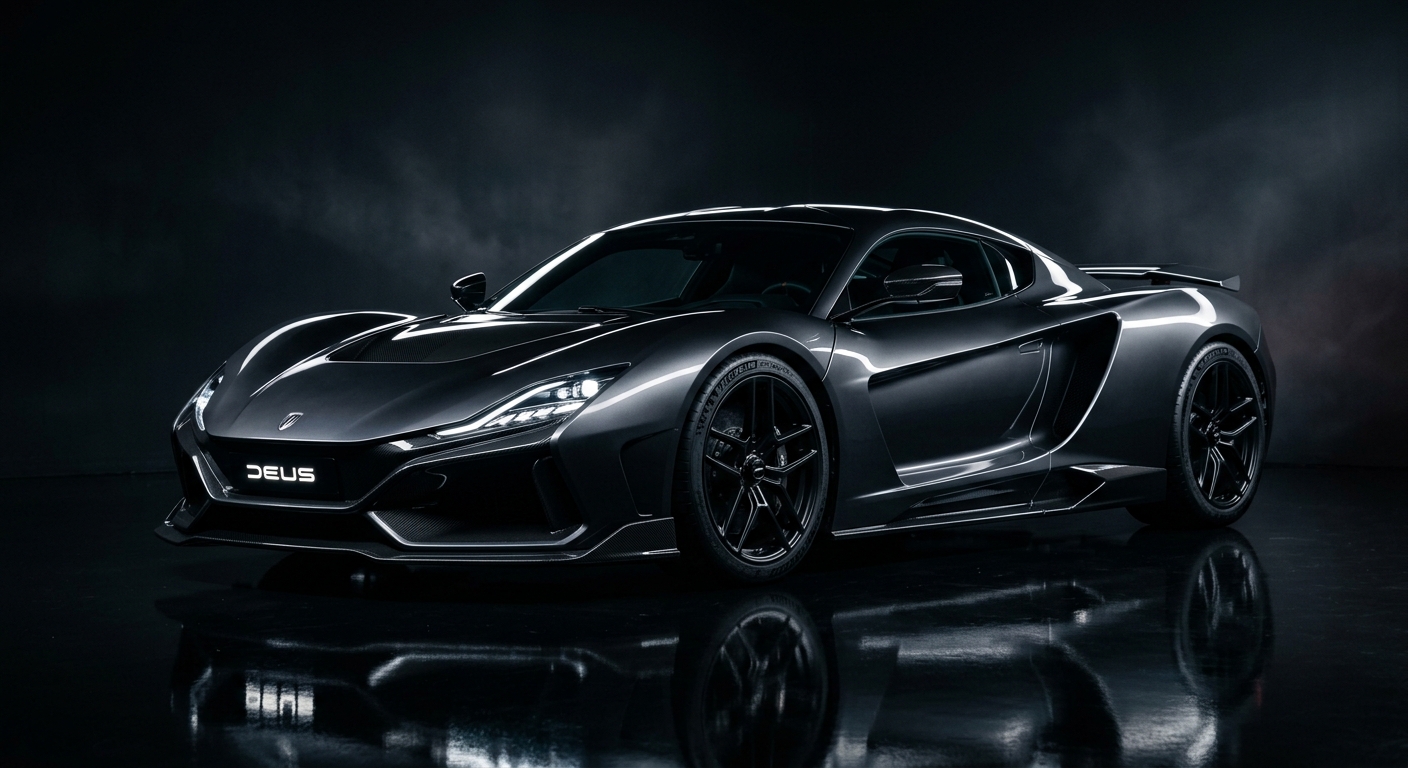
The partnership with Italdesign for the exterior styling was inspired. The Vayanne’s bodywork is a masterclass in aggressive aerodynamics wrapped in sensuous Italian curves. Every surface serves a purpose, from the front splitter that channels air through carefully sculpted ducts to the active rear wing that provides up to 450kg of downforce at speed.
The car’s proportions are pure hypercar theater: impossibly low, impossibly wide, with a greenhouse that seems to float above the muscular body. LED light signatures pierce through the darkness like digital lightning, giving the Vayanne an unmistakably futuristic presence that still manages to feel organic rather than clinical.
Electric Fury Unleashed
The headline figures are genuinely staggering. Four electric motors, one at each wheel, combine to produce 2,200 horsepower and 1,475 lb-ft of torque. That’s enough to launch the Vayanne from 0-62 mph in just 1.99 seconds, making it one of the quickest-accelerating production cars ever built.
But the Vayanne isn’t just about straight-line brutality. The four-motor setup provides unprecedented control over power delivery, allowing for torque vectoring that can shift power between wheels thousands of times per second. The result is handling that adapts to conditions with superhuman precision.
The 85kWh battery pack is designed for performance rather than maximum range. While 300 miles might seem modest by EV standards, it’s more than adequate for a hypercar designed to devour racetracks. Fast-charging capability means the battery can recover 80% charge in just 23 minutes.
Track-Bred Technology
Every system in the Vayanne has been developed with track performance in mind. The carbon fiber monocoque weighs just 1,950kg despite the heavy battery pack, helped by extensive use of carbon fiber and advanced composites throughout the structure.
The suspension uses adaptive dampers with multiple driving modes, from a comfortable touring setup to a track-focused configuration that lowers the car and stiffens the damping. Carbon ceramic brakes provide the stopping power needed to repeatedly haul the Vayanne down from its 248 mph top speed.
Active aerodynamics play a crucial role in the car’s performance envelope. The front splitter, side skirts, and rear wing all adjust automatically based on speed and driving mode, optimizing either for maximum downforce or minimum drag depending on the situation.
Interior Excellence
Inside, the Vayanne maintains the drama while adding surprising refinement. The cockpit wraps around the driver like a fighter jet, with every control positioned for maximum ergonomic efficiency. Premium materials throughout include hand-stitched leather, carbon fiber trim, and aluminum accents.
The digital instrument cluster provides all necessary information without overwhelming the driver, while the central touchscreen handles infotainment and vehicle settings. Physical controls for critical functions ensure the driver can make adjustments without taking their eyes off the road.
Despite the focus on performance, the Vayanne offers surprising comfort for long-distance touring. The seats provide excellent support during aggressive driving while remaining comfortable during extended highway cruising. Climate control and premium audio help create a refined environment even at triple-digit speeds.
The Deus Vayanne represents a fascinating glimpse into the future of hypercars, where electric power delivers performance that would have been unimaginable just a decade ago. While it may lack the visceral soundtrack of a naturally aspirated V12, the Vayanne compensates with technology that borders on the supernatural. This is Austria’s electric lightning bolt, and it strikes with devastating precision.