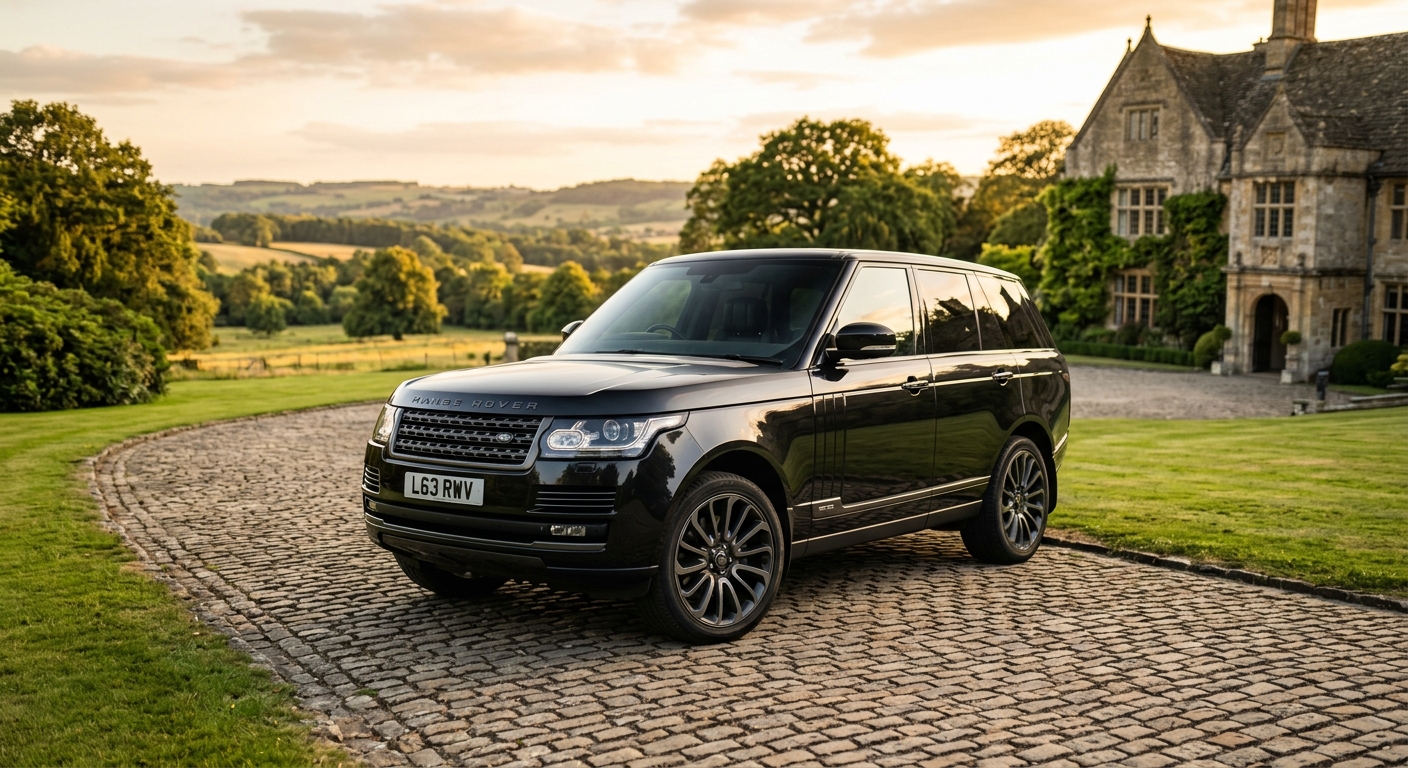
When Land Rover unveiled the fourth-generation Range Rover in 2012, it didn’t just evolution the breed, it revolutionized it. The 2013 Range Rover Autobiography represents the culmination of over four decades of refinement, delivering a luxury experience that rivals the world’s finest sedans while maintaining the go-anywhere capability that made the nameplate legendary.
A Revolution in Aluminum
The most significant change for the L405 generation wasn’t immediately visible but fundamentally transformed everything about the Range Rover experience. Land Rover’s engineers replaced the traditional steel ladder frame with an all-aluminum monocoque construction, shedding nearly 700 pounds compared to its predecessor while dramatically improving structural rigidity.
This weight reduction pays dividends everywhere. The Range Rover feels more agile on pavement, more responsive to steering inputs, and surprisingly athletic for something that tips the scales at over 5,000 pounds. The aluminum construction also provides a more refined driving experience, with reduced noise, vibration, and harshness filtering through to the cabin.
Effortless Power
Under the hood, the Autobiography trim carries Land Rover’s supercharged 5.0-liter V8, producing 510 horsepower and 461 lb-ft of torque. This isn’t just about straight-line performance, though the Range Rover can sprint to 60 mph in just 5.1 seconds. Instead, it’s about effortless capability, the kind of smooth, linear power delivery that makes highway merging and mountain passes feel trivial.
The eight-speed automatic transmission, sourced from ZF, pairs beautifully with the supercharged V8. Shifts are imperceptible during relaxed driving but become crisp and decisive when you ask for more. The transmission’s intelligence in selecting the right gear for the situation contributes significantly to the Range Rover’s refined character.
Terrain Response Mastery
What truly sets the Range Rover apart from luxury SUV pretenders is its genuine off-road capability. The Terrain Response system offers multiple settings for different surfaces, while the air suspension can raise the vehicle nearly 12 inches for serious off-road work. Wade through 35 inches of water, climb seemingly impossible inclines, or descend treacherous slopes with complete confidence.
The Hill Descent Control system deserves special mention. It maintains a constant, safe speed during steep descents without driver input, allowing you to focus entirely on steering. Combined with the excellent all-around visibility and intuitive controls, the Range Rover makes challenging terrain feel almost mundane.
Interior Sanctuary
Step inside the Autobiography, and you’re greeted by one of the automotive world’s finest cabins. The seats, wrapped in the softest Oxford leather, offer 22-way adjustment and massage functions. The rear seats rival those found in luxury sedans costing twice as much, with generous legroom, individual climate controls, and entertainment screens.
Build quality represents a significant leap forward from previous Range Rovers. Panel gaps are tight, materials feel substantial, and the overall fit and finish approaches Germanic standards. The revised dashboard design places all controls within easy reach while maintaining the commanding driving position that defines the Range Rover experience.
Technology Integration
The InControl Touch Pro system, displayed on dual touchscreens, manages everything from navigation to vehicle settings. While not as intuitive as some systems, it offers comprehensive functionality and crisp graphics. The Meridian surround sound system fills the cabin with concert-hall acoustics, turning every journey into an acoustic experience.
The 2013 Range Rover Autobiography succeeds brilliantly at being everything to everyone: a capable off-road machine, a luxurious highway cruiser, and a status symbol that commands respect. While the supercharged V8’s thirst and the complex systems may concern some, the overall package represents British luxury at its most accomplished. This is how you redefine an icon while staying true to its core mission.