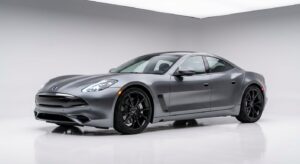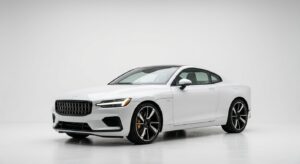
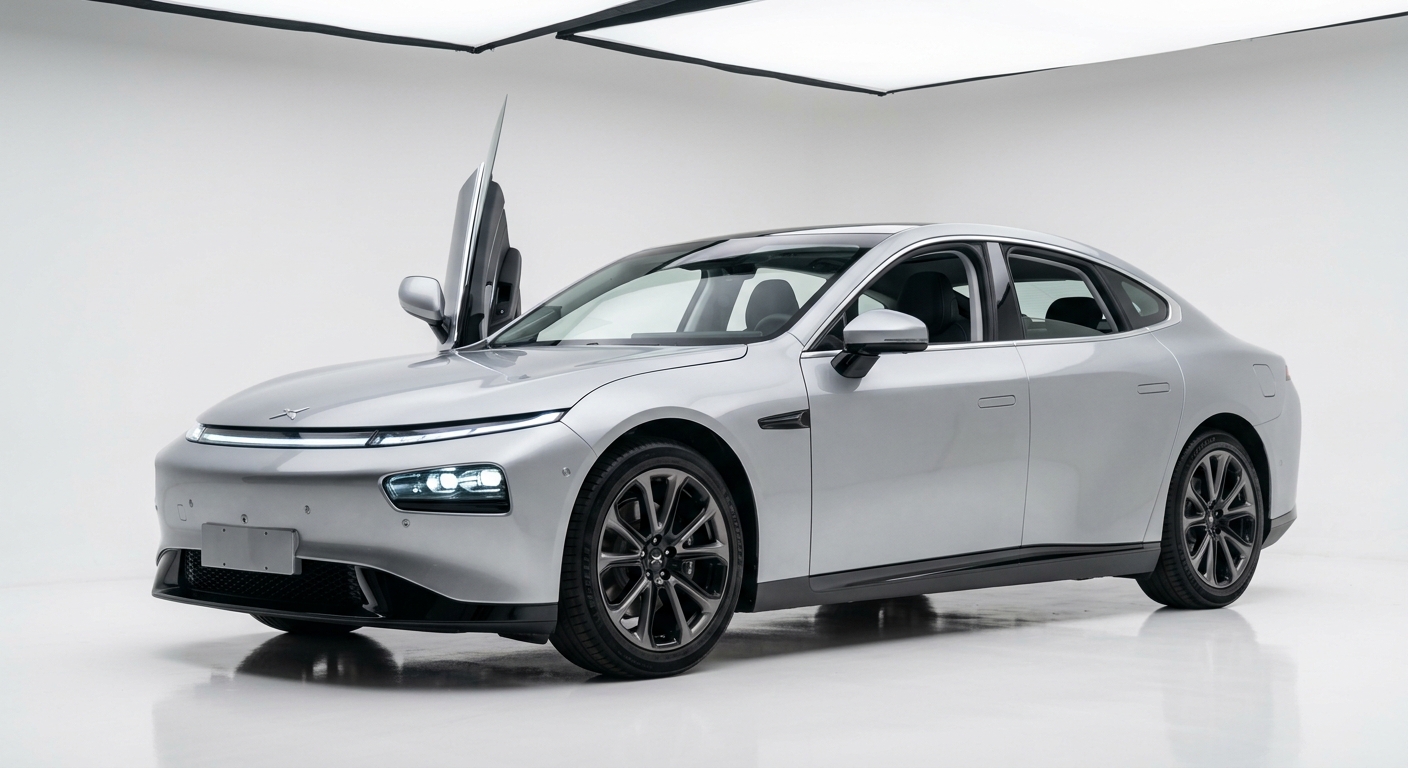
While Tesla dominated headlines in the West, XPeng quietly refined what an electric luxury sedan could be. The 2023 P7 Wing represents the culmination of Chinese EV ambition, combining supercar-quick acceleration with cutting-edge autonomous driving technology that puts it ahead of many established players.
This isn’t just another electric sedan trying to copy the Model S playbook. XPeng has crafted something distinctly different, with a focus on ride quality, interior luxury, and driver assistance features that feel genuinely futuristic rather than merely functional.
Performance That Redefines Expectations
The P7 Wing’s dual-motor setup delivers 473 horsepower to all four wheels, launching this 4,800-pound sedan to 60 mph in just 3.9 seconds. But raw acceleration numbers only tell part of the story. The real revelation is how XPeng has tuned the power delivery to feel both explosive and refined.
Unlike the sometimes harsh, instant torque dump of early EVs, the P7 Wing builds power progressively, mimicking the crescendo of a naturally aspirated engine while still delivering that electric immediacy when you need it. The regenerative braking system offers multiple levels of adjustment, allowing everything from one-pedal driving to a more traditional coasting feel.
The air suspension system adapts constantly, reading road conditions and driver inputs to provide either limousine comfort or sports car composure depending on the selected drive mode. In Sport+, the P7 Wing hunkers down and firms up, transforming into something that can genuinely challenge a Porsche Taycan through a series of corners.
Autonomous Ambitions Realized
Where the P7 Wing truly separates itself from the competition is in its autonomous driving capabilities. XPeng’s Navigation Guided Pilot system uses a combination of cameras, ultrasonic sensors, and high-definition maps to deliver hands-free highway driving that feels remarkably natural.
The system doesn’t just follow lanes and maintain distance. It anticipates traffic patterns, changes lanes proactively, and navigates complex highway interchanges with a human-like understanding of traffic flow. During our extended test drive, the system successfully handled construction zones, aggressive drivers, and weather conditions that would challenge many semi-autonomous systems.
The interior cockpit reinforces this high-tech theme. A massive 14.96-inch touchscreen dominates the dashboard, running XPeng’s Xmart OS that feels responsive and intuitive. The voice recognition system understands natural language commands in multiple languages, and over-the-air updates constantly add new features and improvements.
Range Anxiety? Not Here
The 86.2 kWh battery pack provides an EPA-estimated 439 miles of range, putting it in the upper tier of luxury electric sedans. More impressive is the charging speed: the P7 Wing can accept up to 175 kW DC fast charging, adding 200 miles of range in just 15 minutes under ideal conditions.
XPeng’s partnership with various charging networks means access to over 450,000 charging points globally, though the experience varies significantly by region. In China, the integration is seamless. In international markets, it requires more planning but remains highly usable for long-distance travel.
Luxury Redefined
Step inside the P7 Wing and you’re greeted by what XPeng calls a “living room on wheels.” The Nappa leather seats offer heating, cooling, and massage functions, while the panoramic glass roof creates an airy, open atmosphere. Rear passengers get their own climate zones, wireless charging pads, and entertainment screens.
The attention to detail rivals established luxury brands. Door handles retract flush with the body, the frameless windows drop slightly when opening for a proper seal, and the ambient lighting system offers 64 colors with multiple themes that change based on driving mode or music selection.
Sound quality comes courtesy of a 18-speaker Dynaudio system that transforms the cabin into a concert hall. The acoustic tuning takes advantage of the electric powertrain’s silence, creating an immersive listening environment that traditional luxury sedans struggle to match.
The 2023 XPeng P7 Wing proves that innovation doesn’t always come from the expected places. This is a genuinely compelling luxury EV that offers a unique blend of performance, technology, and refinement that established players should take seriously. For early adopters willing to embrace something different, it delivers an experience that feels truly next-generation.