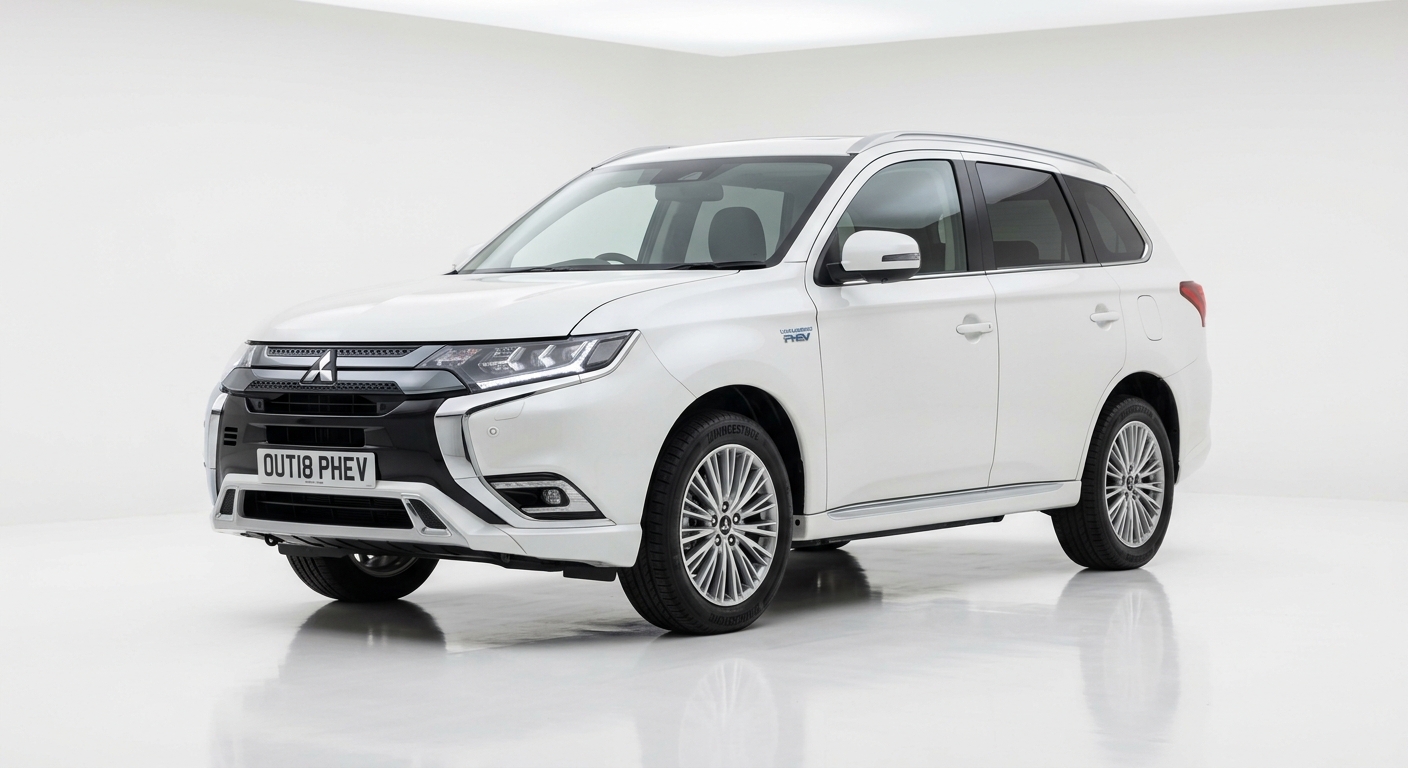
While Tesla grabbed headlines and Toyota perfected hybrids, Mitsubishi quietly created something genuinely useful: a plug-in hybrid SUV that actually makes sense for real families. The 2018 Outlander PHEV represents the kind of pragmatic electrification that most people need, delivering 22 miles of electric-only range wrapped in a practical, affordable package that seats seven.
This isn’t about making a statement or setting lap records. The Outlander PHEV is about making electrification work for people who need cargo space, all-weather capability, and the security of knowing they’ll never be stranded with a dead battery.
The Dual-Motor Advantage
Unlike traditional hybrids that use electric motors as assistants to a gasoline engine, the Outlander PHEV flips the script. Two electric motors handle most of the work, with a 2.4-liter four-cylinder engine that primarily serves as a generator. The front motor produces 82 horsepower, while the rear motor adds another 95 horsepower, creating a sophisticated all-wheel-drive system that responds instantly to traction demands.
The beauty of this setup becomes apparent the moment you press the accelerator. There’s no lag, no CVT rubber-band effect, just immediate electric torque that pulls you smoothly away from stops. The gasoline engine remains largely invisible during normal driving, firing up occasionally to maintain battery charge or provide extra power during highway merging.
Electric Silence, Gasoline Confidence
Twenty-two miles of electric range might not sound impressive compared to modern EVs, but it’s perfectly calibrated for the average commute. Most owners find they can complete daily errands, school runs, and shopping trips without burning a drop of gasoline. When the battery depletes, the transition to hybrid mode is seamless, with the system automatically managing power flow between the motors and engine.
The regenerative braking system offers multiple levels of intervention, from gentle energy recovery to aggressive one-pedal driving. The paddle shifters don’t control gears but rather adjust regeneration intensity, allowing drivers to tailor the experience to their preferences and maximize energy recovery on long descents.
Practical Packaging
Mitsubishi deserves credit for integrating the hybrid system without major compromises to interior space. The battery pack lives beneath the floor, maintaining the Outlander’s generous cargo area and seven-seat configuration. The third row remains tight for adults but works perfectly for children, while the second row slides and folds to optimize passenger and cargo flexibility.
The interior quality represents typical Mitsubishi pragmatism: not luxurious, but well-built and thoughtfully designed. The infotainment system includes dedicated screens for monitoring energy flow and efficiency, helping drivers understand and optimize the hybrid system’s operation. Physical controls remain for climate and audio functions, a refreshing approach in an era of touch-everything interfaces.
All-Weather Capability
The dual-motor all-wheel-drive system provides genuine capability in challenging conditions. Unlike mechanical AWD systems that can be sluggish to respond, the electric motors can instantly adjust torque distribution between front and rear axles. Combined with adequate ground clearance and protective underbody panels, the Outlander PHEV handles rough roads and moderate off-road situations with confidence.
Snow and ice performance impresses particularly, with the electric motors providing precise modulation of power delivery that helps maintain traction where conventional drivetrains might struggle. The system can even operate in electric-only mode during low-speed off-road situations, providing silent progress through nature.
The Charging Reality
The 12-kWh battery charges fully in about four hours on a 240-volt Level 2 charger, or eight hours on standard household current. While DC fast charging isn’t available, the modest battery size makes rapid charging less critical than in pure electric vehicles. Most owners charge overnight at home, starting each day with a full electric range.
Real-world efficiency depends heavily on driving patterns and charging discipline. Owners who charge regularly and drive mostly local distances can achieve triple-digit MPGe figures, while those who ignore the plug and treat it as a conventional hybrid will see numbers closer to traditional SUV territory.
The 2018 Outlander PHEV succeeds where many electrified vehicles stumble: it makes perfect sense for the people who need it most. This is practical electrification executed with Japanese precision and common sense. While it may not inspire passion, it delivers something far more valuable: dependable, efficient transportation that happens to run on electricity most of the time.