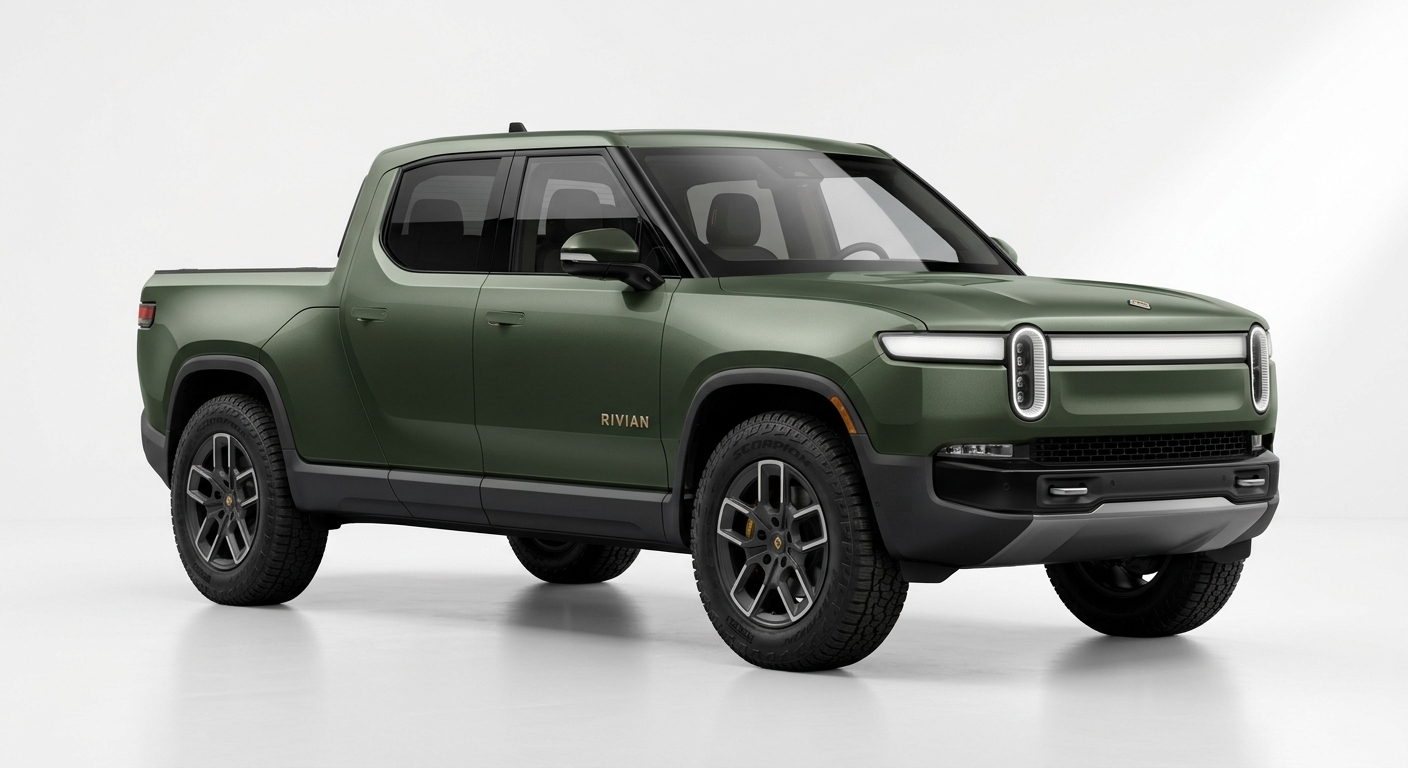
When Amazon decided to back an electric truck startup with billions of dollars, skeptics wondered if Rivian could deliver on the bold promises. The 2022 R1T doesn’t just meet those expectations, it redefines what an electric pickup can be. This isn’t just Tesla’s Cybertruck competitor: it’s a genuine truck that happens to be electric, built by people who understand both adventure and innovation.
Electric Power, Real Truck Capability
The R1T’s quad-motor setup delivers 835 horsepower and 908 lb-ft of torque, numbers that would make a Hellcat blush. But raw power is only part of the story. Each wheel gets its own motor, enabling unprecedented control in challenging terrain. The truck can tank turn like a military vehicle, pivot around obstacles, and climb grades that would leave conventional trucks spinning their wheels.
Behind the wheel, the R1T feels substantial yet refined. The air suspension adjusts from highway-friendly low mode to serious off-road height with the press of a button. In Sport mode, this 7,000-pound truck launches to 60 mph in just 3.0 seconds, delivering supercar acceleration with pickup truck practicality.
Adventure-Ready Innovation
Rivian’s party trick is the “Tank Turn” mode, which rotates the truck nearly in place by spinning opposite wheels in different directions. It’s not just a gimmick: in tight trail situations, it’s genuinely useful. The truck also offers wade mode for deep water crossings, raising the suspension and sealing critical systems for up to three feet of water depth.
The R1T’s “Camp Mode” maintains climate control and power outlets for extended periods without depleting the main battery. Combined with the available Camp Kitchen that slides out of the truck’s innovative “frunk” space, it transforms any location into a base camp. The attention to outdoor recreation details shows throughout, from the vehicle’s rugged underbody protection to its generous ground clearance.
Technology Integration
Inside, the R1T balances high-tech features with intuitive operation. The central touchscreen handles most functions without being overwhelming, while physical controls remain for essential driving tasks. The truck’s over-the-air update capability means new features arrive regularly, much like Tesla’s approach but applied to serious truck duty.
Build quality impresses for a startup’s first effort. Panel gaps are tight, materials feel premium, and the overall execution suggests Rivian took manufacturing seriously from day one. The truck’s Launch Green paint and clean design language help it stand out in parking lots full of conventional pickups.
Real-World Range Reality
EPA-rated range of 314 miles proves optimistic in real-world driving, particularly when towing or tackling serious off-road terrain. Expect closer to 250 miles in mixed driving, with range dropping significantly under load. However, the truck’s 800-volt architecture enables rapid DC fast charging, adding meaningful range quickly when compatible chargers are available.
For buyers planning serious adventure use, the range limitations require more planning than conventional truck owners are accustomed to. But for weekend warriors and daily drivers who occasionally need real truck capability, the R1T delivers an compelling package.
The R1T proves that electric trucks don’t need to sacrifice capability for sustainability. While range anxiety remains real for heavy users, this pickup delivers genuine truck performance with supercar acceleration and genuine innovation. Rivian has built something special here: the first electric truck that truck people will actually want to drive.