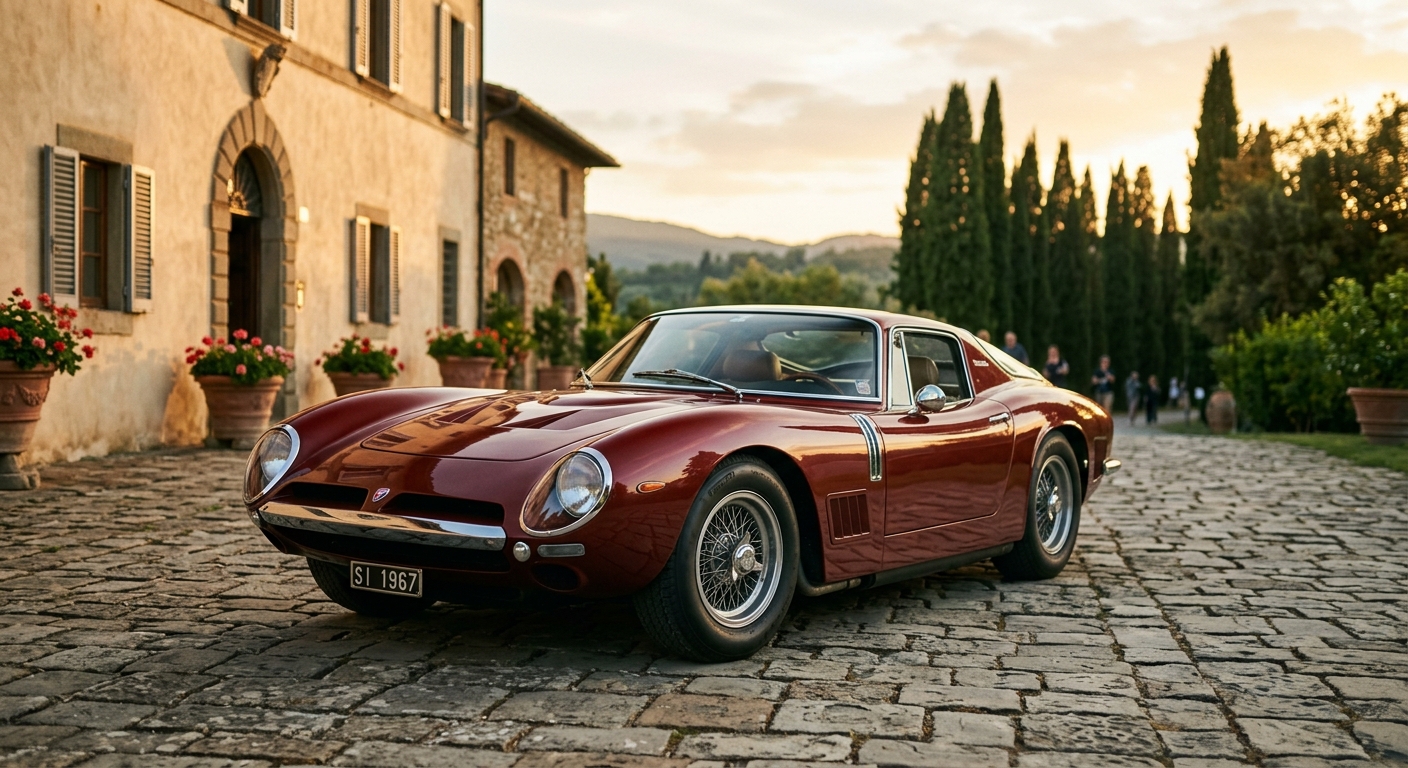
In the pantheon of 1960s Italian supercars, few names carry the mystique of Bizzarrini. While Ferrari and Lamborghini battled for headlines, Giotto Bizzarrini was quietly crafting what many consider the most visceral driving machine of the era. The 5300 GT Strada represented pure, uncompromising performance wrapped in one of the most striking bodies ever penned.
The Genius Behind the Machine
Giotto Bizzarrini wasn’t just another coachbuilder with grand ambitions. As the former chief engineer at Ferrari, he’d penned the legendary 250 GTO before striking out on his own in 1964. His philosophy was simple: create the fastest, most engaging sports car possible, with no concessions to comfort or convention. The 5300 GT Strada was that philosophy made manifest.
The car’s heart was pure American muscle: a 327 cubic inch Chevrolet Corvette V8 producing 365 horsepower. But everything around that engine was quintessentially Italian. Bizzarrini’s own chassis design featured a tubular steel frame that was both lighter and stiffer than anything Ferrari was producing. The suspension, with its sophisticated independent setup all around, was years ahead of its time.
Form Follows Function
The bodywork, penned by Giorgetto Giugiaro during his tenure at Bertone, remains one of automotive design’s greatest achievements. Every curve served a purpose. The impossibly low nose, barely 42 inches off the ground, channeled air through carefully designed ducts. The distinctive hood bulge wasn’t stylistic flourish but necessity, accommodating the American V8’s height.
Inside, the Strada made no pretense of luxury. The cockpit was pure function: lightweight racing seats, a simple dashboard dominated by a massive tachometer, and controls positioned for maximum efficiency. This wasn’t a grand tourer; it was a race car with license plates.
On the Road
Driving a 5300 GT Strada is an exercise in automotive purity that few modern cars can match. The Corvette V8 delivers its power with typical American directness, but the Italian chassis transforms that brute force into something sublime. The steering is immediate and unfiltered, communicating every nuance of the road surface. The brakes, massive Girling discs borrowed from racing, provide stopping power that was revolutionary for 1967.
The sound alone is worth the price of admission. The small-block Chevy’s rumble is amplified by side-exit exhaust pipes that send a spine-tingling symphony directly into the cabin. It’s loud, antisocial, and absolutely intoxicating.
Performance figures tell only part of the story. The sprint to 60 mph takes just 5.8 seconds, remarkable for the era, while top speed approaches 160 mph. But numbers can’t capture the Strada’s most compelling quality: its complete lack of electronic intervention. Every input from the driver translates directly to the road, creating a connection that modern supercars, for all their sophistication, struggle to match.
Rarity Breeds Legend
Only 133 examples of the 5300 GT were ever built, with just a handful of those being the road-going Strada specification. Most were the more track-focused Corsa variant, making genuine Stradas among the rarest supercars of any era. This scarcity, combined with the car’s incredible performance and Bizzarrini’s legendary reputation, has made surviving examples extraordinarily valuable.
The Bizzarrini 5300 GT Strada represents everything we’ve lost in modern supercar development: raw emotion, unfiltered feedback, and the kind of character that can only come from a genius engineer’s uncompromising vision. It’s not the most practical classic you can buy, but it might just be the most rewarding. For those lucky enough to experience one, the Strada offers a reminder of what supercars were like when they were built by madmen rather than committees.