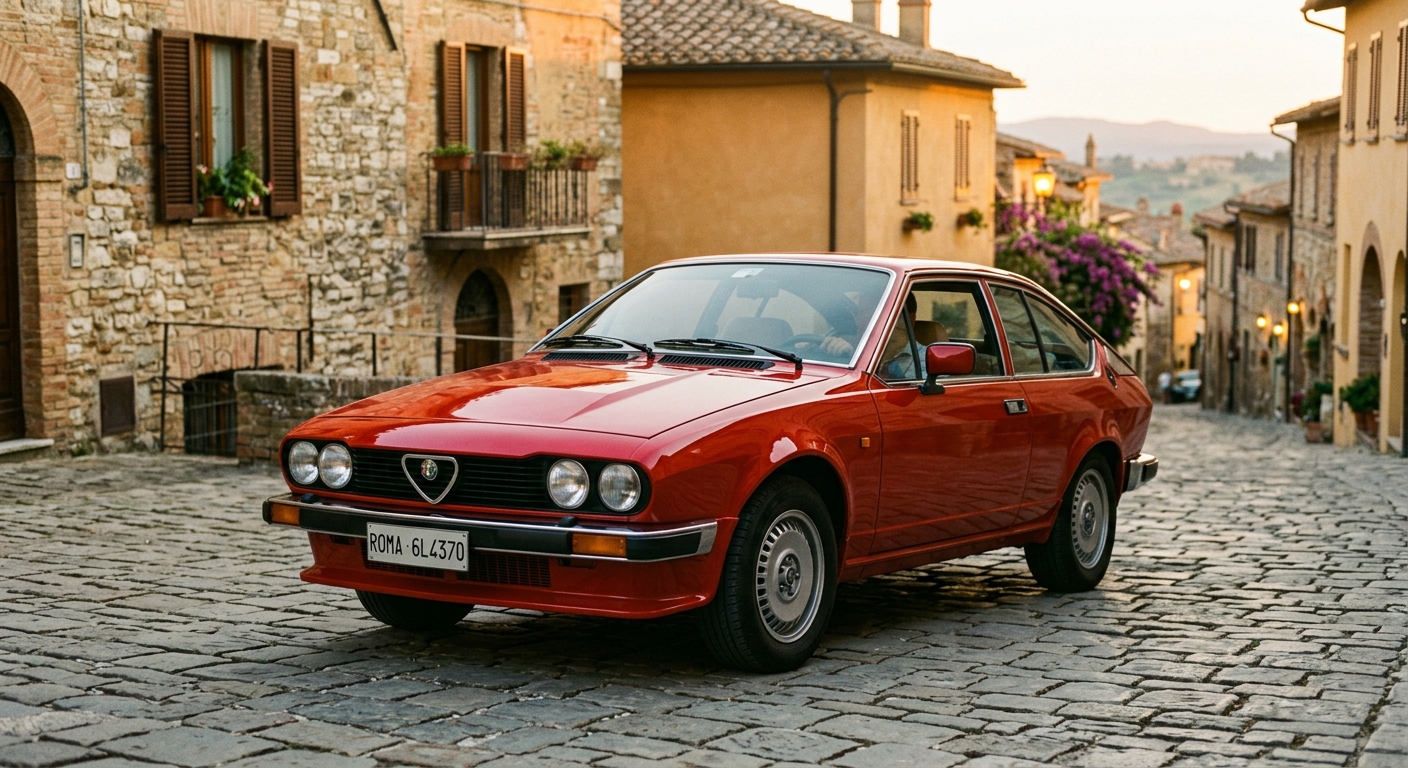
In 1985, Alfa Romeo was crafting its swan song for the analog era. The GTV6 represented everything the storied Italian marque did best: a sonorous V6 engine, telepathic steering, and enough character to make every drive feel like a scene from a European road movie. This was Alfa’s final hurrah before corporate ownership would dilute the magic.
The Heart of the Matter
At the core of the GTV6 lay Alfa Romeo’s magnificent 2.5-liter Busso V6, an engine that would become legendary not for its power output, but for its soul-stirring soundtrack. Giuseppe Busso’s masterpiece produced a modest 158 horsepower, but the way it delivered that power was pure poetry. The engine note built from a cultured burble at idle to a crescendo that could make grown enthusiasts weep with joy.
The V6 wasn’t just about aural pleasure. Its aluminum construction kept weight down, while the 60-degree configuration provided perfect primary balance. Twin Weber carburetors fed the beast, requiring the kind of mechanical sympathy that modern fuel injection has rendered obsolete. This was an engine you had to understand, coax, and ultimately befriend.
Scalpel-Sharp Dynamics
Built on Alfa’s proven Sud platform, the GTV6 combined a sophisticated chassis with near-perfect weight distribution. The front-mounted engine sat entirely behind the front axle line, creating a balance that rivaled purpose-built sports cars. Independent suspension all around, with MacPherson struts up front and a de Dion rear axle, provided the foundation for handling that bordered on the telepathic.
The steering was the GTV6’s secret weapon. Unassisted and beautifully weighted, it delivered information from the road surface with stunning clarity. Turn-in was immediate, and the car changed direction with an eagerness that made every corner an event. This wasn’t the brutal, overwhelming performance of modern supercars, but something more nuanced: a perfect conversation between driver and machine.
Design Icon
Giorgetto Giugiaro’s design for the GTV6 was a masterclass in restraint. The wedge profile spoke of the era’s fascination with angular forms, yet every line served a purpose. The distinctive nose, with its classic Alfa Romeo triangular grille, led to a glasshouse that maximized visibility while maintaining elegant proportions.
Inside, the GTV6 was pure 1980s Italian style. The dashboard curved around the driver in a purposeful arc, with clear instruments and logical controls. The seats, upholstered in period-correct cloth or optional leather, provided excellent support during spirited driving. This was a cabin designed for the serious driver, not the casual motorist.
The Alfa Experience
Living with a GTV6 required patience, understanding, and a good relationship with a knowledgeable mechanic. These were temperamental machines that rewarded mechanical sympathy with moments of automotive transcendence. The Weber carburetors needed regular attention, the electrical systems required Italian-car expertise, and rust prevention was an ongoing battle.
But for those willing to accept the GTV6’s quirks, the rewards were immense. This was a car that made a trip to the grocery store feel like a rallying stage. The combination of that magnificent V6 soundtrack, precise steering, and perfectly balanced chassis created driving experiences that modern cars, for all their technical superiority, struggle to match.
The GTV6 stands as proof that the best cars aren’t always the fastest or most reliable, but those that forge the strongest emotional connections. In an era of increasingly sanitized performance cars, the GTV6 reminds us what we’ve lost: soul, character, and the kind of automotive passion that makes every journey memorable. This was Alfa Romeo at its absolute peak.