While Tesla dominated headlines, Chinese automaker Xpeng quietly engineered one of the most compelling electric sedans on the market. The P7 doesn’t just challenge the Model S with impressive range and performance, it pushes the boundaries of autonomous driving technology in ways that would make Elon Musk take notice.
Design Philosophy: Form Meets Function
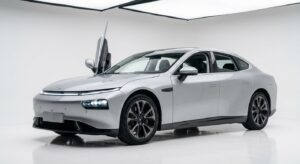
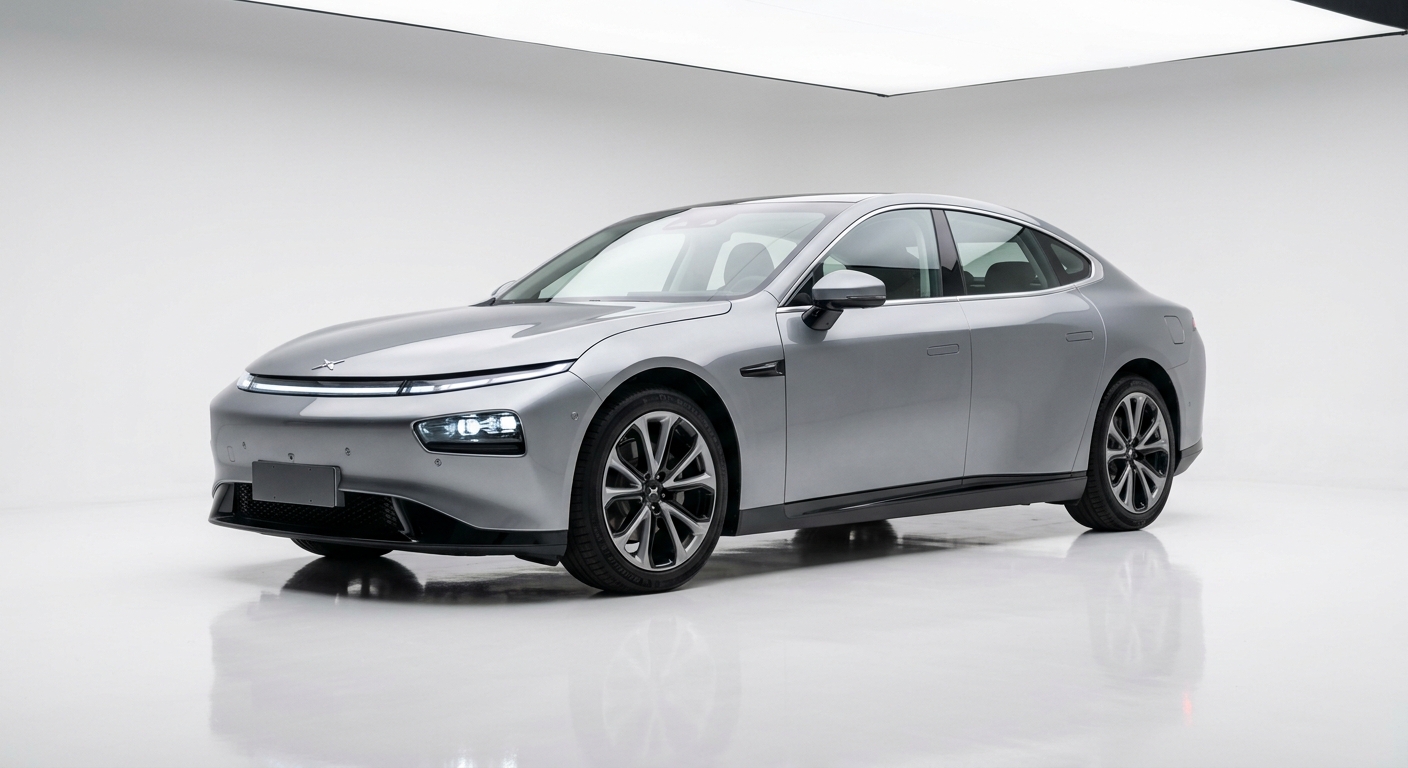
The P7’s exterior strikes an elegant balance between aerodynamic efficiency and visual drama. Its coefficient of drag sits at just 0.236 Cd, making it one of the most slippery production cars ever built. The front fascia features a closed-off grille typical of EVs, but Xpeng’s designers added character with a distinctive light bar that spans the width of the car. At night, this creates a futuristic signature that’s immediately recognizable.
The side profile reveals the P7’s four-door coupe proportions, with a gently sloping roofline that doesn’t compromise rear headroom. Hidden door handles pop out when approached, while the flush-mounted cameras replace traditional mirrors in certain markets. At 4.88 meters long, the P7 sits squarely in premium sedan territory.
Interior Technology: The Digital Cockpit
Step inside and you’re greeted by Xpeng’s interpretation of the minimalist EV interior. A massive 14.96-inch touchscreen dominates the dashboard, running the company’s Xmart OS 2.0 interface. Unlike Tesla’s stark approach, Xpeng retained some physical controls, including a traditional gear selector and climate control buttons.
The cabin materials feel genuinely premium, with Nappa leather appointments and real wood trim. Front seats offer massage functions and heating, while rear passengers enjoy abundant legroom thanks to the car’s 2.998-meter wheelbase. The panoramic glass roof creates an airy atmosphere, though some may find it contributes to cabin heat in sunny climates.
Autonomous Driving: XPILOT 3.0
Where the P7 truly differentiates itself is in autonomous driving capability. The XPILOT 3.0 system utilizes 14 cameras, five millimeter-wave radars, 12 ultrasonic sensors, and high-precision GPS to create a comprehensive understanding of the vehicle’s surroundings. In highway conditions, the system can handle lane changes, merging, and even navigate highway interchanges without driver input.
The party trick is the car’s ability to park itself in tight spaces, summoned by smartphone app. It’s not just a gimmick either, the system works reliably in real-world conditions where many competing systems struggle.
Performance and Range: The Numbers Game
The P7 Performance model we tested packs dual motors producing 430 horsepower and 484 lb-ft of torque. Launch control engages with a firm press of the accelerator, catapulting the sedan to 60 mph in just 4.3 seconds. The acceleration feels effortless and linear, with none of the drama of an internal combustion engine but plenty of addictive instant torque.
More impressive is the efficiency. The 80.9 kWh battery pack delivers up to 439 miles of range on the NEDC cycle, though real-world highway driving typically yields around 320-350 miles. That’s still competitive with the Tesla Model S, and the P7’s charging capabilities are equally impressive.
Charging and Infrastructure
DC fast charging peaks at 120 kW, allowing 10-80% charges in approximately 31 minutes under ideal conditions. Xpeng has also invested heavily in charging infrastructure, particularly in Chinese markets, with plans for global expansion following the car’s international rollout.
Driving Dynamics: Surprisingly Engaging
Despite its focus on technology and efficiency, the P7 delivers engaging driving dynamics. The low center of gravity from the floor-mounted battery pack creates a stable, planted feel through corners. The suspension setup uses double wishbones up front and a five-link rear arrangement, providing a good balance between ride comfort and handling precision.
Steering feel is appropriately weighted and direct, though it lacks the ultimate feedback of the best sports sedans. The regenerative braking system offers multiple levels of adjustment, including a one-pedal driving mode that brings the car to a complete stop.
The Xpeng P7 proves that Chinese automakers are no longer content to simply copy established players. With genuine innovation in autonomous driving, impressive efficiency, and competitive performance, it’s a compelling alternative to Tesla’s dominance in the premium EV sedan space. The future of electric mobility might just be speaking Mandarin.