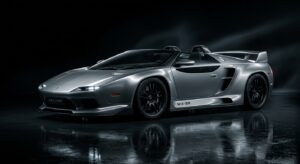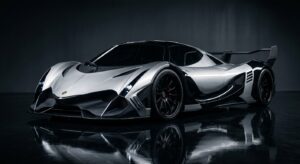
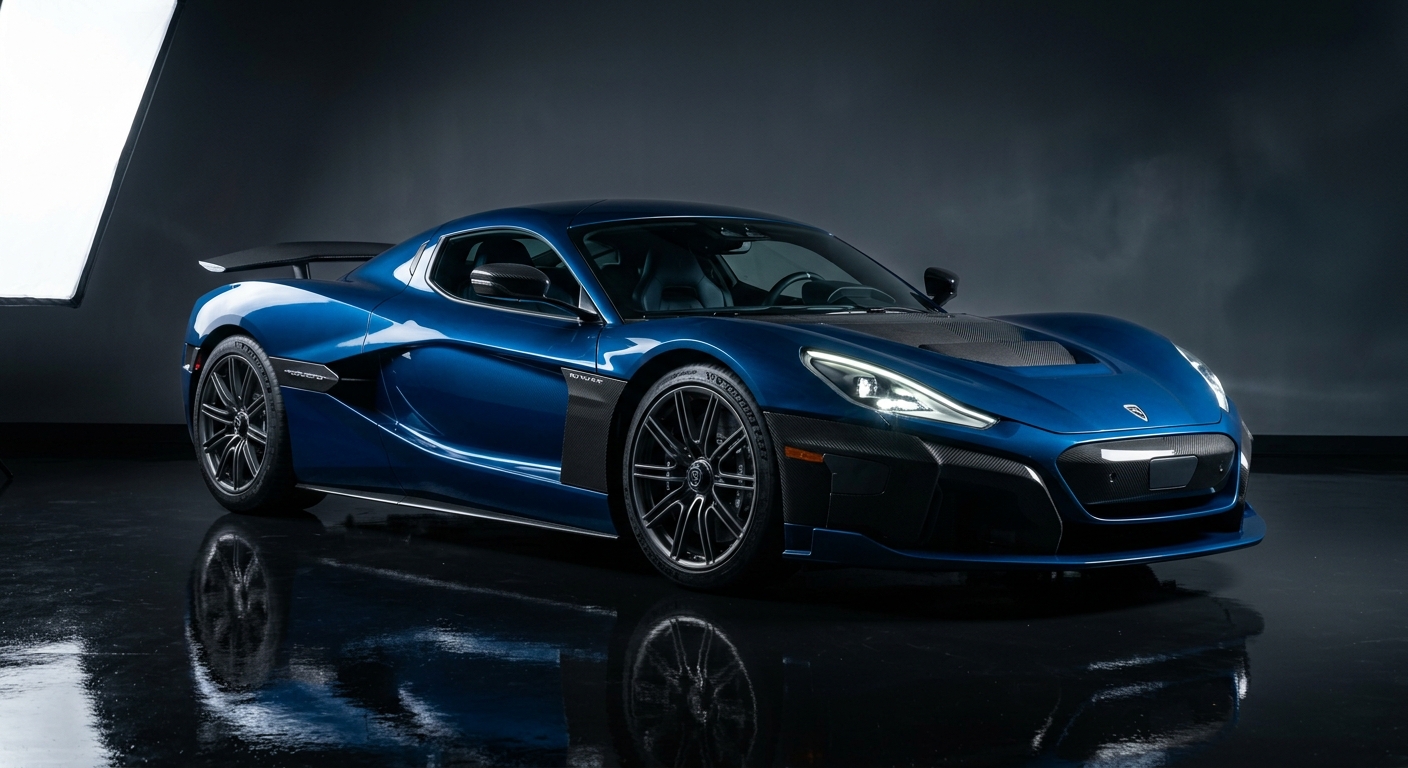
The Rimac Nevera R represents the absolute pinnacle of electric hypercar engineering, taking everything that made the original Nevera groundbreaking and amplifying it to track-focused extremes. This Croatian masterpiece doesn’t just challenge conventional supercars; it obliterates every preconception about what electric performance can achieve.
Unleashing Electric Fury
Behind the wheel of the Nevera R, the first sensation isn’t the staggering 2,107 horsepower figure, it’s the complete redefinition of acceleration. Where traditional supercars build power through rev ranges, the Nevera R delivers its full fury instantaneously. The four electric motors, one at each wheel, create a symphony of torque vectoring that makes the car feel telepathically connected to your thoughts.
The acceleration from standstill is genuinely otherworldly. The 1.74-second sprint to 60 mph doesn’t feel like motion in the conventional sense, more like reality itself being compressed and stretched. There’s no drama from shifting gears or climbing power bands, just relentless, linear acceleration that continues building until physics and aerodynamics finally intervene at 258 mph.
Track-Bred Precision
What separates the Nevera R from its standard sibling is the obsessive focus on track performance. The suspension has been completely retuned with track-specific damping and spring rates. The aerodynamics package adds genuine downforce through a more aggressive front splitter, side skirts, and a substantial rear wing that can generate up to 15% more downforce than the base car.
The carbon fiber construction keeps weight to a remarkable 4,740 pounds, impressive for a car packing a 120kWh battery pack. The center of gravity sits incredibly low, and the 50:50 weight distribution creates a platform that changes direction with supernatural agility for something this powerful.
Croatian Engineering Excellence
Rimac’s attention to detail borders on obsessive. The cabin blends luxury with purpose, featuring Alcantara-wrapped surfaces, carbon fiber accents, and a driver-focused cockpit that puts every control exactly where it should be. The digital instrument cluster provides real-time information about power distribution, thermal management, and battery status.
The Rimac All-Wheel Torque Vectoring system represents the cutting edge of electric vehicle dynamics. Each motor can be controlled independently with millisecond precision, creating cornering characteristics that seem to defy the laws of physics. The car can send power exactly where it’s needed, when it’s needed, with a level of precision no mechanical differential could ever achieve.
Living with Lightning
Despite its track focus, the Nevera R remains surprisingly civilized in daily driving. The ride quality, while firm, doesn’t punish passengers, and the cabin provides excellent refinement when you’re not exploring the outer limits of performance. The 340-mile range ensures real-world usability, while 350kW DC fast charging means you’re never far from getting back on the road.
The Nevera R isn’t just about straight-line speed, though that aspect is thoroughly covered. It’s about demonstrating that electric propulsion can create the most engaging, most precise, most devastatingly effective supercar experience ever conceived. This isn’t the future of performance cars, it’s the present, delivered with Croatian precision and vision.
The Rimac Nevera R doesn’t just represent the future of supercars, it obliterates the very concept of what we thought possible from a road car. This Croatian masterpiece delivers performance that borders on the supernatural while maintaining the refinement and usability that separates genuine hypercars from track-only missiles. In an era where every manufacturer claims to build the ultimate driving machine, Rimac has simply gone ahead and actually built it.