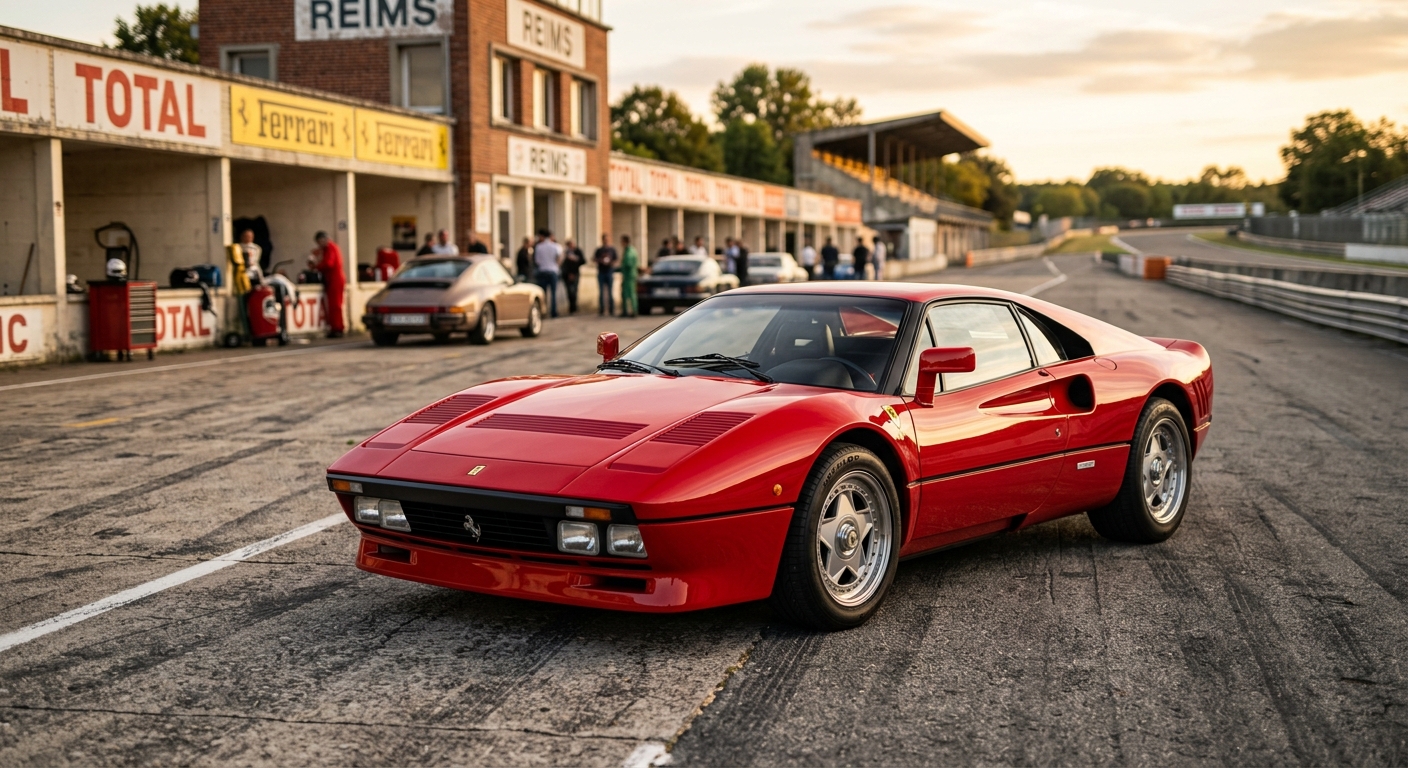
In 1985, Ferrari created something unprecedented: a road car born purely from racing necessity that would inadvertently launch the modern hypercar era. The 288 GTO wasn’t just another exotic sports car, it was a homologation special built to satisfy Group B racing regulations, and in doing so, it established the template for every limited-production, track-focused supercar that followed.
Racing Genesis
The 288 GTO’s story begins with Enzo Ferrari’s burning desire to return to sports car racing dominance. Group B regulations required manufacturers to build 200 road-going examples of their race cars, and Ferrari saw an opportunity to create something extraordinary. Starting with the 308 GTB platform, they stretched the wheelbase by 4.3 inches, widened the body, and completely reimagined what a Ferrari could be.
The heart of this transformation was the engine: a 2.8-liter twin-turbocharged V8 that produced 400 horsepower, making it the most powerful road-going Ferrari ever built at the time. This wasn’t simply a turbocharged version of the 308’s V8, it was a completely redesigned unit with a cross-plane crankshaft, IHI turbochargers, and Weber-Marelli fuel injection. The result was explosive performance wrapped in Pininfarina’s most aggressive bodywork yet.
Driving the Legend
Behind the wheel, the 288 GTO reveals its dual personality immediately. At low speeds, it’s surprisingly docile for such an extreme machine. The clutch is heavy but manageable, the steering precise if weighty, and the visibility reasonable despite the dramatic bodywork. But once the turbos spool up around 3,500 rpm, the transformation is violent and intoxicating.
The acceleration is savage by any standard, but in 1985 it was otherworldly. Zero to 60 mph arrives in just 4.9 seconds, but it’s the mid-range surge that defines the experience. From 80 to 120 mph, the 288 GTO pulls with a ferocity that pins you to the Recaro seats while the distinctive turbo whistle builds to a crescendo behind your head.
The handling strikes a brilliant balance between race car precision and road car usability. The suspension is firm but not punishing, allowing the car to attack corners with confidence while remaining composed over imperfect surfaces. The steering provides excellent feedback, and despite the significant power increase over the 308, the chassis feels completely in control.
Design Revolution
Visually, the 288 GTO broke new ground for Ferrari design. Pininfarina took the elegant 308 and transformed it into something far more aggressive and purposeful. The flared wheel arches, deep front air dam, side-mounted oil coolers, and distinctive rear spoiler weren’t styling exercises, they were functional aerodynamic elements born from racing requirements.
The interior maintains Ferrari’s traditional focus on the driver, with a classic gated manual transmission, analog gauges, and supportive racing seats. The materials feel special without being ostentatious, perfect for a car that prioritizes function over luxury. Every surface and control has been designed with performance in mind.
Historical Significance
Only 272 examples of the 288 GTO were ultimately produced, making it one of Ferrari’s rarest modern classics. Ironically, Group B was cancelled before Ferrari could race the car, but this twist of fate only enhanced the 288 GTO’s mystique. It became the foundation for the even more extreme F40, establishing Ferrari’s formula for limited-production specials that continues today.
The 288 GTO’s influence extends far beyond Maranello. It proved that manufacturers could create profitable, low-volume supercars that pushed technological boundaries while satisfying wealthy enthusiasts’ desires for exclusivity. Every modern hypercar, from the McLaren F1 to today’s hybrid monsters, owes a debt to the 288 GTO’s pioneering approach.
The 288 GTO stands as one of Ferrari’s most significant achievements, a car that accidentally created the blueprint for the modern hypercar while pursuing racing glory. Its combination of devastating performance, exotic rarity, and historical importance makes it not just a great Ferrari, but one of the most influential supercars ever built. Today, as values soar past $4 million, the 288 GTO proves that true automotive legends only appreciate with time.