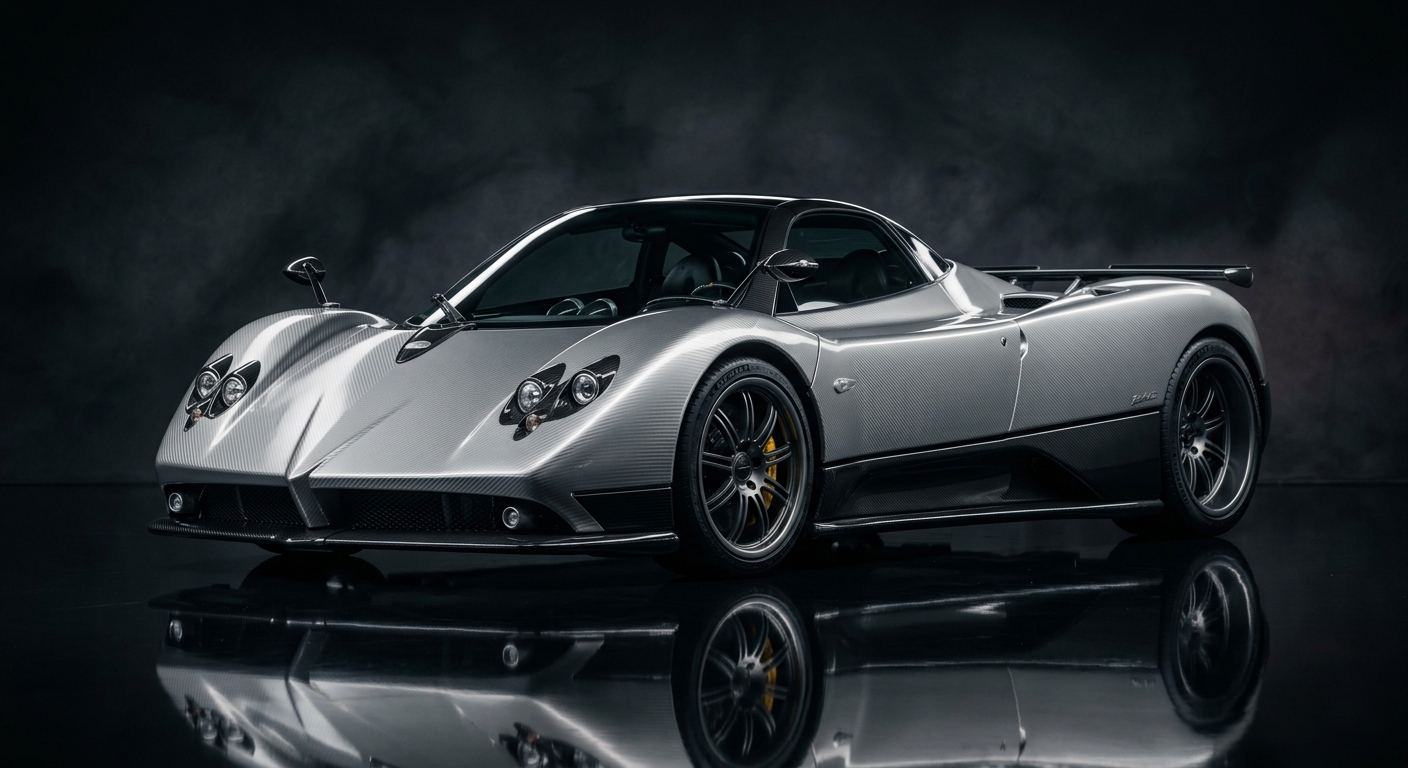
When Horacio Pagani unveiled his first creation in 1999, the automotive world witnessed the birth of something unprecedented: a supercar that blurred the line between engineering excellence and pure art. The Zonda C12 wasn’t just another Italian exotic, it was a manifesto written in carbon fiber and powered by Mercedes-AMG fury.
Emerging from Pagani’s modest facility in Modena, this hand-built masterpiece represented seven years of obsessive development and an uncompromising vision that would forever change how we think about supercars.
The Artist’s Canvas
Every surface of the Zonda C12 tells a story of meticulous craftsmanship. The carbon fiber monocoque wasn’t just structural, it was sculptural. Pagani’s background in composite materials, honed during his years with Lamborghini, culminated in bodywork that seemed to flow like liquid metal frozen in motion. The distinctive quad exhaust tips, positioned like organ pipes, announced the car’s presence with an unmistakable visual signature that would become Pagani’s calling card.
The interior elevated automotive craftsmanship to new heights. Hand-stitched leather, machined aluminum, and carbon fiber dashboard elements created an environment that felt more like a fighter jet cockpit than a traditional car interior. The gear shifter, carved from a single piece of aluminum, exemplified the attention to detail that would make Pagani legendary.
Mercedes Muscle Meets Italian Soul
At the heart of the C12 lived a 6.0-liter Mercedes-AMG V12, tuned to produce 394 horsepower. While the power figures might seem modest by today’s hypercar standards, the Zonda’s 1,250-kilogram dry weight meant every horsepower counted. The engine, sourced from AMG’s high-performance division, provided not just power but reliability that many boutique supercar manufacturers struggled to achieve.
The marriage of German engineering precision with Italian artistic flair created something magical. The V12’s naturally aspirated soundtrack, enhanced by Pagani’s carefully tuned exhaust system, delivered an orchestral performance that complemented the car’s visual drama.
Driving Poetry
Behind the wheel, the Zonda C12 revealed its true character. The steering, unassisted and direct, communicated every nuance of the road surface. The six-speed manual transmission required commitment and skill, rewarding the driver with mechanical engagement that few modern supercars can match.
The suspension, featuring Öhlins dampers and anti-roll bars, struck a remarkable balance between track-focused performance and surprising road civility. This wasn’t a stripped-out race car with license plates, it was a grand touring supercar that could devour continents as easily as it could attack apexes.
Limited Genesis
With only 106 examples produced between 1999 and 2002, the C12 established Pagani’s philosophy of extreme exclusivity. Each car required approximately six months to complete, with much of the work performed by hand. This artisanal approach meant no two Zondas were exactly alike, with customers able to specify unique details that made their car truly one-of-one.
The Zonda C12 didn’t just launch a supercar company, it established a new paradigm for what automotive artistry could achieve. Twenty-five years later, Horacio Pagani’s first creation remains as breathtaking and relevant as the day it debuted, proving that true vision transcends trends. This isn’t just a collector’s piece, it’s the genesis of modern hypercar philosophy.