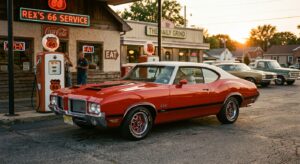
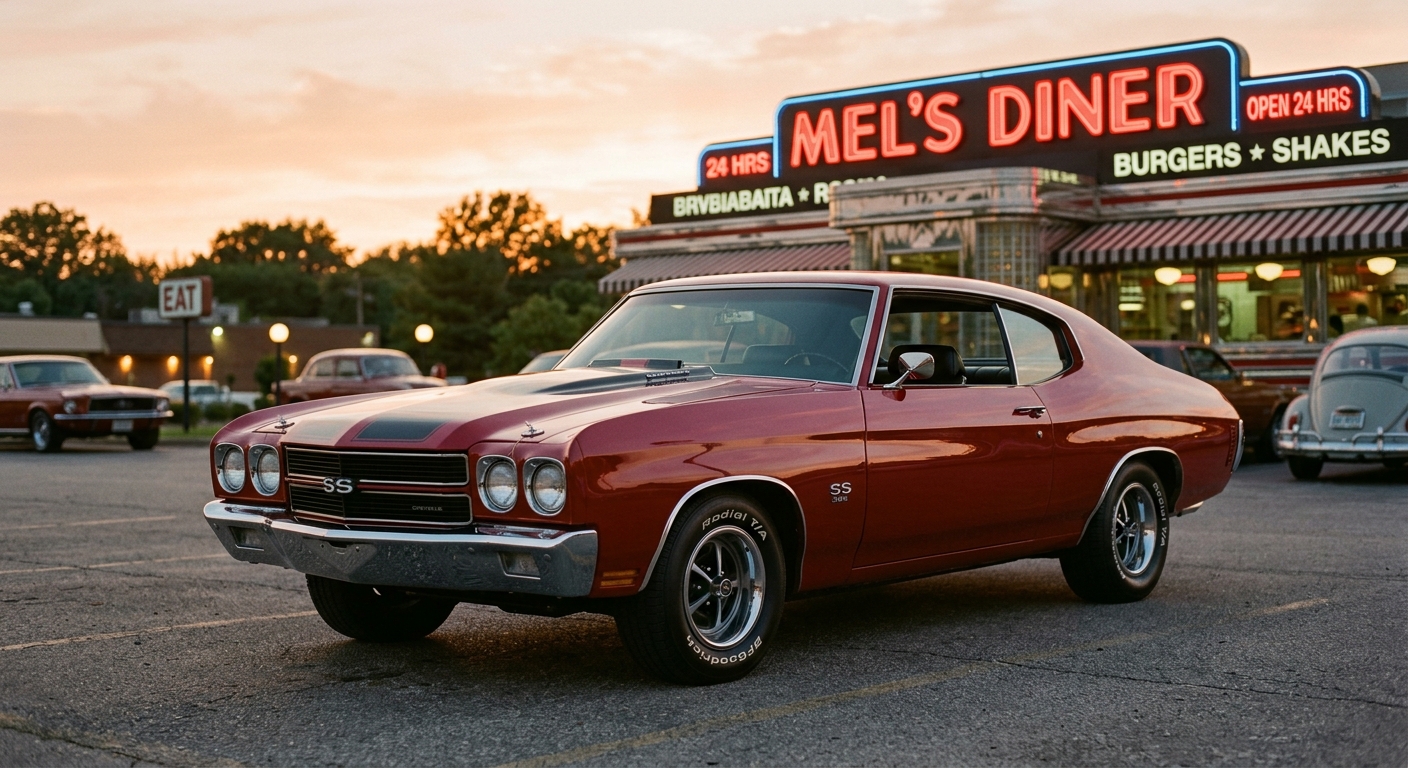
In 1970, if you wanted serious muscle car performance but couldn’t stretch to a Hemi ‘Cuda or Boss 429 Mustang, the Chevelle SS 396 was your ticket to the big leagues. This was the everyman’s muscle car, the one that put 375 horsepower within reach of regular folks who just wanted to go fast on Saturday nights.
The Sweet Spot of Muscle
The 1970 Chevelle SS represented the peak of the original muscle car era, just before emissions regulations and insurance companies started putting the squeeze on Detroit’s horsepower wars. With its redesigned body that was both more aggressive and more refined than its predecessor, the ’70 SS 396 struck the perfect balance between street manners and strip performance.
Under that power-bulged hood lived the L78 396 big block, a 402-cubic-inch beast that Chevrolet stubbornly continued to call a 396 for marketing reasons. With its solid lifter cam, 11.0:1 compression ratio, and free-breathing heads, this engine was all business. The advertised 375 horsepower was likely conservative, as many dyno tests suggested the actual output was closer to 400 horses.
Driving the Dream
Fire up the L78 and you’re immediately reminded why muscle cars captured America’s imagination. The big block settles into a lopey idle that vibrates through the entire chassis, promising violence at higher RPMs. The four-speed Muncie transmission shifts with mechanical precision, each gear change accompanied by a satisfying mechanical click.
On the road, the SS 396 delivers the kind of linear, building power that makes modern turbocharged engines feel artificial by comparison. There’s no lag, no waiting for boost to build. Just put your foot down and feel 400-plus pounds of torque trying to twist the car sideways. The rear tires break loose with alarming ease, sending the Chevelle into controlled slides that require both skill and respect to manage safely.
More Than Just Straight-Line Speed
While the Chevelle was never mistaken for a sports car, the SS package did include upgrades that made it more than just a drag strip hero. The F41 suspension option brought stiffer springs and shocks, while power steering and power front disc brakes helped manage the beast. The result was a car that could actually handle corners with some composure, even if it preferred long, sweeping curves to tight switchbacks.
The interior struck the right balance between performance and practicality. Bucket seats held you reasonably well during spirited driving, while the full complement of gauges kept you informed of engine vitals. Unlike some muscle cars that felt like stripped-down race cars, the Chevelle maintained enough creature comforts to serve as a daily driver.
Cultural Impact and Legacy
The 1970 Chevelle SS wasn’t just transportation; it was a cultural statement. This was the car that blue-collar America could actually afford, the muscle car that didn’t require a trust fund or connections at the dealership. It appeared in countless movies, songs, and teenage fantasies, representing freedom, rebellion, and the uniquely American belief that there’s no problem that can’t be solved with more horsepower.
Today, finding a genuine L78 SS 396 in good condition requires both patience and deep pockets. The combination of brutal performance and relatively affordable entry point when new means most were driven hard and put away wet. Survivors command serious money at auction, with pristine examples often exceeding six figures.
The 1970 Chevelle SS 396 represents everything great about the original muscle car era: honest performance, accessible pricing, and enough attitude to make every drive memorable. It may not have been the fastest or most sophisticated car on the street, but it was the one that regular folks could actually own and enjoy.