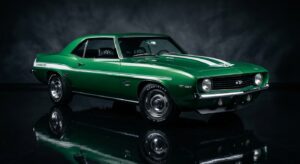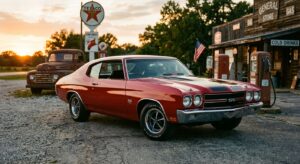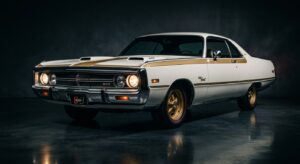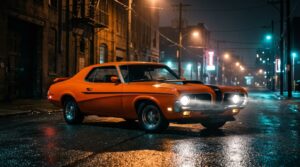
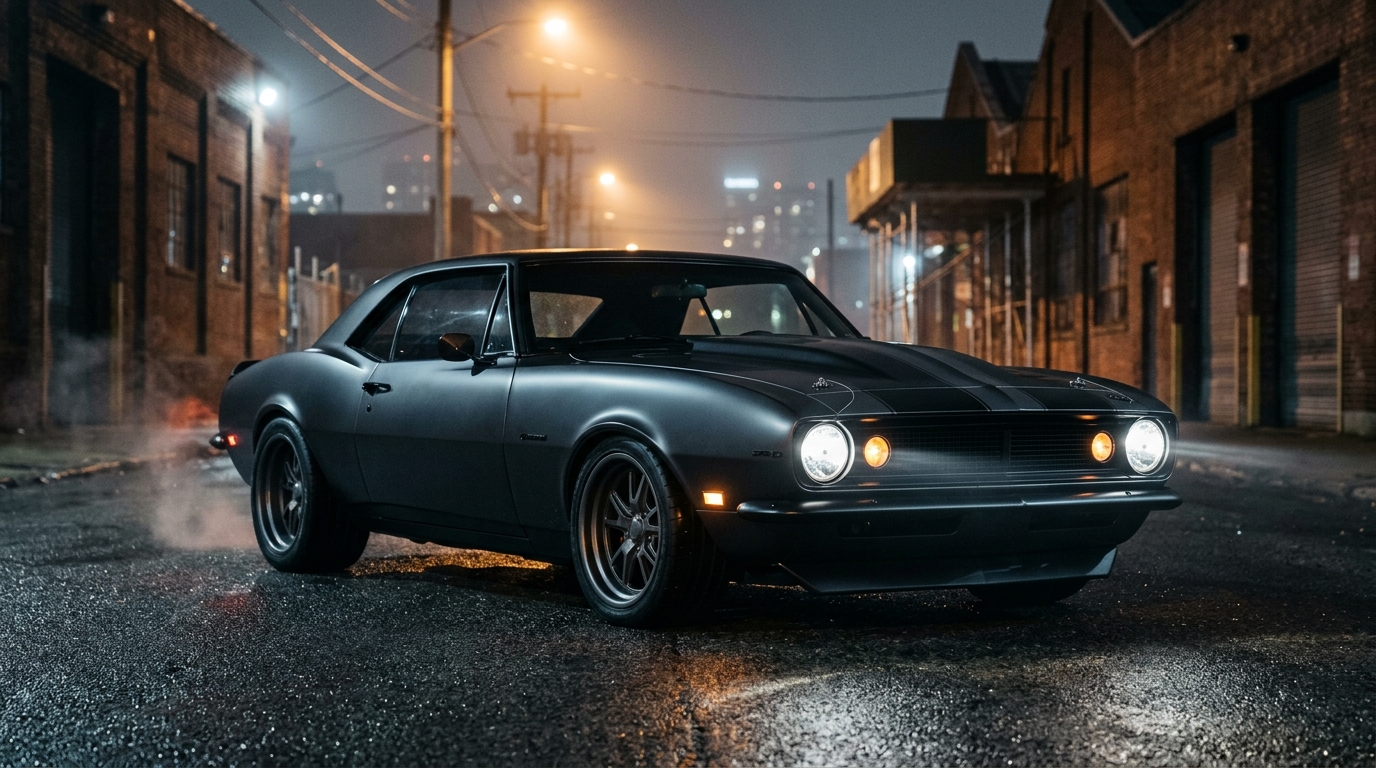
Somewhere past midnight on an empty strip of two-lane, a pair of round headlights swings out from a darkened gas station and a deep, lumpy idle rolls across the pavement like thunder with a grudge. Everyone in the muscle car world loves to say the Ford Mustang had Carroll Shelby, so what did Chevrolet have? Quietly, in the back rooms of a few Midwest dealerships, it had the COPO Camaro, and after dark it was every bit the terror Shelby’s Cobras were.
The Paperwork Rebel
COPO stands for Central Office Production Order, a GM internal process meant for fleet vehicles like taxis and police cruisers. Clever dealers, most famously Don Yenko in Canonsburg, Pennsylvania, and Fred Gibb in La Harpe, Illinois, figured out the system could be used to order a Camaro with options Chevrolet’s catalog never offered. The result in 1967 was the tiny, nearly mythical COPO 9560 Camaro, and it was not a Shelby project at all. It was Chevrolet’s back-door answer to anyone who thought the standard 396 Camaro was enough.
Here is where history needs correcting. The 1967 Camaro was offered with the big-block 396 as the top regular production engine, and that was the SS 396. The legendary COPO story really takes off in 1968 and 1969, with the 427 and the famous COPO 9561 and 9560 cars. A genuine 1967 COPO Camaro is a rarer and stranger beast: a handful of special-order cars, including the rumored early L72 427 test mules and dealer-requested variants. The 1967 car we are celebrating here is best understood as the foundation, the first-year Camaro platform that the whole COPO legend was built on.
The Heart of the Thing
The big-block that defined the muscle-era Camaro in 1967 was the 396 cubic inch Turbo-Jet, rated at 375 horsepower in its top SS form. For the COPO-style specials, the drama came from the legendary L72 427, a solid-lifter, high-compression monster with a rated 425 horsepower and a famously underrated true output well north of that. Bolted into a unibody pony car weighing roughly 3,600 pounds, it made the chassis feel like a suggestion.
What It Is Like After Dark
Night is where a car like this earns its reputation. The 1967 Camaro’s round sealed-beam headlights, set behind the optional Rally Sport hidden-lamp grille on some cars, throw a warm, yellowish pool of light that barely reaches 150 feet in practice. You drive differently when you cannot see what is coming, and with a big-block under your right foot that caution is not optional. Dashboard glow comes from a simple set of gauges with soft backlighting, and the cabin smells of vinyl, fuel, and hot metal.
The sound is the real headlight. A solid-lifter big-block at idle has a chop that rattles window glass in sleeping neighborhoods, and when you open it up the induction roar fills the cabin and echoes off every brick wall you pass. In a silent city at 2 a.m., it is not subtle, and it is not meant to be.
The Handling Reality
Let us be honest about the chassis. Leaf springs in the rear, front coil springs, and manual drum brakes on many cars mean this is a straight-line weapon first. Power steering was optional and the ratio is slow. Nobody bought a COPO Camaro to carve canyons. They bought it to disappear into the dark at the end of a quarter-mile and leave the other driver looking at taillights.
Why It Matters Tonight
The COPO program proved something important: a dealer with a clever idea and a stack of paperwork could make Detroit build the car enthusiasts really wanted. The 1967 Camaro was the canvas. Everything that followed, from the Yenko Super Camaro to the 1969 ZL1 aluminum-block 427, grew from the seeds planted that first year. Spend an evening with one parked under a streetlamp and you can feel the history humming in the sheet metal.
A 1967 Camaro with a big-block and a dealer’s cheeky paperwork trail is the kind of machine that makes midnight feel like opening night: loud, raw, and impossibly cool. It is not the sharpest tool on a twisty road, but when the streets empty out and the streetlights hum, nothing else sounds quite like it. Verdict: a thunderous slice of muscle car history that is happiest after dark.