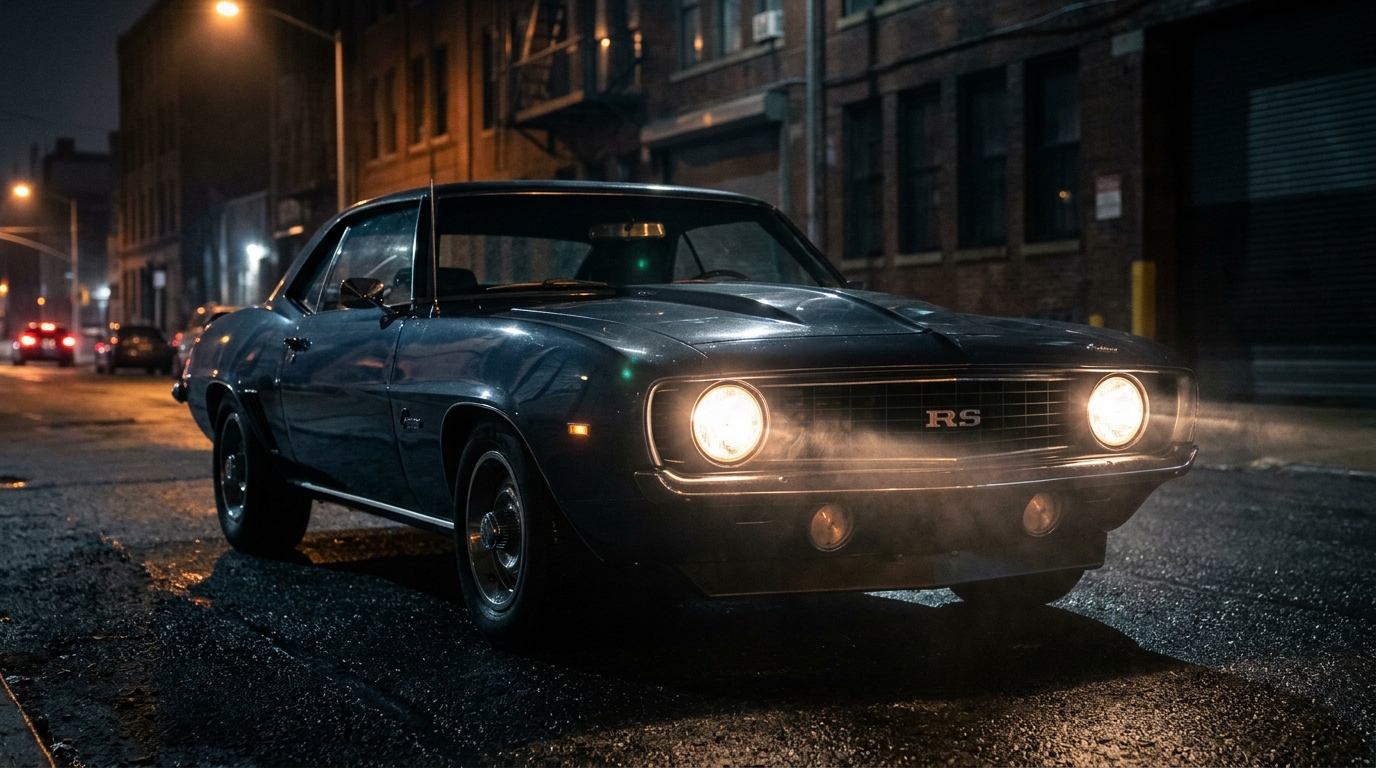
Under a sodium streetlight, the 1969 Camaro RS looks like it is winking at you. The grille reads as a clean, unbroken face until you thumb the switch, and then two panels rotate away and a pair of round lamps stare down the road. It is a piece of automotive theater that only works properly after sundown, and fifty-plus years on it still lands.
The Face That Hides Its Eyes
The Rally Sport package, coded RPO Z22, is the reason this Camaro is different from the one parked next to it at the cruise night. Chevrolet’s designers moved the headlamps behind electrically operated, vacuum-assisted door panels that blend into the grille. With the lights off, the nose is smooth and almost sinister. Switch them on and the doors swing open, revealing the lamps, a trick borrowed from the show-car playbook and executed with surprising reliability on factory cars. For 1969, the RS also brought revised parking lamps mounted below the bumper, a blacked-out grille treatment, and RS badging on the fenders and steering wheel hub.
There is a practical wrinkle that every owner knows. The vacuum system that opens the doors can leak with age, so a tired example may greet you with one eye open and one eye shut. When the system is healthy, the reveal is crisp and a little theatrical, which is exactly the point.
A Camaro Built for the Long Game
The 1969 model year is the high-water mark for first-generation Camaro styling. The sheetmetal was heavily revised from 1968, with a more aggressive lower body, a distinctive crease over the rear wheel arches, and a wider, lower stance that gave the car real presence. It was also the best-selling year of the first generation, with Chevrolet building around 243,000 Camaros, a figure that includes the RS package, which was one of the most popular options on the order sheet.
Under the hood, the RS was not a performance package. It was an appearance and lighting option that could be paired with almost any engine. That meant an RS could be a sensible six-cylinder cruiser or a snarling big block, which makes the badge more of a style statement than a promise of speed. The most common choice was a small-block V8, and a 350 cubic inch engine with 255 horsepower in the base V8 tune was the heart of many RS builds, with higher output versions up the range for those who ticked the boxes.
Driving It After Dark
Night is where an old Camaro earns its keep. The first thing you notice is how dim the dash is by modern standards. The gauges glow a soft, warm green, and the whole cabin feels like the inside of a jukebox. There is no glare, no screen, no distraction. Just the road and the engine.
The headlamps themselves, once revealed, are period-correct sealed beams, and they are not bright by today’s standards. On an unlit back road you are driving at the pace the lights allow, which turns out to be a gift. Speeds drop, attention sharpens, and the V8 burble through the exhaust becomes the soundtrack. In town, the hidden-light doors catch the eye of every pedestrian at a crosswalk, and the car draws more glances at 11 p.m. than most modern exotics do at noon.
The ride is soft and the steering is slow, as you would expect from a car with a recirculating-ball setup and a Detroit idea of cornering. Power steering was optional, and a manual-steering car demands real effort in a parking lot. Power front disc brakes were an option too, and they are worth having. At night, with a cool engine and a quiet street, the Camaro rewards you for slowing down and enjoying the ride rather than chasing numbers.
Living With a 1969 Today
These cars are plentiful enough to be livable and beloved enough to be expensive. Parts support is superb, with nearly every component reproduced, so keeping an RS on the road is easier than for most classics of the era. The things to inspect are the usual suspects: rust in the cowl, trunk floor and rear quarter panels, the condition of the vacuum headlight system, and whether the car is a real RS or a clone. A documented, numbers-matching example commands a healthy premium, and the 396 and 427 big-block cars sit at the top of the market.
Editor’s verdict: The 1969 Camaro RS is not the fastest first-generation pony car, but it is the one that makes the best entrance after dark. Those hidden lamps, that warm dash glow and a V8 rumble on an empty street add up to pure, uncomplicated charm. Buy it for the theater, keep the vacuum lines healthy, and let the night do the rest.