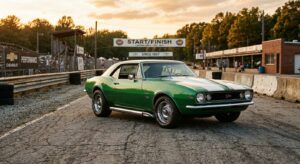
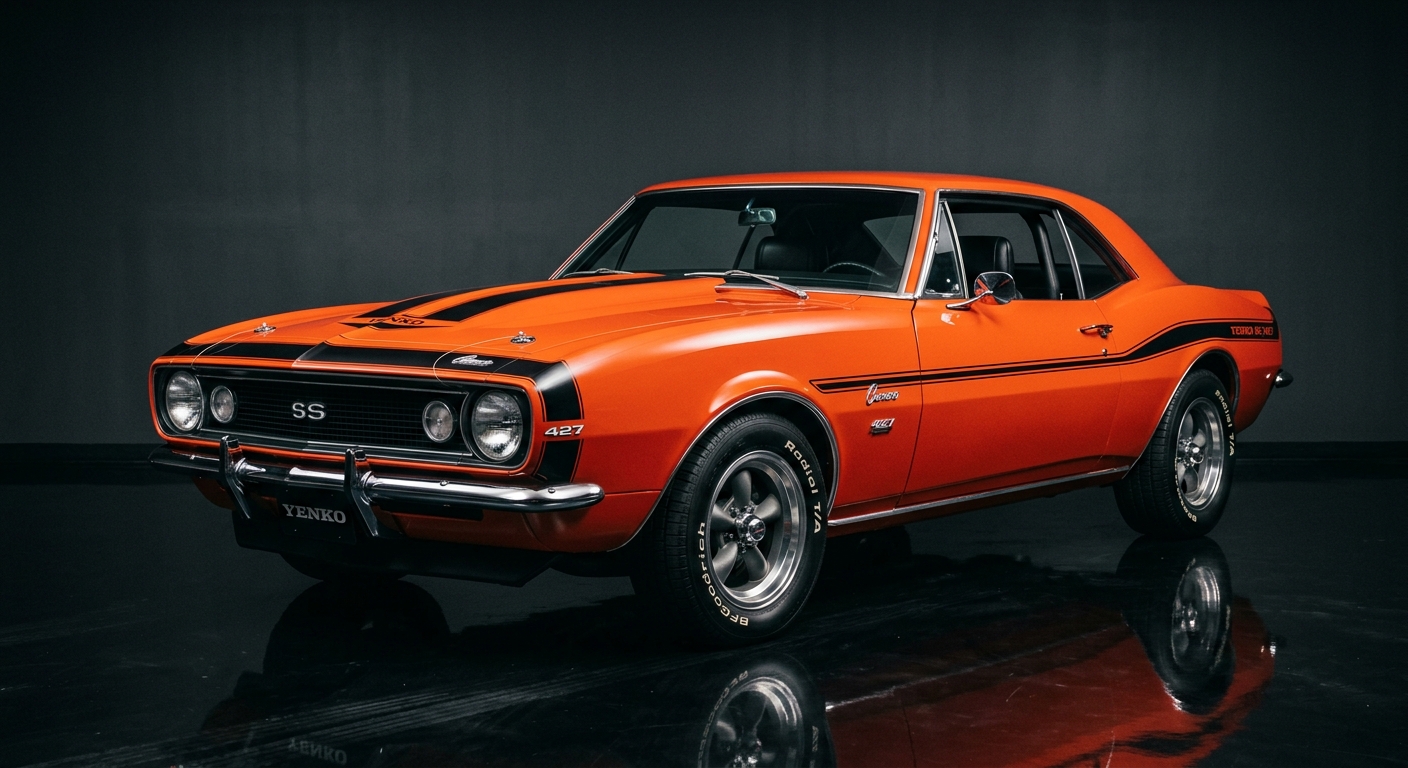
In 1967, when Chevrolet’s corporate bean counters limited the Camaro to a maximum 396 cubic inches, Pennsylvania Chevrolet dealer Don Yenko had other ideas. His solution was beautifully simple and completely insane: stuff the biggest, baddest engine Chevy made into their new pony car. The result was the Yenko Camaro SC/427, a factory-built cruise missile that redefined what a small block platform could handle.
This wasn’t just another dealer special or weekend warrior project. Yenko’s operation was a full-scale assault on the establishment, taking delivery of brand-new Camaros and immediately ripping out their engines to install the legendary L72 427 big block. What emerged was a car that could embarrass Corvettes, terrify Mustangs, and leave tire marks on the souls of anyone brave enough to mash the throttle.
The Yenko Difference
Don Yenko wasn’t your typical car dealer. A former racing driver with an intimate understanding of performance, he recognized that GM’s internal politics were holding back their most promising platforms. The first-generation Camaro had the bones to handle serious power, but corporate restrictions meant customers had to settle for the 375-horsepower 396 as the top option.
Yenko’s solution bypassed the bureaucracy entirely. His shop would order base Camaros, then perform what amounted to a complete powertrain transplant. The 427 L72 big block, normally reserved for the Corvette, was shoe-horned into the Camaro’s engine bay along with the necessary supporting modifications. Heavy-duty suspension components, upgraded cooling systems, and beefed-up drivetrains ensured these monsters could handle the additional 425 horsepower.
Engineering Brutality
The numbers tell only part of the story. With 425 horsepower and 460 lb-ft of torque on tap, the Yenko Camaro could launch from 0-60 mph in under 5 seconds, making it one of the quickest production cars of its era. But raw acceleration was just the beginning. The 427’s massive displacement delivered a torque curve that felt like being kicked by an angry mule, with power delivery that could break traction at will.
The sound was equally intimidating. The 427’s deep, thunderous exhaust note announced the car’s presence from blocks away, while the engine’s mechanical symphony of solid lifters and aggressive cam timing created a soundtrack that was pure automotive theater. This wasn’t refined performance – it was controlled violence wrapped in sheet metal.
Living with Lightning
Despite its fearsome reputation, the Yenko Camaro retained much of the standard car’s daily usability. The interior was largely unchanged from the base model, though buyers could option performance-oriented additions like a tachometer and four-speed manual transmission. The driving position was classic 1960s muscle: low-slung, with excellent forward visibility and controls that required real physical effort.
The steering was unassisted and required genuine muscle to maneuver at parking lot speeds, but it provided excellent feedback at highway velocities. The suspension, while stiff enough to control the big block’s weight, still delivered a ride quality that wouldn’t punish occupants on longer journeys. This was a car you could theoretically drive cross-country, assuming you could afford the fuel stops.
Track Day Terror
Where the Yenko Camaro truly came alive was on the drag strip. The combination of relatively light weight (around 3,400 pounds) and massive torque made it a natural quarter-mile weapon. With proper tires and a skilled driver, these cars could consistently run in the low 13-second range, with exceptional examples dipping into the 12s.
The car’s handling was surprisingly competent for such a nose-heavy machine. While it couldn’t match the precision of lighter, more balanced sports cars, the Yenko Camaro could hold its own on twisty roads thanks to its wide stance and well-tuned suspension. The real challenge was managing all that power – lift-off oversteer and sudden throttle applications could quickly overwhelm the rear tires, demanding respect and skill from the driver.
The Yenko Camaro SC/427 represents everything that made the muscle car era legendary: outrageous power, questionable sanity, and the kind of character that modern cars struggle to replicate. With only 64 examples built, finding one today requires serious money and even more serious commitment. But for those seeking the ultimate expression of 1960s American performance, nothing quite matches the brutal honesty of a 427 big block stuffed into a first-generation Camaro.