Full Spec Motors

Quietly Revolutionary, 2019 Hyundai IONIQ Electric

3 min read

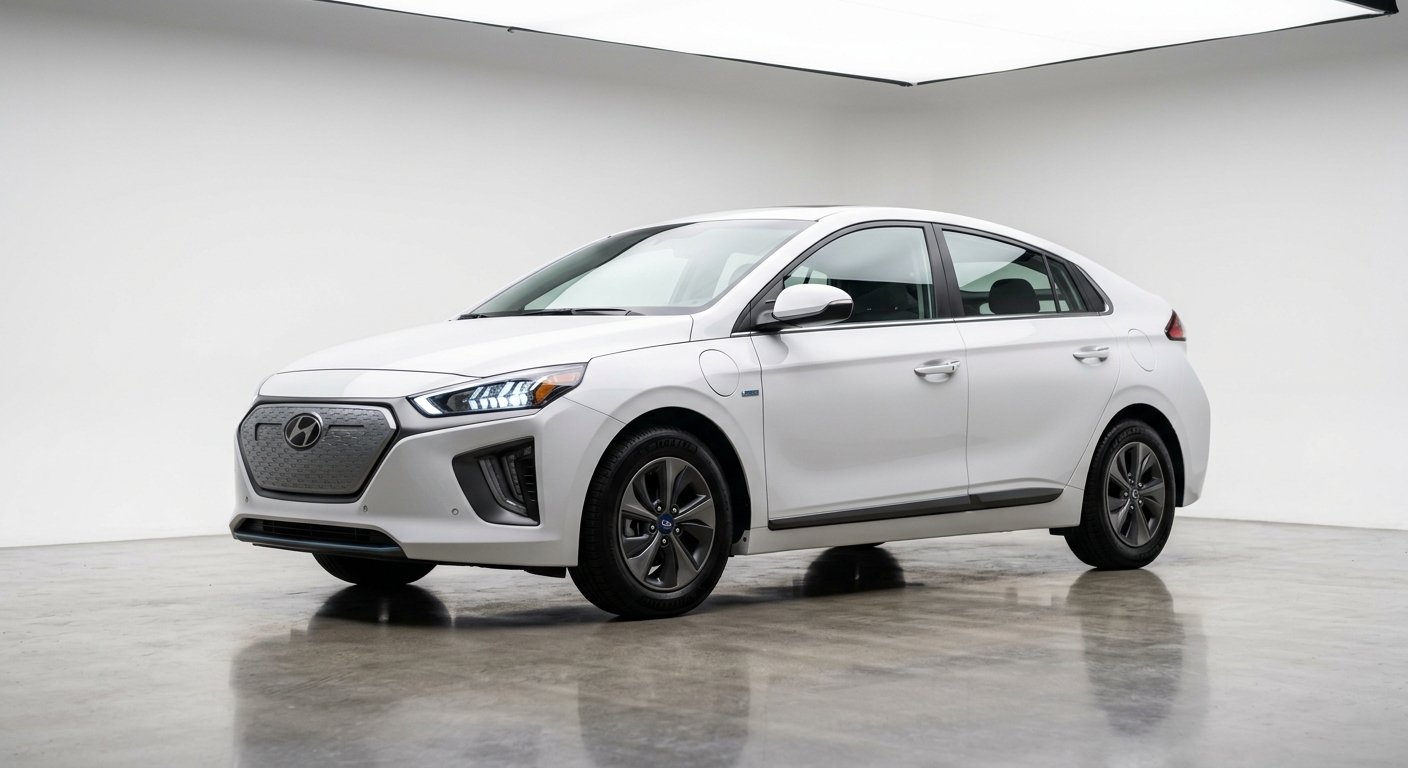
While Tesla grabbed headlines with radical designs and Ludicrous modes, Hyundai took a different approach with the IONIQ Electric. Here was an EV that didn’t need to announce its electric nature with radical styling or gimmicky features. Instead, it simply got on with the business of being an excellent electric car, wrapped in refreshingly normal packaging.

The IONIQ Electric represented Hyundai’s first serious attempt at a dedicated electric vehicle platform, sharing its bones with hybrid and plug-in hybrid variants but optimized specifically for pure electric propulsion. It was a statement of intent from a manufacturer that had quietly become one of the most competent builders of alternative powertrains.

The Electric Experience

Behind the wheel, the IONIQ Electric delivers exactly what you’d hope for from a well-engineered EV. The 134-horsepower electric motor provides smooth, instant torque delivery that makes city driving effortless. There’s no drama here, no tire-shredding acceleration, just refined progress that happens to be whisper-quiet.

The regenerative braking system is among the best in the business, offering multiple levels of regen that can be adjusted via steering wheel paddles. At its most aggressive setting, the car approaches one-pedal driving, slowing significantly when you lift off the accelerator. It’s intuitive enough that even EV newcomers adapt quickly.

What impresses most about the IONIQ Electric is its efficiency. The EPA-rated 150 miles of range might seem modest compared to newer EVs, but the car achieves it while consuming just 25 kWh per 100 miles. That’s exceptional efficiency that translates to lower charging costs and reduced range anxiety.

Substance Over Style

The IONIQ’s interior prioritizes function over flash. The cabin is well-built and logically laid out, with physical buttons for climate controls and a clear, responsive infotainment system. The seats are comfortable and supportive, while rear passengers get adequate space despite the car’s compact footprint.

Cargo space is reasonable at 23.8 cubic feet with the rear seats up, though the oddly-shaped opening limits what you can actually fit. The lack of a front trunk is disappointing, especially considering the space savings of electric propulsion.

Build quality feels solid throughout, with materials that punch above the car’s price point. Hyundai’s attention to detail shows in the tight panel gaps and consistent interior finish, qualities that weren’t always associated with Korean brands just a decade earlier.

The Bigger Picture

The IONIQ Electric arrived at a crucial moment in EV adoption. While premium brands pushed the boundaries of performance and luxury, Hyundai focused on making electric driving accessible and practical. The result was a car that proved EVs could be normal, reliable transportation rather than exotic statements.

The IONIQ’s platform would later evolve into Hyundai’s dedicated E-GMP architecture, spawning more ambitious projects like the IONIQ 5. But this original IONIQ Electric deserves credit for establishing Hyundai as a serious player in the EV space, offering buyers a sensible alternative to Tesla’s radical approach.

Electric Vehicles
2019 Hyundai IONIQ Electric
Single-Motor FWD Electric
MSRP: $33,045 (after federal tax credit: $25,545)
0-60 MPH
9.9s
Range
150mi
Power
134hp
DC Charging
77kW
Powertrain
Motor TypePermanent Magnet Synchronous
Battery38.3 kWh Lithium-Ion
Peak Power134 hp @ 4,000 rpm
Peak Torque218 lb-ft @ 0-3,000 rpm
Transmission
TypeSingle-Speed Reduction Gear
LayoutFront-Wheel Drive
Final Drive Ratio7.981:1
Dimensions & Weight
Length176.4 in
Width71.1 in
Height57.1 in
Curb Weight3,164 lbs
Range & Charging
EPA Range150 miles
Efficiency136 MPGe combined
AC Charging7.2 kW (0-100% in 6 hours)
DC Fast Charging77 kW (10-80% in 35 min)
Our Ratings
Performance

6/10

Handling

7/10

Daily Usability

8.5/10

Value

9/10

Sound

7/10

Character

7.5/10

The IONIQ Electric may not have the flashy appeal of a Tesla or the exotic nature of a high-end EV, but it succeeds precisely because it doesn’t try to be something it’s not. Here’s an electric car that prioritizes efficiency, value, and everyday usability over headline-grabbing performance figures. For buyers seeking their first taste of electric driving without the premium price or radical styling, the IONIQ Electric delivered exactly what was needed at exactly the right time.

5 thoughts on “Quietly Revolutionary, 2019 Hyundai IONIQ Electric”

  1. I appreciate this take more than you’d expect from a guy with three 911s in his garage. The IONIQ’s philosophy actually reminds me of what Porsche nailed with the 918 hybrid, you know? It does the job without constantly announcing itself, which is genuinely rare in the EV space. Haven’t driven one myself but I’ve watched enough track day friends transition to electric and the ones who seem happiest are usually in vehicles that don’t feel like a statement piece.

    Log in or register to reply
    • Paul, exactly this. The 918 succeeded because it was built on proven architecture and engineering fundamentals first, then layered the electrification on top. With the IONIQ you’re seeing Hyundai apply that same discipline, and honestly from a documentation and provenance angle, that’s what matters for future collectibility. The ones that’ll hold value are the cars that solved real problems instead of chasing a narrative, and early adopters who picked the IONIQ over flashier competition knew what they were buying. Curious whether you think that translates to long term appreciation potential in a decade or so.

      Log in or register to reply
  2. Paul, that’s a really sharp comparison. The 918 worked because it was fundamentally competent first and hybrid second, and I think you’re onto something with the IONIQ doing the same thing. From a collector standpoint though, I’m curious whether these early production EVs will ever develop the kind of provenance that makes them interesting long term, or if they’ll just be seen as the awkward first chapter once the tech settles out. What’s your read on that?

    Log in or register to reply
    • I’d actually be really curious to inspect one of these in a few years, because early EVs are a wildcard for longevity that traditional cars have taught us how to read. Battery degradation is the elephant in the room nobody talks about at collector meetups, plus these 2019 models are right at that inflection point where the tech was changing fast, so parts availability could get sketchy. The IONIQ’s understated approach might actually work in its favor long term, honestly – people will respect the engineering practicality more than the flashy promises, which usually ages better than hype.

      Log in or register to reply
      • ngl this is the question ive been asking for like 6 months now lol – like everyones obsessed with range but nobodys really talking about what these batteries look like at 150k miles in 2027, you know? plus ioniq parts are gonna be way easier to source than some of the weird proprietary stuff other makers used back then, which honestly gives it major points over some competitors. my one thing tho – do you think hyundais warranty transfer situation helps or hurts long term ownership? because i havent found a single source that breaks down how that affects used ev pricing going forward

        Log in or register to reply

Leave a Comment