In an era when Detroit was desperately trying to maintain performance credibility while navigating fuel crises and emissions regulations, Chrysler took a different approach with the Cordoba. Rather than chase pure horsepower numbers, they crafted something more sophisticated: a personal luxury coupe that whispered rather than screamed, yet still packed enough V8 muscle to remind you of its pedigree.
The Personal Luxury Revolution
The mid-1970s marked a pivotal shift in American automotive culture. The muscle car era was gasping its last breath, strangled by insurance costs and environmental concerns. But Americans still wanted style, presence, and a hint of performance wrapped in a more civilized package. Enter the personal luxury segment, dominated by cars like the Chevrolet Monte Carlo and Ford Thunderbird.
Chrysler’s Cordoba, launched in 1975, represented the company’s ambitious entry into this lucrative market. By 1978, the model had found its stride, offering buyers a compelling blend of old-school American muscle and contemporary luxury appointments. The T-Top variant added an extra dimension of desirability, bringing open-air motoring to the personal luxury equation.
Distinctive Design Language
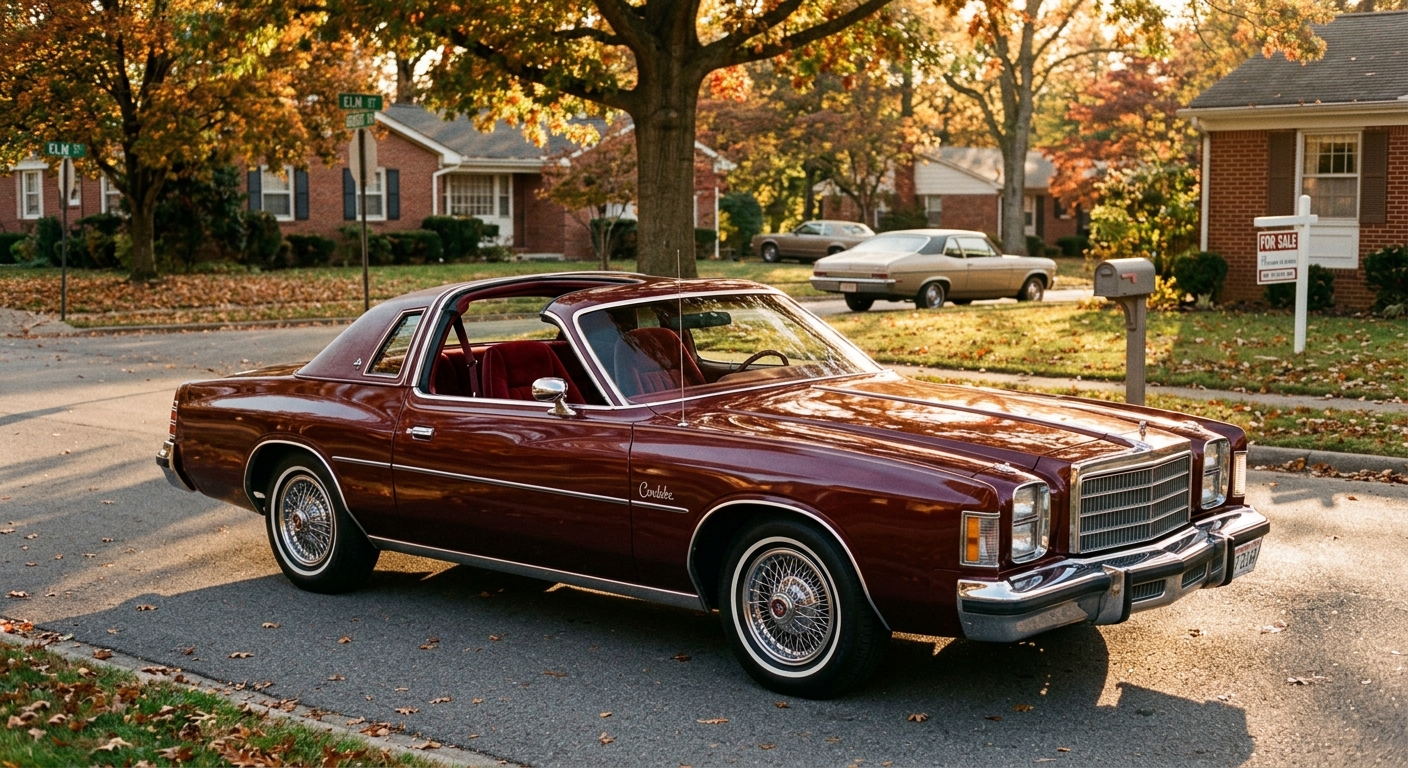
The Cordoba’s styling struck a careful balance between elegance and aggression. Its long hood and short deck proportions echoed classic muscle car DNA, while details like the distinctive opera windows and formal roofline spoke to luxury car sensibilities. The T-Top configuration, with its removable roof panels, transformed the coupe into a quasi-convertible without sacrificing structural rigidity.
Chrome accents were applied with restraint, highlighting key design elements without overwhelming the clean lines. The car’s wide stance and subtle wheel arch flares hinted at the performance potential lurking beneath the refined exterior. It was distinctly American in its approach to luxury, favoring bold presence over European subtlety.
The Driving Experience
Behind the wheel, the 1978 Cordoba T-Top revealed its dual personality. The available 400 cubic inch V8 provided the kind of effortless torque delivery that made American cars legendary. Unlike the high-strung small blocks of the early muscle car era, this engine prioritized smooth, linear power delivery that matched the car’s luxury aspirations.
The suspension tuning favored comfort over cornering prowess, delivering the kind of highway-cruising composure that buyers in this segment demanded. The steering was light and manageable, while the brakes provided adequate stopping power for the car’s substantial mass. With the T-Top panels removed, the driving experience gained an engaging sensory dimension that transformed mundane journeys into occasions.
Interior Luxury and Comfort
Step inside the Cordoba, and you were greeted by an interior that took its luxury mission seriously. Rich materials, thoughtful ergonomics, and attention to detail created an environment that rivaled much more expensive European offerings. The famous “Corinthian leather” appointments became a cultural touchstone, representing American luxury at its most unapologetic.
The T-Top configuration added complexity to the interior design challenge, but Chrysler’s engineers managed to maintain structural integrity while providing easy access to open-air motoring. The removable panels stored securely, and the weatherstripping proved remarkably effective at keeping the elements at bay when properly installed.
Cultural Impact and Legacy
The Cordoba’s influence extended far beyond its sales figures. It represented a successful American interpretation of the personal luxury concept, proving that domestic manufacturers could compete effectively in segments traditionally dominated by European imports. The car’s marketing campaign, featuring Ricardo Montalban and his famous “Corinthian leather” endorsements, became an integral part of 1970s popular culture.
For enthusiasts today, the Cordoba represents an interesting alternative to more conventional muscle cars of the era. Its combination of luxury appointments, distinctive styling, and V8 performance offers a unique ownership experience that stands apart from the typical Camaro or Mustang restoration project.
The 1978 Cordoba T-Top represents American automotive culture at a fascinating crossroads, delivering genuine luxury and distinctive style wrapped in an accessible package. While it may not corner like a sports car or accelerate like a modern muscle machine, it offers something increasingly rare: authentic character and presence that money simply can’t buy today.