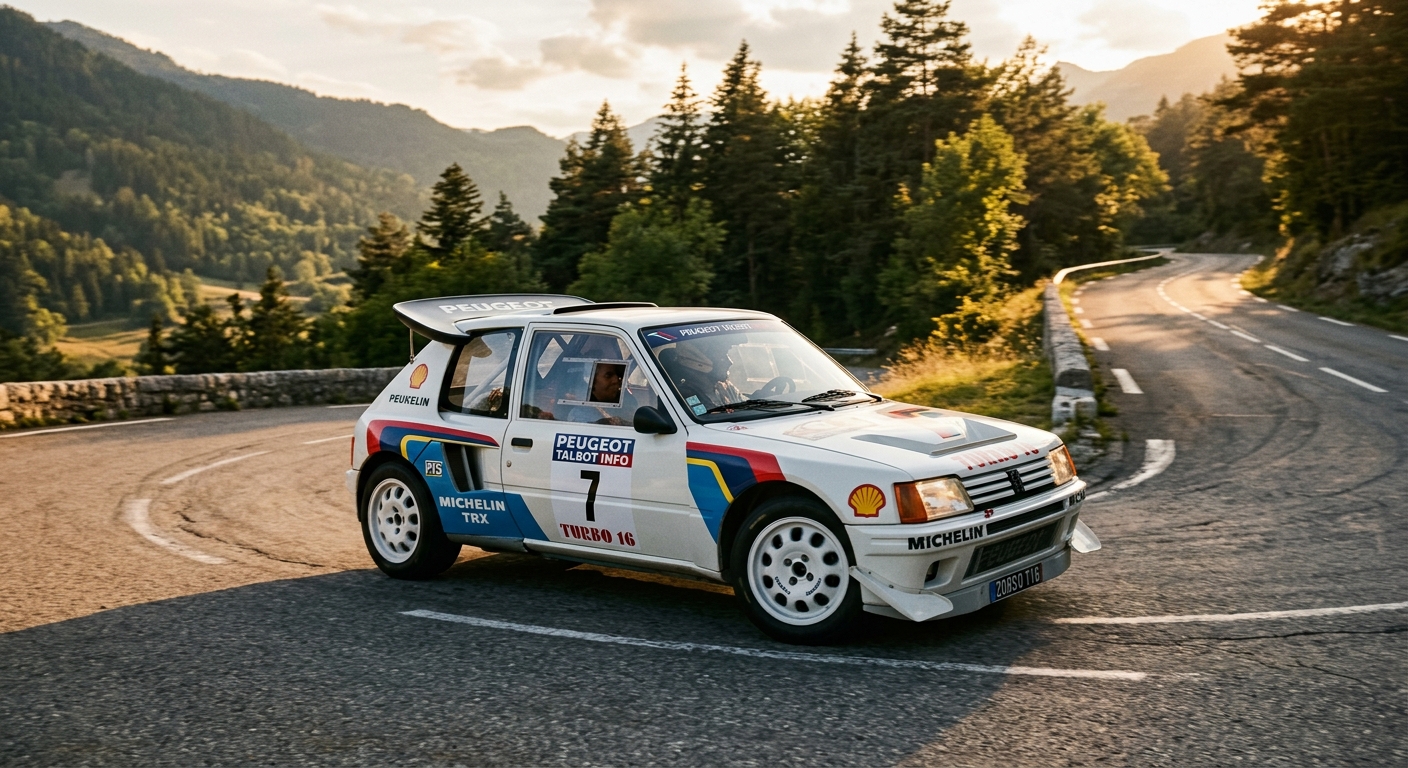
In the wild world of 1980s Group B rallying, manufacturers needed to build road-going versions of their competition cars to satisfy homologation requirements. While most companies grudgingly produced the minimum 200 units required, Peugeot went further with the 205 Turbo 16, creating one of the most extraordinary hot hatches ever conceived. This wasn’t just a regular 205 with more power: it was a complete reimagining of what a compact performance car could be.
Engineering Excellence in Miniature
The 205 Turbo 16 shared little more than its basic silhouette with the regular 205. Peugeot’s engineers relocated the entire drivetrain to achieve perfect weight distribution, mounting the turbocharged 1.8-liter four-cylinder engine behind the driver and sending power to all four wheels. This mid-mounted configuration, borrowed directly from the rally car, transformed the 205’s handling characteristics completely.
The engine itself was a masterpiece of forced induction technology. Producing 200 horsepower in street trim, it featured a Garrett turbocharger, intercooler, and sophisticated engine management for the era. The all-wheel-drive system split torque between front and rear axles through a center differential, providing incredible traction that regular front-wheel-drive hot hatches simply couldn’t match.
Rally-Bred Dynamics
Behind the wheel, the Turbo 16 felt unlike any other small car of its era. The mid-engine layout provided exceptional balance, while the wide track and lowered stance delivered cornering grip that embarrassed much more expensive sports cars. The steering was direct and communicative, offering the kind of feedback that modern performance cars struggle to replicate.
The turbo engine delivered power with characteristic 1980s drama. Below 3,000 rpm, the car felt relatively docile, but once the turbocharger spooled up, acceleration became explosive. The surge of power combined with the all-wheel-drive traction created a driving experience that was both thrilling and accessible, allowing drivers to explore the car’s limits with confidence.
Functional Aggression
Visually, the Turbo 16 announced its intentions through massively flared wheel arches, a prominent rear spoiler, and distinctive side air intakes. These weren’t merely cosmetic additions: every aerodynamic element served a purpose, cooling the mid-mounted engine and generating downforce at speed. The interior remained surprisingly practical, though rear seat space suffered due to the engine’s relocation.
Rally Heritage
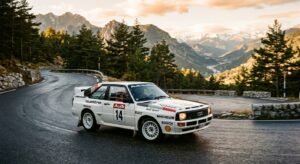
The competition version of the 205 Turbo 16 dominated the World Rally Championship, securing constructor’s titles for Peugeot in 1985 and 1986. Drivers like Timo Salonen and Juha Kankkunen piloted the rally variant to numerous victories, establishing Peugeot as a force in motorsport. This competition success only enhanced the road car’s desirability among enthusiasts.
The rally connection wasn’t just marketing fluff. Many of the engineering solutions pioneered in the competition car filtered down to the street version, including advanced suspension geometry, sophisticated four-wheel-drive systems, and turbocharging technology that was cutting-edge for the mid-1980s.
The 205 Turbo 16 represents everything that made 1980s performance cars special: uncompromising engineering, dramatic styling, and an emotional connection that transcends mere numbers. Today, these homologation heroes command astronomical prices, but they remain bargains compared to their contemporary exotic rivals that offered less performance and drama.